Lifestyle

The couples who last tend to share one trait that has nothing to do with communication skills. They find the same things boring.

The couples who last tend to share one trait that has nothing to do with communication skills. They find the same things boring.

Relationship advice obsesses over communication techniques, but the couples who genuinely last share something harder to teach: a matched tolerance for boredom, a similar threshold for stimulation, and the ability to sit in the same comfortable silence without either person needing to fill it.

Lifestyle

Scandinavian countries didn’t accidentally become the best places in the world to grow old — and the 7 things they do differently reveal exactly what the rest of us have been getting wrong

Two people stand on rocks overlooking a harbor with boats, traditional houses, and steep mountains in the background under cloudy skies.

While America’s seniors struggle with isolation and financial stress, Scandinavian countries have quietly revolutionized aging through seven counterintuitive approaches that challenge everything we think we know about growing old.

Culture

The Danish concept of “pyt” is the most effective stress-management tool I’ve come across — and the behavioural science behind why it works is something every non-Scandinavian needs to understand

A woman sits at a desk with a laptop, eyes closed and lips pursed, appearing to take a deep breath. Office supplies and a coffee cup are on the desk.

While Americans exhaust themselves treating every WiFi glitch like a crisis, the Danish have mastered a one-word mental trick that stops stress before it starts—and the neuroscience reveals why it works better than meditation, breathing exercises, or any app on your phone.

Lifestyle

The reason Scandinavian countries keep producing the world’s most emotionally secure people might have nothing to do with happiness — and everything to do with how they teach people to need each other without shame

A person in a beige coat rides a bicycle along a canal lined with colorful buildings and boats on an overcast day.

While Americans spend decades in therapy learning it’s okay to need others, Scandinavian children master this truth in kindergarten through “hygge pedagogy”—and the difference might explain why they’re not happier, just less fundamentally alone.

Culture

Why BIG built its first Japan project from compressed soil on a remote island in the Seto Inland Sea

Why BIG built its first Japan project from compressed soil on a remote island in the Seto Inland Sea

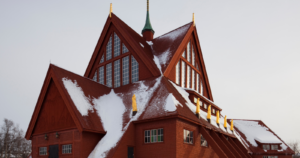
When BIG, the Copenhagen-founded architecture studio led by Bjarke Ingels, chose rammed earth — compressed layers of local soil — as the primary material for its first project in Japan, the decision said more about the state of luxury architecture than about any single building. The project, a trio of villas called Not A Hotel […]

Lifestyle

There is a feeling that arrives in your late thirties when you realize your parents have become careful around you, and that their carefulness is a kind of respect you didn’t ask for

There is a feeling that arrives in your late thirties when you realize your parents have become careful around you, and that their carefulness is a kind of respect you didn't ask for

The moment you notice your parents have started handling you gently — softening their opinions, replacing statements with questions — contains both gratitude and grief. Their carefulness is a form of respect nobody asked for, and recognizing it changes everything.

Lifestyle

People who become fluent in a second language as adults often say the same thing: they didn’t just learn new words, they discovered a version of themselves that had simply never had permission to exist

People who become fluent in a second language as adults often say the same thing: they didn't just learn new words, they discovered a version of themselves that had simply never had permission to exist

Adult language learners often report something beyond fluency: a shift in identity itself. The second language doesn’t just add words — it gives permission for a version of the self that had no medium through which to appear.