
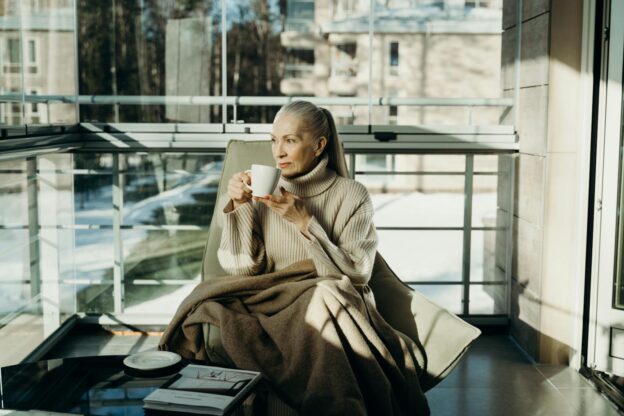
Graceful aging is almost always described in the language of accumulation: more hobbies, more social engagements, more purpose-driven projects, more steps on the fitness tracker. The Scandinavian version of growing older well looks, from the outside, like the opposite. It looks like a woman watching the light change on a fjord for forty minutes. It looks like a retired carpenter who spends an afternoon adjusting a single drawer. It looks, frankly, like not much at all. That’s what makes it easy to miss.
The busyness trap and its Scandinavian counterpart
Most Western cultures treat retirement as a productivity crisis. You were useful; now you must find new ways to be useful. Volunteer. Learn Mandarin. Take up ceramics, but make sure you exhibit. The logic is straightforward: idle hands invite decline.
Research suggests that Scandinavian countries consistently rank among the world’s best places to grow old. The welfare systems, the healthcare access, the social safety nets all contribute. But spend time around older Danes, Swedes, and Norwegians, and you notice something that policy alone doesn’t explain.
The ones who seem genuinely well aren’t necessarily the busiest. They’re the ones who appear to find the texture of daily life absorbing enough. Coffee that’s made properly. A walk that follows no route. A conversation about absolutely nothing important that somehow lasts an hour.
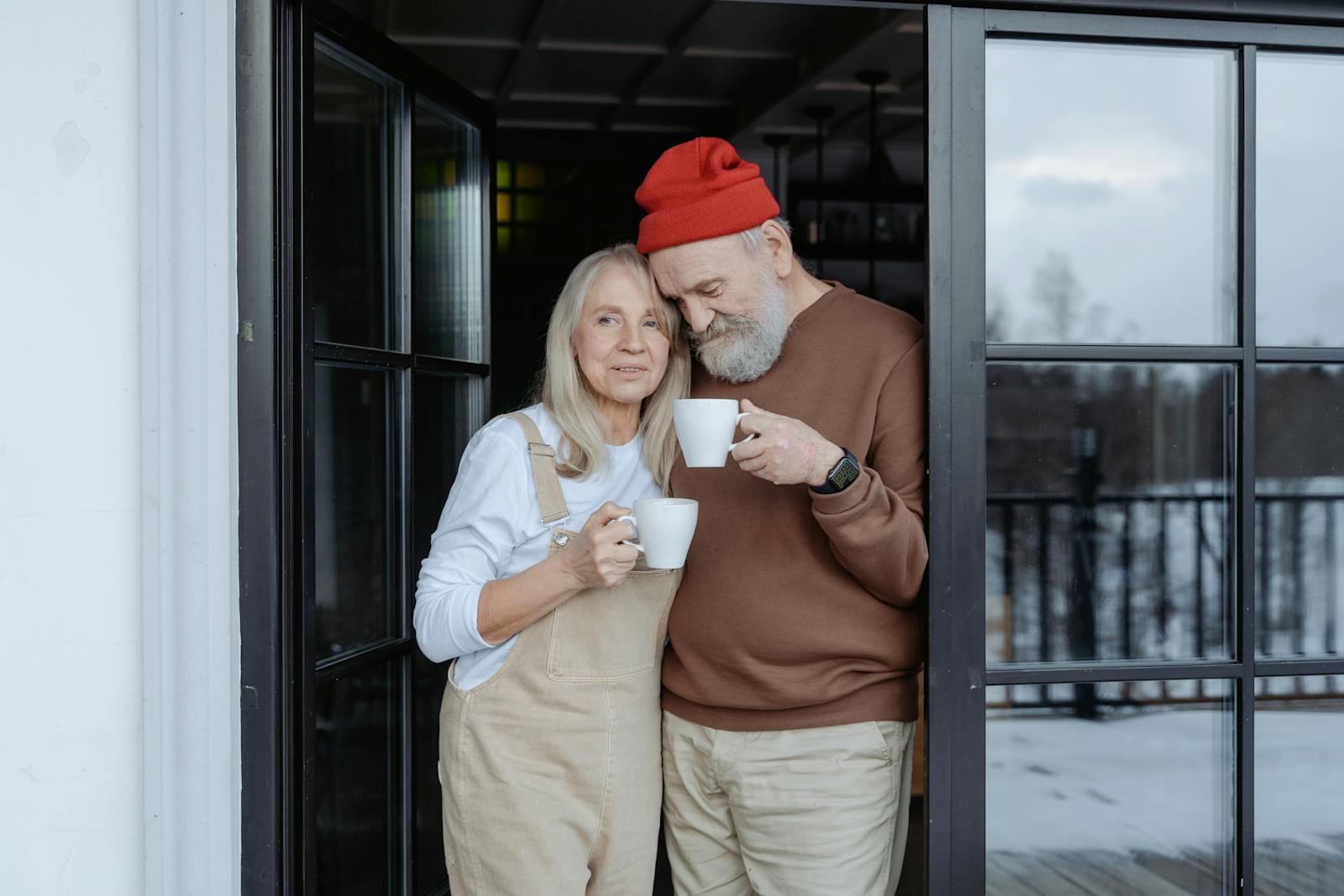
This is not laziness. It’s a specific skill, cultivated over decades.
What the research actually measures
Research on aging and well-being has identified a pattern that resonates with what I’ve observed in Scandinavia: how one lives during the “third age,” the relatively active period for older adults immediately following retirement, determines not just longevity but meaning.
Studies have found that many older adults whose “post-retirement debut” in their community doesn’t go well end up isolated. And some who appear active from the outside still carry a deep sense of loneliness. The activity itself isn’t protective. The quality of attention is.
This distinction matters. Busyness and engagement look similar from the outside, but they operate on different psychological channels. Research examining older adults’ well-being has explored how specific daily habits relate to distinct domains such as eudemonic well-being (a sense of purpose and positive relationships), affective well-being (happiness), and evaluative well-being (life satisfaction). What’s striking is that even the simplest repeated choices — what you eat, how you walk, whether you sit with another person in silence or fill the air — show meaningful links to these different forms of psychological well-being. These aren’t dramatic interventions. They’re ordinary choices, repeated with attention. Which is precisely the Scandinavian model.
Where the training begins
The title of this piece makes a claim: the people who age most gracefully in Scandinavia learned early how to be interested in ordinary things. “Early” is the operative word, and understanding what it means requires looking at how Scandinavian children grow up.
Danish and Norwegian kindergartens are built around outdoor play in all weather. Swedish förskola emphasizes unstructured time in nature — not as a pedagogical add-on but as the core of the curriculum. The Danish concept of friluftsliv (open-air living) is not a weekend hobby; it’s a cultural expectation that begins before a child can read. From the earliest years, children are trained in a specific form of attention: noticing weather, texture, light, seasonal change. The curriculum of the unremarkable.
This training deepens through institutions that exist nowhere else in quite the same form. The Swedish study circle tradition (studiecirkel), in which small groups gather regularly to learn something together — not for credentials but for the process. The Danish folkehøjskole system, where adults of any age attend residential schools with no exams and no grades. These institutions share a common assumption: learning something for its own sake is a form of social care. And critically, they are available across the entire lifespan. A person might join their first study circle at 20, attend a folk high school at 35, and still be showing up to a weekly reading group at 78.
The result is that by the time a Scandinavian reaches 70, they’ve had decades of structured practice at finding the world interesting without requiring it to be extraordinary. They can sit through a long afternoon without reaching for stimulation because the afternoon itself has content: the quality of the light, the birds at the feeder, the way the coffee tastes different in March than it did in January. This isn’t spontaneous wisdom. It’s trained capacity, built year by year, in classrooms without grades and forests without walls.
The Danish case for small pleasures
Hygge gets exported as an aesthetic. Candles, wool blankets, the whole catalogue. But I understood it differently one winter evening in Copenhagen, at a friend’s apartment, on an unremarkable Tuesday. She’d put real care into the evening — good bread, real butter, candles that weren’t decorative but functional (the overhead light was genuinely terrible). We sat at the table until almost midnight.
What struck me most was that she wasn’t trying to make the evening special. She was simply paying attention to it. The meal was simple. The conversation was ordinary. But nothing felt rushed or incidental. This wasn’t performance. It was how she survived the dark season — how Danes have always survived it. The candles, the warm drinks, the gathering together. These aren’t style choices. They’re psychological infrastructure.
This is the habit I keep noticing in older Scandinavians who seem to be aging with something I can only call composure. They treat the ordinary as worthy of attention. Not in a mindfulness-app way, but as a default setting they’ve had for years — since childhood walks in the rain, since their first study circle, since they learned that a Tuesday dinner could hold as much meaning as you were willing to bring to it.
Engagement versus entertainment
Research on aging suggests that what works in supporting older adults isn’t labelling things as “preventative care” or activities “for older adults.” Those labels can repel people.
What works is creating contexts where people can be genuinely interested in something: a discussion, a course, a shared activity that isn’t defined by its health outcomes but by its intrinsic quality.
Research on physical activity patterns in aging populations consistently shows that gentle, consistent movement like walking outperforms dramatic fitness regimes in long-term outcomes. The same logic applies to psychological engagement. Consistent, low-intensity interest in the world around you is more sustainable than bursts of purpose-driven activity.
The busy retiree who fills every hour risks the same burnout they experienced at work. The person who cultivated attention to the ordinary over a lifetime has a renewable resource.
The democratic roots of ordinary quality
Post-war Scandinavian design was, at its foundation, a democratic project: the idea that good design should be accessible to everyone, not reserved for the wealthy. This principle extended beyond objects. It shaped how Scandinavians think about the quality of everyday life.
If your coffee cup is well-made, you notice the coffee more. If your public spaces are designed with care, you’re more inclined to sit in them. If your social infrastructure assumes that people deserve beauty and order in their daily routines, then daily routines start to feel worth inhabiting. Much of the best contemporary Scandinavian fiction explores exactly this: the inner weather of seemingly unremarkable lives, the tension between surfaces and depths.
This cultural context produces a specific kind of older person. Someone who has spent a lifetime in environments designed to make the ordinary bearable, even beautiful. Someone for whom a well-set table or a properly brewed cup isn’t aspirational content but just Tuesday.
Research points to the global significance of this approach. As we enter “the era of the centenarian,” the question is no longer simply how long people live but how they experience those years. Studies suggest that even when people face illness, there is still happiness to be found. That finding doesn’t come from accumulating experiences. It comes from knowing how to receive the ones already present.
What gets lost in translation
When Scandinavian aging is discussed internationally, it usually becomes a story about policy: universal healthcare, pension systems, elder care standards. These things matter enormously. A welfare state that ensures you won’t go bankrupt from illness is foundational to aging without terror.
But policy doesn’t explain the specific quality I’m describing. The composure. The apparent contentment with enough. This is cultural, and it’s transmitted not through legislation but through daily practice, across decades, in homes and schools and public parks.
I’ve interviewed rural Danish craftspeople who still practice traditional techniques, and what strikes me every time is their relationship to repetition. The same joint, the same glaze, the same stitch, performed thousands of times. They don’t describe this as monotonous. They describe it as endlessly variable. Every iteration is different if you’re paying close enough attention.
That’s the insight, really. Monotony is a failure of attention, not a property of the activity.
In my recent piece on Scandinavian grief, I wrote about how certain emotional registers go unrecognized because they don’t match the expected volume. The same is true for Scandinavian contentment. It’s quiet. It doesn’t announce itself. From the outside, it can look like passivity. From the inside, it feels like presence.
A working theory
None of this is to romanticize Scandinavia or its elderly. Depression exists here. Loneliness exists here, and it can be brutal, especially during the long dark winters. Not every older Scandinavian is a serene philosopher of the everyday. Some are bitter, bored, and isolated, just like anywhere else.
But the pattern holds: the ones who navigate aging with the most visible grace share a common trait. They are interested. Not driven, not busy, not relentlessly optimizing. Just interested. In the bread rising. In the neighbor’s dog. In the way the ice forms differently this year.
The World Health Organization’s 1948 definition of health describes it as “a state of complete physical, mental and social well-being and not merely the absence of disease or infirmity.” Reflecting on this, researchers have pointed out that well-being means different things depending on the context. It’s “a convenient term with an unclear definition.”
I’d argue that for the Scandinavians who age best, well-being is not a concept at all. It’s a practice so embedded in daily life that it has no name. You don’t call breathing a wellness strategy.
The trick, if there is one, is that you can’t start at 65. The capacity for finding the ordinary interesting is built slowly, over years of choosing to pay attention when nobody required you to. It begins in the friluftsliv of childhood, deepens in the study circles and folk schools of adulthood, and becomes, by old age, as involuntary as breathing. The retired teacher in Aarhus who spends an hour each morning watching the harbor didn’t suddenly discover patience. She’s been practicing since she was six years old, standing in the rain at recess because that’s what Danish children do.
The rest of us, catching up, might start by sitting with our coffee a little longer. By not reaching for the phone. By noticing that the light just changed.
It’s not much. That’s the point.
Photo by cottonbro studio on Pexels