
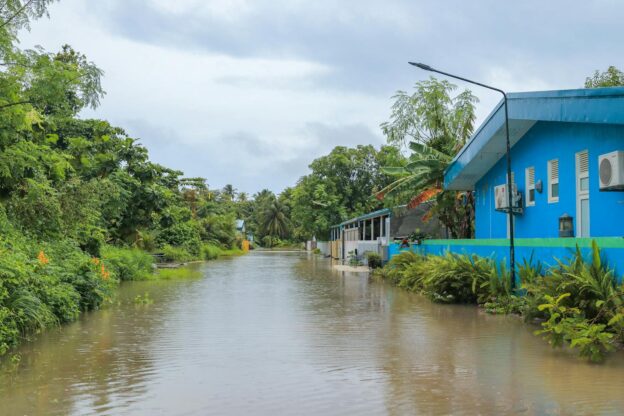
A 2024 report from the Danish Council on Climate Change (Klimarådet) laid bare an uncomfortable truth about who benefits from Denmark’s flood protection spending. The numbers are damning: Denmark’s national flood defence schemes allocate resources primarily based on the economic value of assets at risk, meaning municipalities like Gentofte and the wealthy coastal stretches of North Zealand — where single summer houses can exceed 15 million kroner — attract the bulk of public protection investment. Meanwhile, low-income municipalities like Lolland, Langeland, and parts of Southern Jutland, where storm surge damage is most frequent and most devastating, receive a fraction of comparable support despite facing far greater physical exposure.
For a country that prides itself on social cohesion and equitable public policy, the implications are significant. Denmark isn’t just failing to close the gap between rich and poor in disaster preparedness. It may be actively widening it.
The municipalities bearing the brunt
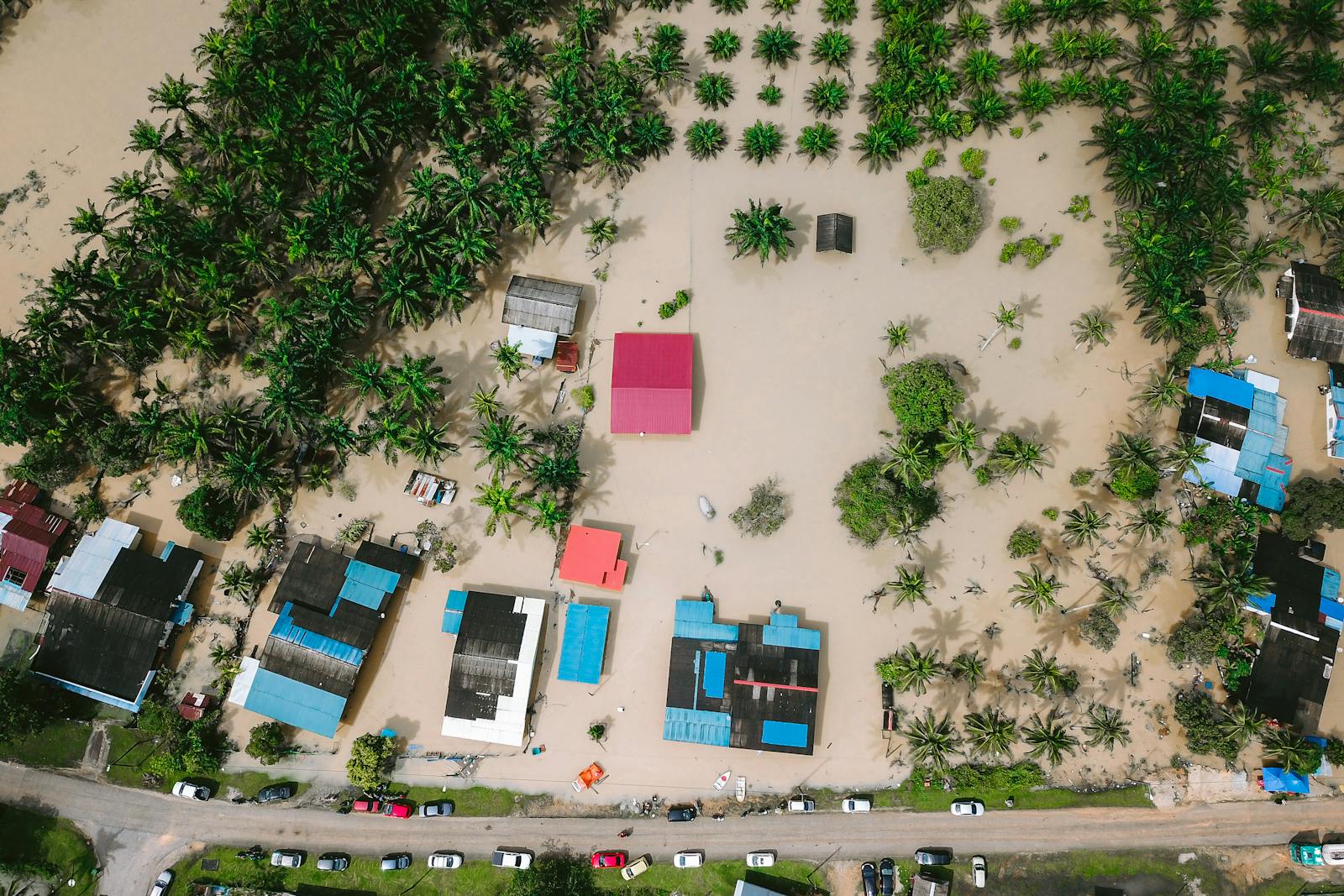
Klimarådet’s analysis confirmed what residents of places like Lolland Kommune have long known firsthand: the municipalities hardest-hit by storm surge tend to be among Denmark’s poorest. Lolland — which suffered severe flooding during the storm surge events of both 2017 and January 2024 — has an average household income roughly 25% below the national median and one of the country’s highest unemployment rates. Langeland, another repeatedly flooded municipality, faces a similar profile: an ageing population, declining property values, and a tax base too thin to fund meaningful flood infrastructure independently.
Yet the way Denmark’s support schemes are structured, the protection flows disproportionately toward areas with the most expensive real estate. The logic, on paper, is straightforward: safeguard the greatest economic value. In practice, it means wealthy coastal homeowners in places like Rungsted, Hornbæk, and the Whisky Belt north of Copenhagen see their investments protected by public schemes while lower-income communities — the ones facing the most frequent and damaging flooding — are left comparatively exposed.
Klimarådet explicitly warned of a “split” society emerging along these fault lines, with annual storm surge damages projected to increase significantly over the coming decades as rising sea levels and intensifying weather patterns compound existing vulnerabilities along Denmark’s 7,300 kilometres of coastline.
The equity blind spot in disaster policy
The structural dynamic at work in Denmark has been well documented internationally. Social policy research on climate-related displacement has consistently shown how disaster aid tends to flow upward rather than downward. Wealthier households and communities are better positioned to navigate bureaucratic application processes, to leverage insurance, and to attract political attention. In Denmark specifically, municipalities like Gentofte have dedicated administrative staff and planning departments capable of assembling detailed risk assessments and funding applications. A municipality like Lolland, already stretched thin across every public service, simply cannot compete in the same bureaucratic arena.
The Klimarådet findings suggest the problem isn’t one of intent but of design. The schemes weren’t created to favour the wealthy. They were created to protect economic value, and in a society where economic value is unevenly distributed, that protection follows the money. When the government evaluates flood defence investment based on cost-benefit ratios tied to property values, a single row of North Zealand summer houses can outweigh an entire village on Lolland in the allocation formula.
Climate risk as a class issue
The overlap between flood exposure and low income in Denmark is not coincidental. Historically affordable coastal areas — where property prices stayed low precisely because of exposure to the elements — attracted residents with fewer resources. Communities along the southern coastlines of Lolland and Falster, or the low-lying stretches of western Jutland around Lemvig and Thyborøn, developed as working landscapes: fishing, agriculture, modest residential housing. These are not the picturesque harbour towns of North Zealand with their multi-million kroner summer houses. They are places where proximity to the sea was a practical reality, not a luxury amenity.
As storm surge events become more frequent and more severe, these communities face a compounding problem. After the January 2024 storm surge — one of the worst in recent Danish history — property values in already-struggling municipalities dropped further, reducing local tax revenue and making it even harder for those municipalities to fund their own defences. Meanwhile, national support schemes oriented toward protecting high-value assets pass them by.
The result is a feedback loop: the communities most damaged by flooding are the least able to recover, and the least likely to receive proportional support. Klimarådet’s warning about a societal split is less a prediction than a description of a process already underway.
What a redesign could look like
Addressing the problem requires a fundamental reorientation of how Denmark allocates flood protection resources. Rather than distributing support based on the value of assets at risk, a needs-based model would prioritise communities with the least capacity to protect themselves — municipalities like Lolland, Langeland, and Lemvig, with lower incomes, weaker infrastructure, and higher exposure.
Klimarådet recommended precisely this kind of shift: moving toward allocation criteria that weight human vulnerability and municipal capacity alongside — or instead of — raw property value. Concretely, this would mean that a dike project protecting 200 homes in a low-income municipality could be ranked above a project protecting 50 high-value summer houses, even if the latter represents a higher kroner figure on paper.
There are practical obstacles. Municipalities with higher-value properties generate more tax revenue and tend to have louder political voices. The affluent communes north of Copenhagen wield considerable influence in national policy debates. Redirecting resources toward lower-income coastal communities would require central government intervention and a willingness to overrule the economic logic that currently drives allocation — a step the current government has not yet signalled readiness to take.
The accumulation of structural gaps
The flood spending disparity does not exist in isolation. It reflects a broader pattern in which Danish policy mechanisms designed around economic efficiency quietly produce unequal outcomes. The allocation formulas don’t announce themselves with dramatic headlines. They accumulate in the margins of policy design, in the assumptions baked into cost-benefit ratios that treat a kroner of property value in Gentofte as equivalent to a kroner of property value on Langeland — ignoring that the loss of a 1.5 million kroner home may represent everything to a family on Lolland, while the loss of a 15 million kroner summer house represents a fraction of its owner’s wealth.
This is the structural tension at the heart of Klimarådet’s findings: a system that is formally neutral but functionally regressive.
The test ahead
Denmark’s welfare model has always been a work in progress — refined, debated, and adjusted over decades. The Klimarådet report is best understood not as an indictment but as a diagnostic. It identifies a specific mechanism through which well-intentioned policy produces unequal outcomes, and it does so with enough specificity to be actionable.
The question now is whether Danish policymakers treat this as a technical problem — a formula to be adjusted — or as a signal of something deeper. With climate risks intensifying and municipalities like Lolland and Langeland facing escalating damage with each passing storm season, the answer will say a great deal about whether Denmark’s commitment to equality extends to the communities that need it most, or stops where the property values drop.
Photo by Hussain Naushad on Pexels