
June 2017 was the first time I understood what perpetual light actually does to a person. I’d survived my first Copenhagen winter, felt quietly proud of myself for it, and assumed I’d passed the hardest test Nordic life had to offer. Then the summer solstice arrived, and with it a version of sleeplessness and emotional overwhelm I had no framework for. Nobody had warned me about this part.
Everyone warns you about the dark. The relocation forums, the expat blogs, the well-meaning friends who hear you’re moving north and immediately start Googling vitamin D supplements. The darkness is the headline act of Nordic anxiety. And yes, it’s real. But it’s also something you can name, prepare for, and build rituals around.
The light is different. The light doesn’t announce itself as a problem. It arrives as a gift and then refuses to leave.
What nobody tells you about a sky that won’t close
In Copenhagen, the summer solstice delivers extended daylight hours, with the sky never fully darkening in between. Go further north and things get more extreme. In Tromsø, Norway, located more than 200 miles north of the Arctic Circle, the Midnight Sun period runs from May to July, when the sun simply doesn’t set. The yearly cycle swings between this and the Polar Night, when it doesn’t rise at all.
Most people fixate on the Polar Night. It sounds dramatic, cinematic, survivable in a poetic way. But the Midnight Sun is the season that quietly destabilises you, because you’re supposed to be enjoying it. You’re supposed to be at your best.
What actually happens is that your body loses its temporal anchoring. The cues that tell you when to wind down, when to stop being productive, when to feel tired: they evaporate. Your circadian rhythm depends on the gradual dimming of light to trigger melatonin production, and in these extended daylight conditions, it gets almost nothing to work with. The psychological effects of environments where the sun never sets are documented but rarely discussed with the same urgency we give to winter darkness.
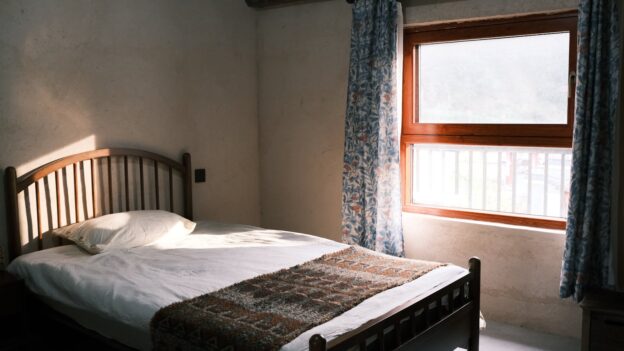
You lie in bed at 11 p.m. and the room is golden. You lie there at 1 a.m. and it’s still bright enough to read a book. Your mind doesn’t settle. Your thoughts loop. And because the world outside your window looks like 4 p.m., your nervous system agrees: it’s not time to rest.
The emotional volume gets turned up
Sleep disruption alone would be manageable. Blackout curtains exist. Eye masks are cheap. But the light does something else that curtains can’t fix: it amplifies everything you feel.
There’s a form of seasonal affective disorder that peaks not in winter but in summer, characterised by hyperarousal, agitation, insomnia, and a kind of emotional flooding that doesn’t look like the classic image of depression. Where winter SAD tends toward lethargy and withdrawal, summer SAD can manifest as restlessness, anxiety, and an inability to regulate your emotional responses. You feel too much, not too little.
I remember walking along the harbour in Nyhavn during my second June in Copenhagen, watching the light on the water at what should have been dusk, and feeling a wave of emotion so intense I had to sit down. It wasn’t sadness. It wasn’t joy exactly. It was something closer to being emotionally porous, as if the boundaries between my internal world and the external one had thinned.
This is the thing people don’t prepare for. The darkness asks you to endure. The light asks you to feel.
Winter gets the sympathy; summer gets the confusion
When you tell people you’re struggling in a Scandinavian winter, you get understanding. There are frameworks for it. Seasonal affective disorder is widely recognised as a form of depression that emerges in the darker months, affecting a significant portion of the population in affected climates, with symptoms like oversleeping, overeating, and social withdrawal. People know what this looks like. Doctors screen for it.
When you tell people you’re struggling in a Scandinavian summer, you get puzzled looks. Why would you be unhappy when the weather is beautiful? Why can’t you sleep when everyone else is at outdoor concerts and swimming in the lakes?
The social pressure compounds the physiological disruption. Nordic summers carry an almost manic cultural energy. Everyone is outside. Every park is full. The calendar fills with midsummer celebrations, outdoor dining, weekend trips to the coast. The collective mood is euphoric and urgent, because everyone knows the light is finite. There’s an unspoken imperative to maximise every hour.
If you can’t match that energy, if your body is running on fractured sleep and your emotions feel raw, the gap between how you feel and how you’re supposed to feel becomes its own source of distress.
The mindset research that reframed how I think about seasons
A researcher named Kari Leibowitz conducted a Fulbright-funded study in Tromsø that fundamentally changed how I understand seasonal experience. Working with psychologist Joar Vittersø at the University of Tromsø, she developed the Wintertime Mindset Scale, a 10-item questionnaire measuring whether people viewed winter as something to be enjoyed or endured.
What she found was striking. Residents of Tromsø had lower rates of wintertime depression than would be expected given their latitude. In fact, the prevalence of self-reported depression during winter in Tromsø, at 69°N, was the same as that of Montgomery County, Maryland, at 41°N. The difference wasn’t genetic or geographic. It was attitudinal.
Leibowitz’s work drew on research on subjective mindsets, including studies showing that people’s beliefs about stress can influence their physiological responses. The Tromsø study applied a similar principle to seasons: a positive wintertime mindset correlated with greater psychological well-being during the Polar Night.
This research gets cited constantly in articles about surviving Nordic winters. But almost nobody applies it to Nordic summers. And that’s the gap I keep coming back to.
Because if mindset shapes your experience of darkness, it also shapes your experience of relentless light. And the dominant mindset around Nordic summers is uncritical celebration, which leaves no room for the people who find June overwhelming.
What I’ve actually learned about surviving the light
Ten years into Nordic life, I’ve developed a relationship with the light that is less romantic and more practical than the one I imagined in 2016.
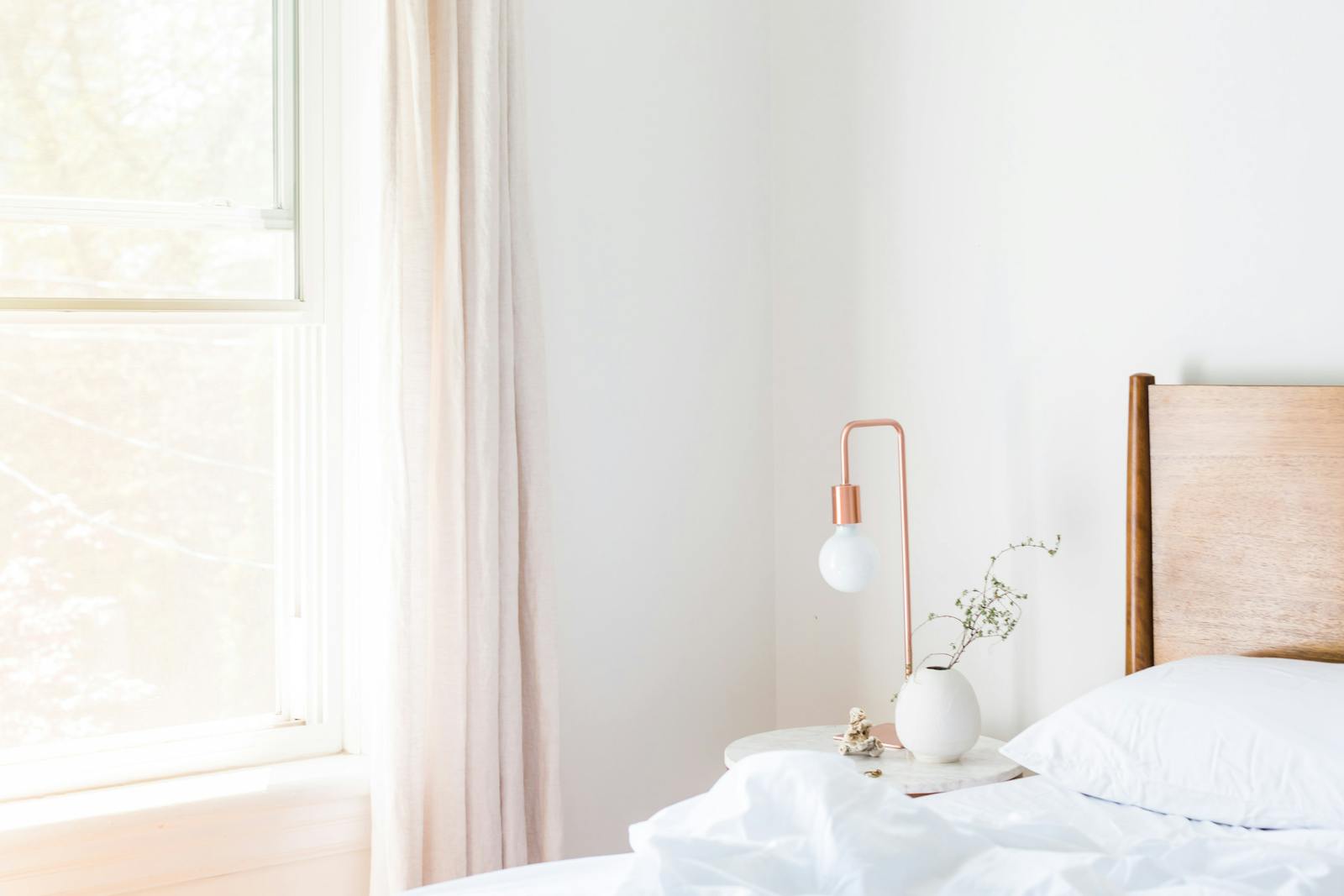
The first thing I learned is that blackout curtains are non-negotiable. Not the thin IKEA kind. The serious, rubber-backed, total-darkness kind that make your bedroom feel like a cave. Copenhagen apartments often come with roll-down external shutters, and if yours has them, use them. If not, invest in proper window coverings before your first June. This is not optional. This is infrastructure.
The second thing is that you need to create artificial dusk. Your body won’t produce melatonin if your environment is still flooded with light, so you have to manufacture the transition. I start dimming lights at 9 p.m. I put my phone away. I light candles, which feels ridiculous in June but works. A Danish friend once told me during a winter dinner that the candles weren’t about atmosphere; they were about survival. The same principle applies in reverse. In winter, candles replace the missing light. In summer, they replace the missing dark.
The third thing is harder to implement: you have to resist the social pressure to fill every light-filled hour with activity. Nordic summer operates on a scarcity mindset. The light is precious because it’s temporary, so everyone tries to consume as much of it as possible. But this creates a kind of collective hyperarousal that, for some people, makes the emotional flooding worse.
Learning to close the curtains at 8 p.m. on a beautiful June evening and read a book instead of going to yet another outdoor gathering was one of the most countercultural things I’ve done in Denmark. It felt like waste. It was self-preservation.
The darkness teaches you something the light doesn’t
I wrote about spending a winter alone in Copenhagen and how it taught me the difference between loneliness and solitude. What I didn’t fully articulate then is that winter also taught me containment. The darkness puts a lid on things. It gives you edges, boundaries, a natural end to the day. It says: enough. You can stop now.
The light offers no such mercy. It says: more. Stay awake. Feel this. Don’t waste it. The light turns every moment into an opportunity, and opportunities, when they never stop arriving, become a kind of tyranny.
This is the paradox that new arrivals don’t expect. The season everyone fears (winter) teaches you how to rest. The season everyone celebrates (summer) teaches you that rest has to be actively fought for.
Experts who study seasonal affective disorder stress the importance of routine and light management across all seasons, not only winter. The advice is the same in both extremes: maintain consistent sleep and wake times, manage your light exposure deliberately, and don’t let the external environment dictate your internal rhythm.
But nobody markets this advice for summer. The entire wellness-industrial complex around Nordic seasonal living is oriented toward winter coping. Summer is treated as the reward. The finish line. The thing you were waiting for.
And then it arrives, and you’re lying awake at 2 a.m. with the sun still up, feeling every unprocessed emotion from the past six months, wondering why the best season of the year feels like this.
So, to anyone considering a Nordic life
The darkness will not break you. I promise. You will buy candles. You will learn the word hygge (or koselig, or mys, depending on where you land) and discover that it describes something real: not a marketing concept but a genuine psychological strategy for communal warmth. You will gather with people you care about and eat heavy food and survive it. In my recent piece on ageing well in Scandinavia, I wrote about how the people who thrive here are the ones who learned to find interest in ordinary things. Winter trains you in this skill. You get very good at small pleasures.
The light is what you should prepare for. Not because it’s terrible (it’s genuinely magical to walk home at midnight in full daylight, and the first time you do it you will feel invincible), but because it asks more of you than you expect.
It asks you to feel without a dimmer switch. It asks you to stop without external cues telling you to stop. It asks you to set boundaries in the middle of collective euphoria, which is one of the most difficult social acts there is.
And it asks you to accept that the hardest part of living somewhere beautiful is not the obvious hardship everyone warned you about. It’s the gift nobody told you could be too much.
I’ve had a decade of Nordic Junes now. The light still gets me. Not in the devastating way it did the first year, but in the persistent way of something that requires active management. Every year I recalibrate. I adjust the curtains. I protect my sleep. I say no to some of the beautiful evenings so I can actually enjoy the rest. Mental health professionals emphasise that managing light exposure is not just a winter concern, and they’re right. It’s a year-round practice in the Nordics.
If you’re thinking about moving here, pack your blackout curtains. Not for December. For June.
Photo by Zhiqiang LI on Pexels