

Sweden offers a legal minimum of 25 paid vacation days, with many workers receiving upward of 40. New parents can take up to 480 days of leave at roughly 80% of their salary. According to analysis of global well-being data, Sweden has ranked consistently among the top happiest nations on Earth, scoring high on social support, work-life balance, and institutional trust. Those policy choices aren’t lifestyle perks. They’re structural decisions about what a society considers a reasonable life. And they produce something I didn’t fully understand until I spent years moving in and out of Swedish daily life: a population that has, in large numbers, figured out what enough looks like and organized their lives around protecting it.
The title of this piece says I moved to Sweden. That’s not quite right. I spent extended periods there through my wife’s academic work (she’s Finnish, which means our family life already involves shuttling between Danish and Finnish value systems), and through my own reporting on Nordic policy differences. But the encounters I had with Swedish colleagues, neighbors, and acquaintances over several years changed how I think about ambition, sufficiency, and what it means to build a life that actually works.
The Danish Boy Who Wanted More
I grew up in Aarhus, a city that likes to think of itself as Denmark’s second capital. My parents were middle-class in the Danish sense, which means they had enough and weren’t embarrassed about it, but also weren’t going to talk about wanting more. This is the shadow of Janteloven, the unwritten cultural code that discourages standing out or claiming you’re better than anyone else. I absorbed the egalitarian ethic without fully understanding it.
But I also absorbed something else: a restless feeling that the life I was supposed to want (stable job, reasonable hours, a good apartment, regular holidays) was somehow insufficient. I couldn’t have articulated what more I wanted. I just knew I wanted it. I wanted bigger stories. A faster career. Recognition. When I landed at Berlingske covering EU affairs, I felt like I’d arrived somewhere. The work was relentless, the news cycle punishing, the adrenaline constant.
It took me the better part of a decade to understand that the restlessness wasn’t ambition. It was anxiety dressed up in a suit.
What “Enough” Looks Like in Practice
The Swedish people I got to know didn’t talk about ambition much. This wasn’t because they lacked it. Several were accomplished academics, engineers, and civil servants. One ran a mid-sized furniture company. Another was a pediatric surgeon. These were not people drifting through life without direction.
What struck me was the absence of a particular kind of striving: the kind that treats your current life as a draft version of a better one. They were living their actual lives with apparent intention. The surgeon left work at a reasonable hour because she’d structured her schedule around her children’s routines — and no one in her department treated this as evidence of insufficient commitment. The furniture company owner turned down an expansion opportunity because, as he put it, it would have required him to travel in ways that conflicted with how he wanted to spend his weeks. He wasn’t apologetic about it. He’d done the math on what his life would become, and he’d said no.
But it was the smaller, less dramatic choices that accumulated into something I couldn’t stop noticing. A neighbor in Södermalm who left her office at 3:30 every day, not because she was part-time but because Swedish work culture genuinely permits the redistribution of hours. A colleague’s husband who spent every Friday afternoon baking with his daughters — not as a special occasion but as a fixed feature of his week, defended the way an American might defend a client meeting. A retired teacher who told me she’d turned down a principal’s position twenty years earlier because, she said, “I wanted to be excellent at one thing and present for the rest,” and who seemed, at seventy, to have no regrets about the trade.
This wasn’t laziness. It was precision. They had figured out what enough looked like, and they protected it.
Research on global well-being captures something about why this works at scale. Studies have identified six key factors driving life satisfaction: GDP per capita, social support in times of need, absence of corruption, healthy life expectancy, freedom to make life choices, and generosity. Sweden scores well on all six. But the one that kept pulling my attention was “freedom to make life choices.” That sounds abstract until you see what it produces: people who genuinely feel they have the space to choose enough over more.
The System That Makes Sufficiency Possible
I want to be clear about something. The Swedish approach to “enough” isn’t purely a cultural disposition. It’s underwritten by infrastructure. When the state guarantees healthcare, subsidizes childcare so that monthly fees are capped regardless of income, provides parental leave designed to be used by both parents, and ensures a pension system that functions, the cost of not constantly striving drops dramatically. You can afford to choose enough because the floor beneath you is solid.
The practical effects of this infrastructure are visible in ways that outsiders sometimes miss. Swedish parents aren’t heroically sacrificing careers to be present for their children — the system is designed so that presence doesn’t require sacrifice. The furniture company owner who turned down expansion wasn’t taking a financial risk; his family’s healthcare, his children’s education, his eventual pension were not contingent on maximizing revenue. The surgeon who left at a reasonable hour wasn’t making a brave stand; she was operating within norms her workplace actively supported.
Compare this with the United States, where recent analysis shows the country dropping in global happiness rankings, driven in part by political polarization and eroding trust. The American model optimizes for individual achievement and wealth accumulation. The Swedish model optimizes for something different: a baseline of security that allows people to define ambition on their own terms. Both produce outcomes. The outcomes just look very different.
I wrote recently about the specific calm that Scandinavian people carry, and how it’s less about inner peace than about a practiced discipline. The sufficiency ethic is related. It’s not that Swedish people have transcended desire. It’s that the structures around them make it easier to act on the desires that actually improve their lives rather than the ones that just generate motion.
The Janteloven Paradox
Here’s where it gets complicated. Growing up Danish, I know Janteloven from the inside. The cultural norm that says “don’t think you’re special” has real force in Scandinavian societies, and it produces genuine benefits: lower status anxiety, less conspicuous consumption, a shared sense that everyone’s contribution matters roughly equally. But it also creates pressure. The line between choosing enough because it’s wise and choosing enough because standing out feels socially dangerous is not always clear.
Some of the Swedes I spent time with acknowledged this tension. One academic friend said something I’ve thought about since: that the hardest part isn’t wanting less, it’s knowing whether you want less because you actually want less or because you’ve internalized the expectation that you should. She laughed when she said it. The question clearly didn’t have a clean answer.
My wife, who grew up Finnish, has a slightly different perspective on this. Finnish culture shares some of the same egalitarian instincts but expresses them differently. Finns tend to be more comfortable with silence, with solitude, with letting people sort themselves out. Swedes are more actively social about their sufficiency, more likely to frame it in collective terms. The Danes split the difference, performing equality while quietly competing over summer houses. (I say this with affection.)
Analysis of Finland’s strong performance in happiness rankings noted that Finns credit their satisfaction to connection with nature and strong living standards. But what I notice, living in a Danish-Finnish household, is that the Nordic cultures have each found slightly different ways to institutionalize the same basic insight: that enough, properly constructed, is actually better than more.

What I Couldn’t Stop Thinking About
There was a specific evening in Stockholm that crystallized something for me. I was having dinner with a couple, both in their early forties, both working professionals. Their apartment was modest by the standards of a two-income household. The dinner was simple. Wine, bread, fish, salad. Their kids were in bed.
We talked about work, but not in the way I was used to from my years in journalism. There was no underlying competition, no subtle positioning about who was busier or more important. They talked about what they were doing with evident interest but without the breathless urgency that I recognized from my own professional life. They had plans for the summer that involved a cabin and a lake. They seemed genuinely looking forward to it.
I walked home thinking: this is what it looks like when people have enough and know it.
Not in a self-satisfied way, as if they had all the answers. In a quiet, practical, slightly boring way that was more compelling than any high-achievement narrative I’d encountered. Their lives had a settled quality that I’d been conditioned to read as complacency but which, up close, looked more like competence. They had built exactly the life they wanted, and they were living in it rather than treating it as a waystation to something better.
Scandinavia Standard has written about the Scandinavian habit of walking in silence as a form of intimacy that survives when performance falls away. That evening in Stockholm had the same quality. When people aren’t performing ambition, what’s left is just life. And life, it turns out, can be quite good.
The Cracks Worth Mentioning
I’d be doing this topic a disservice if I pretended the Swedish model produces nothing but contented adults having simple dinners. Sweden has real problems. Housing shortages in Stockholm and Gothenburg are severe. Integration of immigrants has been uneven and politically fraught. Mental health issues among young Swedes are rising. The generous welfare state requires high tax rates that periodically produce political backlash.
And the sufficiency culture has its own failure modes. A society that encourages enough can sometimes discourage the kind of risk-taking that produces genuinely important breakthroughs. Sweden has produced global companies (Spotify, IKEA, Ericsson), but some Swedish entrepreneurs have told me they felt they had to leave, at least psychologically, to give themselves permission to aim big.
Analysis of the world’s happiest places tends to emphasize the shiny outcomes: beautiful cities, high trust, efficient public services. And those things are real. But the internal experience of living in a sufficiency culture is more mixed than outsiders usually appreciate. There’s freedom in it and there’s constraint in it, and the same person can feel both in the same week.
I know this because I’ve felt it myself. Living in Frederiksberg, raising two kids in a Danish-Finnish household, I’ve built something that looks a lot like “enough” from the outside. Most days, it feels like enough from the inside too. Some days it doesn’t. And the cultural expectation that it should can make those restless days lonelier than they need to be.
Why This Matters Beyond Scandinavia
Research on global well-being has found that the key factor separating happy nations from unhappy ones isn’t wealth. It’s trust. Studies have noted that people in high-trust societies are more resilient when crises hit, and that benevolence between citizens actually increased during COVID-19, remaining about 10% above pre-pandemic levels even as the initial spike faded.
Trust is what makes “enough” feel safe rather than precarious. If you trust that the healthcare system will catch you when you’re sick, that your job won’t disappear without support, that your neighbors would return your wallet if you dropped it (studies actually use this as a proxy for social trust), then choosing enough isn’t a gamble. It’s rational.
Recent rankings show Nordic countries continuing to dominate the top ten, with Finland, Denmark, Iceland, and Sweden all clustered at the top. But what’s interesting is that Costa Rica and Mexico have broken into the top ten as well, not through Swedish-style welfare states but through strong family networks and social connections. Mexico, with single-person households making up just 11% of the total compared to much higher rates in Europe, achieves something similar through different means: a web of relationships that makes sufficiency feel abundant.
This suggests that the specific Swedish version of “enough” isn’t the only path. But it is one that works, and it works because it’s backed by both culture and infrastructure in a way that’s genuinely hard to replicate without both.
What I Brought Home
I left journalism at 39 because the daily treadmill made it impossible to think deeply about how systems actually work. The news cycle rewards urgency and novelty. It punishes the slow, structural stories about why a society produces the outcomes it does. Writing about Nordic life from the outside of daily journalism has given me time to sit with questions that don’t resolve in a single news cycle.
The question of ambition and sufficiency is one of them. I’m 47 now. My kids are 8 and 11. The life I’ve built in Frederiksberg looks, from the outside, like a thoroughly Scandinavian exercise in enough: a stable family, work I find meaningful, a rhythm that makes room for the non-professional parts of life. And I’m aware that this is partly a choice and partly a product of living inside systems that make this choice viable.
What I took from those years of crossing into Swedish life was a recalibration. Not a conversion. I still feel the pull of wanting more, still catch myself treating busyness as evidence of worth. But I’ve seen enough people living well within their means, on their own terms, to know that the equation I absorbed growing up (ambition equals wanting more) is incomplete.
Ambition can also mean wanting exactly what you have, and building the discipline to protect it. That’s harder than it sounds, and it looks less impressive on paper. But the people I met in Sweden who had figured it out seemed, if not happier in some measurable sense, then more present. More available to the life actually happening around them.
I think about them more than I expected to. Which is, I suppose, how you know when something has quietly rearranged your sense of what a good life looks like.
There’s a related idea that Scandinavia Standard has explored about Scandinavian comfort: that the Nordic instinct isn’t to tell you everything will be fine, but to sit with you in the difficulty. The sufficiency ethic has a similar texture. It doesn’t promise that enough will feel thrilling. It promises that enough, properly built, will hold.
Last month, my daughter asked me what I wanted to be when I grew up. She’s eight, and she asks this kind of thing without irony. I started to give some deflecting adult answer, and then I stopped. I told her I wanted to be someone who paid attention to his life while it was happening. She looked at me like that was a strange ambition. Maybe it is. But it’s the one I brought home from Sweden, and it’s the one I’m trying, imperfectly and with recurring lapses into old habits, to keep.
So far, it has held. Not perfectly. Not without days when the old restlessness surfaces and enough feels like a word I’m hiding behind. But more often than not, it holds. And the people I met in Stockholm, in their modest apartments with their simple dinners, were right about something I couldn’t have learned from a ranking or a policy paper: that a life built around enough doesn’t feel like settling. It feels like arriving.
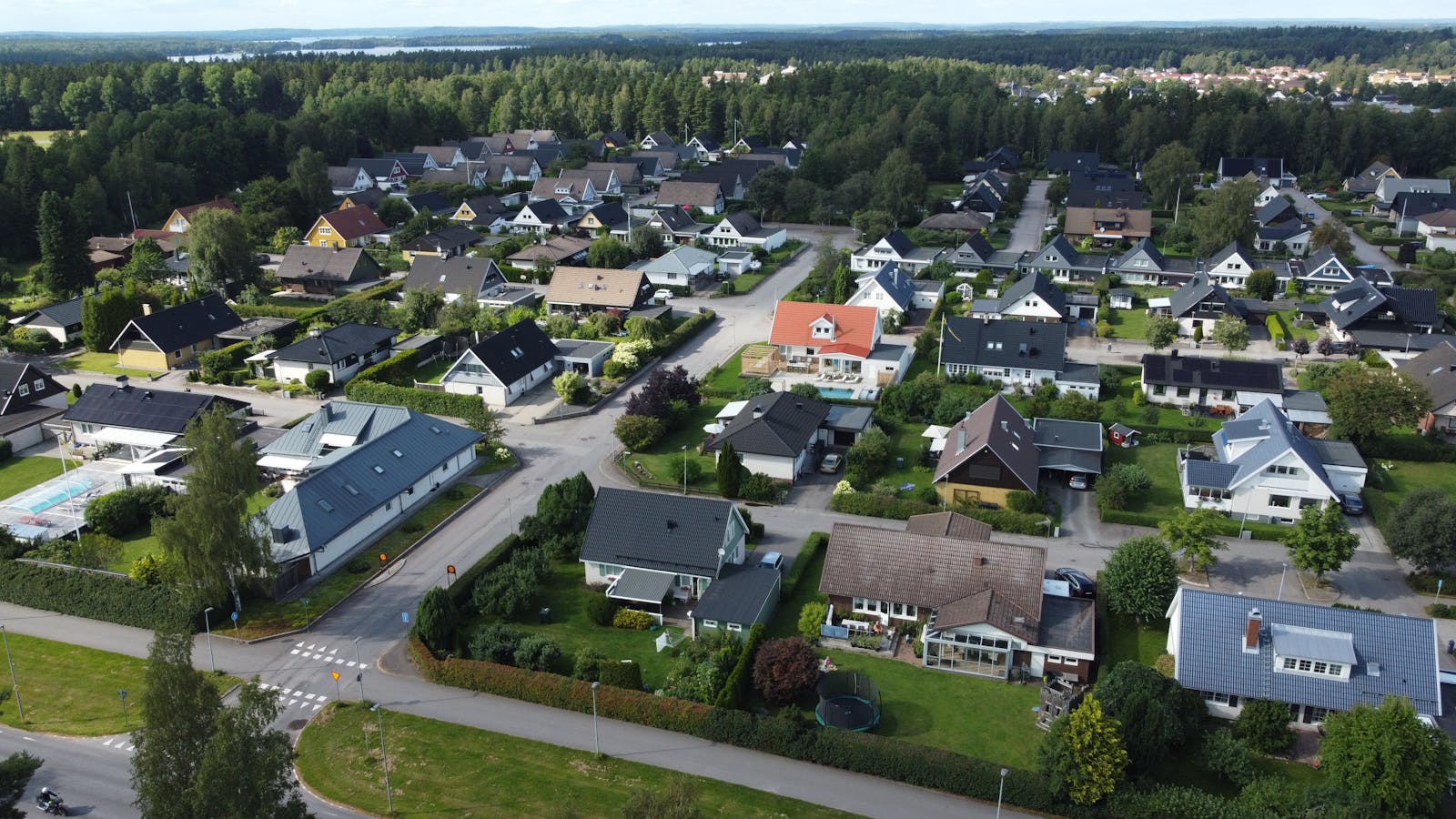
Photo by Klara Foldys on Pexels