

For most of my life, I believed that good hospitality meant filling the silence. Growing up in a Swedish household in Gothenburg, welcoming a guest meant offering coffee before they’d even removed their shoes, asking about their journey, steering them to the best seat, making sure no moment passed without evidence that you were glad they came. I carried that instinct with me like a reflex. Then I spent enough time in Denmark to realize how wrong I’d been, or at least how incomplete my understanding was.
The shift didn’t happen overnight. It came gradually, through small moments of confusion that eventually assembled into clarity. A Danish friend who didn’t greet me at the door when I arrived at her apartment but instead called out from the kitchen that I should come in when I was ready. A host at a dinner party in Copenhagen who showed me to my room and then simply left, no small talk, no itinerary, no hovering. At first I thought these were lapses. Later I understood they were choices.
The Space Before the Welcome
There’s a particular quality to arriving somewhere new. You’re tired, possibly disoriented, carrying the residue of whatever journey brought you there. The conventional wisdom in most hospitality traditions is to immediately counteract that disorientation with warmth, attention, and activity. Make the guest forget they’re a guest. Fill the space so they don’t have to.
Danish hospitality, at least as I’ve experienced it in private homes and smaller guesthouses, often works in the opposite direction. It gives you the space to arrive on your own terms. You’re shown where things are. Then you’re left alone.
This isn’t coldness. It’s a kind of trust. The host trusts that you know what you need better than they do, and that the most generous thing they can offer in those first minutes is the absence of performance, both yours and theirs.
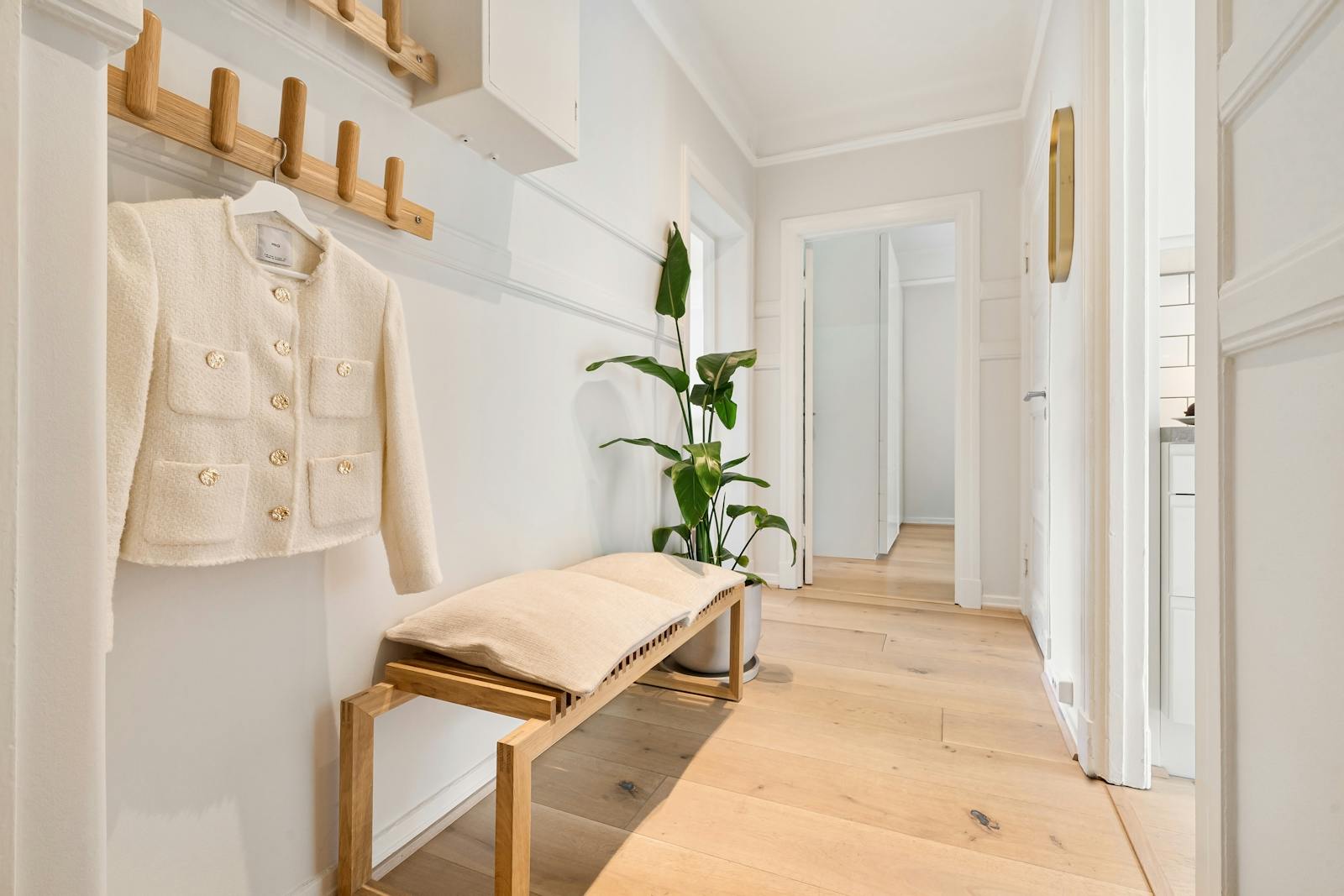
I came to think of it as the space before the welcome. The pause that lets you actually land before anyone asks anything of you, even if what they’re asking is just that you smile and say you’re fine.
What Hygge Actually Requires
Most people outside Scandinavia associate Danish culture with hygge: candles, blankets, cinnamon rolls, togetherness. And that’s all real. But hygge has a precondition that rarely gets mentioned. It requires that everyone in the room actually wants to be there.
You can’t manufacture that willingness by smothering someone with attention the moment they walk through the door. Genuine coziness requires consent, a mutual settling in. And the Danish approach to initial distance is, paradoxically, what makes the later closeness possible.
I think about this often when I consider the difference between Swedish and Danish approaches. Sweden has its own version of social restraint, of course. But Swedish hospitality can still lean toward the anxious side, the compulsive offering of more coffee, more food, more reassurance that you’re welcome. Denmark, in my experience, is more willing to let the silence do its work.
The Quiet Intelligence of Leaving People Alone
When I moved from Gothenburg to Stockholm years ago, and later spent three years in Umeå, I learned a great deal about solitude. Northern Sweden in winter is an education in the difference between being alone and being lonely. Those years gave me something I still carry: a deep appreciation for what silence can hold.
But even with that appreciation, I had to unlearn my impulse to fill space when someone arrived. That impulse isn’t purely generous. It’s partly anxious. We hover because we’re worried. Worried the guest won’t feel welcome, worried we’re not doing enough, worried about the gap between their expectation and our offering.
The mechanism is simple but easy to overlook. When your host isn’t performing, you don’t have to perform either. The energy in the room changes. You stop being someone who must respond and become someone who is simply present.
This is what I experienced in Denmark. The hosts who left me alone weren’t disengaged. They were giving me permission to be ungathered for a few minutes, to exist without an audience.
Hospitality as Negative Space
In visual art, negative space is the area around and between subjects. It’s not emptiness. It’s what gives the subject its shape. The same principle operates in social interaction.
The Danish approach to hosting someone, leaving them room to arrive, not narrating every moment, trusting them to ask for what they need, creates a form of negative space in which the guest can actually appear as themselves. Not as a performer of gratitude. Not as someone who has to match your energy. Just as a person who has traveled and needs a minute.
I encountered a related idea in research on workplace interventions and subjective well-being, where the most effective approaches for improving how people feel often weren’t about adding more activity or stimulation. Psychological interventions like mindfulness, which are fundamentally about creating space rather than filling it, showed significantly positive effects on well-being. The parallel isn’t perfect, but the principle resonates: sometimes less input creates more comfort.
What Lies Beneath the Swedish Reflex
I don’t want to romanticize the Danish approach or flatten the Swedish one. Both carry costs. The Swedish instinct to fuss over a guest comes from real warmth, real care. My mother would never have considered leaving a visitor alone in their room for even five minutes. That impulse was love, not performance.
But love can be anxious. And anxious love can accidentally center the giver rather than the receiver. When I look back at how I used to host people, I can see how much of my attentiveness was actually about managing my own discomfort with the unknown. What if they need something? What if they think I’m rude? What if the silence gets awkward?
After my divorce at 38, I spent about eighteen months working through the aftermath, reading obsessively, beginning to write about what I was experiencing. During that time I had very few guests, and when someone did visit, I found I didn’t have the energy for the old performance. I’d show them where the towels were and retreat. And the strange thing was, those visits felt closer. More honest. The absence of my usual hovering created room for something quieter and more real.
That experience echoed what I’d noticed in Denmark but hadn’t fully understood until I lived it from the inside.
Walking in Silence, Arriving in Silence
There’s a broader pattern here, one that runs through Nordic culture like a thread. The Scandinavian habit of walking in silence with someone you love is not the absence of connection. It’s connection stripped of performance. The same principle applies to arrival.
When you don’t fill the first ten minutes with chatter, you’re communicating something powerful: I trust you. I trust that our connection doesn’t depend on constant maintenance. I trust that you’ll tell me what you need.
This connects, too, to what Scandinavia Standard has explored about the difference between loneliness and solitude. A guest who is left alone for a few minutes isn’t being abandoned. They’re being given solitude, which is a gift, not a punishment. The distinction matters enormously.
People moving to Scandinavia often have to unlearn a whole set of assumptions about what care looks like, what ambition looks like, what friendship looks like. Hospitality is part of that unlearning. You arrive expecting to be greeted with energy and warmth. You’re greeted with space and calm. The warmth comes later, when you’re actually ready to receive it.
Lagom in the Hallway
Living in Umeå for three years taught me what lagom actually feels like from the inside, not as a concept but as a daily practice. The right amount. Not too much, not too little. Applied to everything from how much food you take at a shared meal to how long you talk at a party.
Applied to hospitality, lagom means giving a guest exactly as much attention as they need and no more. It means reading the room instead of defaulting to maximum effort. It means that sometimes the most generous thing you can do is hand someone a key and close the door behind you.
I walk specific routes through Stockholm when I need to think, and on one of those walks last autumn, I found myself turning this over. Why had I spent so many years equating hospitality with visible effort? Why did stepping back feel so counterintuitive?
The answer, I think, is that most of us were taught that caring is an active verb. You do things. You say things. You fill things. The Danish model suggests that caring can also be a receptive verb. You notice. You wait. You make room.
Both are real. But we tend to overvalue the first and undervalue the second.
The Welcome That Waits
I’m not arguing that all hospitality should look Danish, or that Swedish warmth is somehow lesser. Cultures develop their social practices for deep reasons, and what works in Copenhagen may not translate directly to a village in southern Italy or a home in Osaka.
But the specific insight I took from Denmark is portable. Real hospitality sometimes means understanding that your guest’s first need is not your attention. Their first need is a moment to be nobody, before they become your guest.
When you give someone that moment, you’re telling them that the welcome isn’t a performance they need to match. It’s a state that will unfold at its own pace. The coffee will come. The conversation will come. The hygge will come. But first: the space.
I host differently now. When someone arrives at my apartment in Södermalm, I show them the room, point out the kitchen, tell them to take their time. Then I leave. Not permanently. Not coldly. Just for a few minutes. Just enough for them to exhale without an audience.
Almost always, they emerge lighter. The conversation that follows is better because it wasn’t forced. The evening that unfolds is warmer because it wasn’t manufactured.
The best welcome I ever received was in a small apartment in Nørrebro, a few winters ago. My host, a woman I’d known only through a mutual friend, said almost nothing when I arrived. She put a hand briefly on my shoulder, pointed to a door, and went back to what she was doing. Behind the door was a bed with clean sheets, a glass of water on the nightstand, and a window looking out onto a quiet street where a cyclist passed slowly through the rain.
I sat on the edge of the bed for ten minutes doing nothing at all. I could hear her moving in the kitchen, the faint clatter of plates, a radio turned low. There was no urgency in the sounds. No performance. Just someone making space for me to land.
When I came out, she was setting the table. Two cups, a pot of coffee, a plate of rugbrød with cheese. She looked up and smiled, not the eager smile of someone who’d been waiting, but the calm smile of someone who knew I’d come when I was ready. We sat down. The conversation came easily because nothing had been forced before it.
That evening remains, for me, the clearest expression of what Danish hospitality actually is. The hospitality hadn’t started when I walked through the door. It started when the door closed behind me.
Photo by hi room on Pexels