

It was 10pm on a Friday, maybe three months after I’d moved to Copenhagen from Melbourne, and my partner put on his running shoes and headed out the door. Alone. No invitation, no explanation, no apology. He kissed me on the forehead and left.
I stood in the kitchen of his Vesterbro apartment and felt something I couldn’t name for another two years: the specific loneliness of being loved by someone who doesn’t need you.
Nobody tells you that the hardest part of a Scandinavian relationship is that your partner will expect you to be a whole person on your own. Not because they don’t love you, because they do. The expectation goes something like this: you are a full person. You were a full person before we met. You will continue to be a full person while we are together. And the moment you start outsourcing your sense of self to this relationship is the moment something has gone wrong.
This sounds beautiful on paper. It is much harder in practice.
The cultural architecture of separateness
Scandinavian relationships operate inside a cultural framework where individual modesty masks genuine self-possession. People here grow up with a strong social safety net, accessible childcare, and a norm of splitting everything from restaurant bills to parental leave. This produces adults who are not looking for someone to complete them. They’re already built.
When your Danish or Swedish or Norwegian partner tells you they need a Saturday afternoon to themselves, they’re not pulling away. They’re maintaining the architecture of the person you fell in love with. The distinction matters enormously, but it can take years to feel it rather than just know it.
Scandinavians seem to absorb this idea through the culture itself. For the rest of us, it arrives as a lesson.
What it looks like when nobody rescues you
My partner is an architect. We met at a conference where I was covering design and he was presenting about public space. Those early conversations had a quality I later recognized as distinctly Scandinavian: he was interested in me, genuinely, but he was not trying to absorb me. He asked what I thought. He disagreed with some of it. He went home to his own apartment afterward.
Coming from a place where romantic interest sometimes announces itself through constant availability, this was disorienting. Where was the flood of texts? Where was the impulse to spend every waking moment together? He liked me. He also had a life.
I later learned that research on psychological needs satisfaction describes the interplay between autonomy and relatedness. These aren’t opposites. They’re both basic psychological needs. You can feel connected to someone precisely because they support your independence, and that support generates trust, not distance.
But in the moment, at 28, recently arrived in a new country, what I felt was: why doesn’t he need me more?
The discomfort of being expected to cope
The thing about Scandinavian relationships that nobody warns you about is the emotional self-sufficiency expectation. Your partner will sit with you in difficulty, yes. Scandinavians don’t comfort you by telling you everything will be fine. They stay present while you feel bad. But they will not manage your feelings for you. They will not reorganize their life around your anxiety. They will not perform the emotional labor of making you feel okay when you are capable of getting there yourself.
This can feel cold if you’re used to a relationship model where love means absorbing your partner’s emotional state. In many cultures, a good partner anticipates your distress and preemptively soothes it. In Scandinavia, a good partner trusts that you can handle your own distress and is there if you ask.
The distinction is respect. The feeling, especially at first, is loneliness.
The critical difference in Scandinavian adult partnerships is that you’re expected to meet some of those needs yourself. You don’t just get to feel things and expect your partner to decode them. The responsibility is shared. And the sharing starts with knowing what you actually need.
The household labor connection
I wrote recently about how Scandinavian couples split household labor not because of ideology but because nobody here finds helplessness attractive. That piece touched on something I keep circling back to: the Scandinavian model of partnership is built on a deep discomfort with dependency.
Dependency of any kind. Emotional, financial, domestic. If you can’t cook your own dinner, do your own laundry, manage your own calendar, and process your own feelings, you are not yet ready to be in a relationship here. The relationship is something you bring your whole, functioning self to. It is not a mechanism for completing an incomplete person.
This applies to both partners. Danish men iron their own shirts. Swedish women don’t perform gratitude for basic competence. The bar is: be an adult. And the bar is non-negotiable.
For someone raised in a culture where interdependence is the love language, where needing each other IS the point, this can feel like your partner is keeping one foot out the door. They’re not. They just don’t believe that needing someone is the same as loving them.
What autonomy actually costs you
The cost is this: you can’t hide.
In a relationship that demands you remain a whole person, you have to actually be a whole person. You have to have your own interests, your own friends, your own interior life. You have to know what you think about things. You have to be willing to disagree with your partner and not treat disagreement as a crisis.
My partner and I disagree regularly. He sometimes feels my journalism is too critical of the design industry; I sometimes find his projects too accommodating of corporate clients. These conversations sharpen both of us. They don’t threaten the relationship because the relationship was never built on agreement. It was built on two people who find each other interesting.
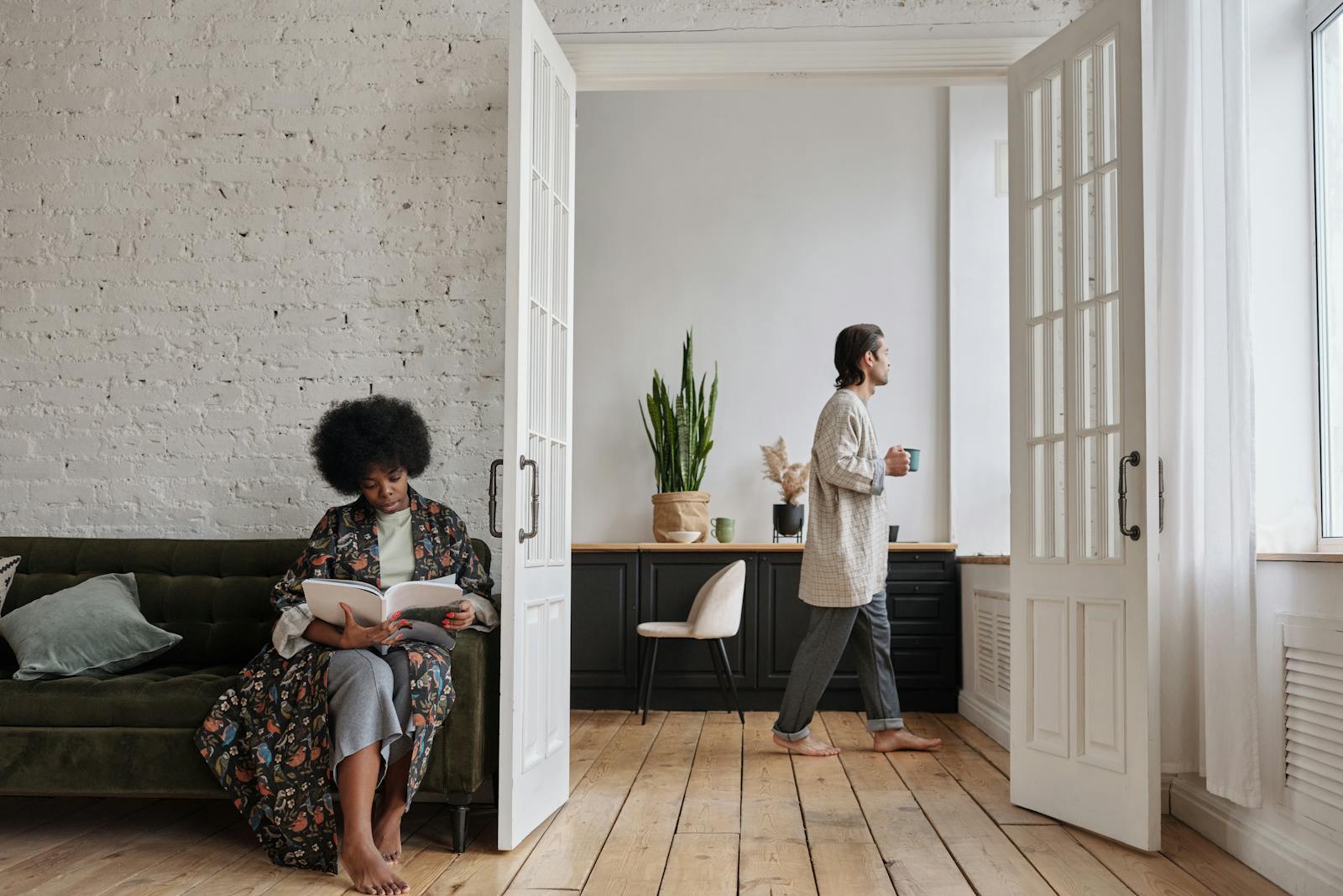
When that’s the foundation, there’s nowhere to collapse into. You can’t become the person who just agrees with everything. You can’t melt into your partner’s identity and call it love. You have to keep showing up as yourself, and yourself has to be someone worth showing up as.
Writers have noted the importance of not letting love take over your entire identity, of maintaining the ability to make independent decisions even inside deep commitment. The Scandinavian version of this principle is less advice and more infrastructure. It’s how relationships here are built from the ground up.
The part that surprises you
After ten years in Copenhagen, what surprises me most is that the Scandinavian model of love, the one that felt so withholding at first, turned out to be the most generous thing anyone has offered me.
Because when someone expects you to be a whole person, they’re telling you they believe you can be. They’re not hovering. They’re not filling your silences. They’re not performing concern as a substitute for actual respect. They are looking at you and seeing an equal, a person capable of managing their own life, and choosing to build something alongside that person rather than in place of that person.
I wrote yesterday about the version of grief in Nordic culture where everything is objectively fine and you still feel like something is missing. The relationship version of that is the early phase where your Scandinavian partner loves you clearly, treats you well, and still makes you feel like you’re missing the all-consuming intensity you grew up believing love was supposed to be.
That intensity isn’t missing. It’s just distributed differently. It lives in the choice to come home every evening to someone you don’t need but actively want. It lives in the quiet confidence of two people who could be alone and are choosing not to be. It lives in the trust that your partner will still be a full person tomorrow, and that this is the entire point.
The hardest part of a Scandinavian relationship is becoming someone who doesn’t need a relationship to feel whole. The reward is that you get to have one anyway, and it’s built on something more durable than need.
It’s built on choice. Every single day.
Photo by Kaique Rocha on Pexels