

The bilingual brain is not a monolingual brain with extra vocabulary bolted on. Research in cultural psychology has consistently shown that language and identity are so tightly linked that acquiring a new language in adulthood doesn’t simply add a communication tool; it opens a second operating system for the self. People who have done it describe something more disorienting than learning grammar. They describe becoming someone slightly different, someone who was always there but had no medium through which to appear.
I know this because it happened to me.

The person Danish made
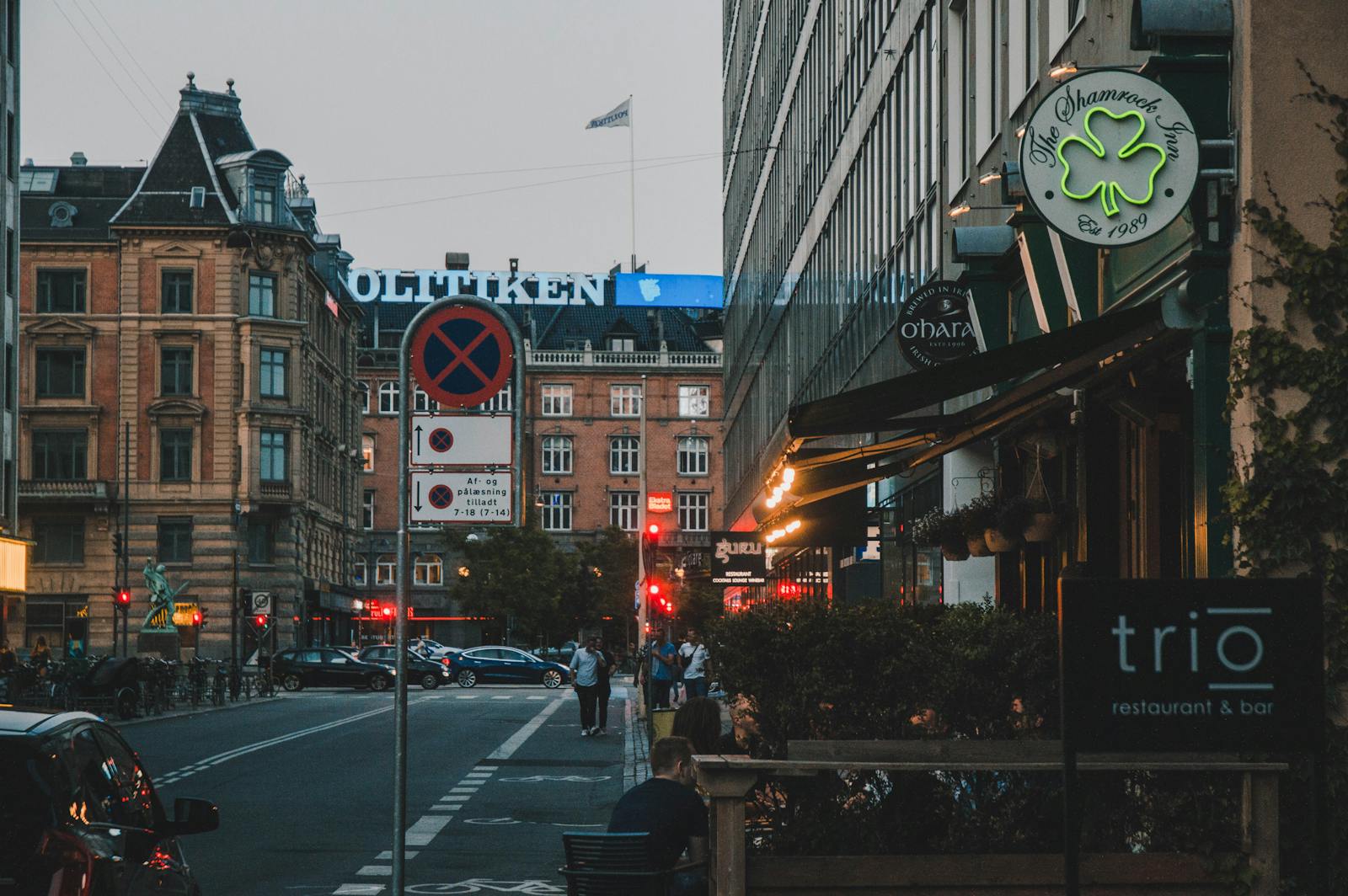
When I moved to Copenhagen from Melbourne in 2016, I spoke English and only English. Australian English, specifically, which is its own kind of personality: blunt, self-deprecating, structurally allergic to silence. Danish turned out to be, in almost every dimension, the opposite register.
Learning it didn’t feel like memorising a phrasebook. It felt like being slowly rewritten. Danish compresses emotion. It favours understatement so aggressively that sincerity often sounds like indifference to untrained ears. I found myself, in Danish, saying less and meaning more. I found myself comfortable with pauses I would have filled in English. A friend from university in Melbourne, who moved back there a few years ago, once asked me on a video call whether I now felt Danish. I realized I don’t feel purely anything anymore. I feel Copenhagen, which is different from feeling Danish or feeling Australian.
That distinction matters, and it’s central to everything that follows. Because the self that Danish gave me permission to be isn’t a Danish self. It’s not the self of someone raised in Jutland or rooted in generations of Scandinavian tradition. It’s a Copenhagen self: shaped by the language but also by the specific, cosmopolitan, slightly ironic context in which I learned it. A city where half the population code-switches between Danish and English before lunch. Where the language arrives already mixed with the experience of being an outsider who chose to stay. The identity I found through Danish could only have emerged here, in this particular harbour, among these particular contradictions.
What the research actually says about language and identity
Cognitive scientists have argued that language shapes thought in measurable ways. Research in the field of linguistic relativity suggests that the language you speak at any given moment changes how you perceive time, colour, and even blame. It’s not just poetic metaphor. The perceptual shift is real.
Two studies illustrate this especially well. A 2021 study published in Frontiers in Psychology examined how emotional attachment to a heritage language shapes identity among Malaysian Chinese learners of Mandarin. The researchers found that language wasn’t just a communication channel; it was an identity anchor. Learners described feeling like different people depending on which language they were using, and the emotional weight each language carried was distinct. Separately, research on emotional resonance and language identity among foreign language learners has found that learners don’t just adopt new vocabulary; they develop new emotional associations, new social instincts, new ways of positioning themselves relative to other people. The second language becomes a space where different rules apply, and in that space, suppressed or undiscovered parts of the self can surface.
This tracks with what I hear from nearly every expat in Scandinavia who pushes past the tourist-Danish of “tak” and “undskyld” and enters the deeper waters where personality lives. They don’t just speak differently. They are different. Quieter, sometimes. More precise. Occasionally funnier, in a drier, stranger register they didn’t know they had. But the person they become isn’t generically Danish. It’s shaped by where they live, who they talk to, what version of the language reaches them. The expat learning Danish in Aarhus is becoming a different person than the one learning it in Nørrebro. Language gives you a new self, but place gives that self its particular features.
Scandinavia Standard has explored what it’s like to speak Danish as a non-native before, and the recurring theme is always the same: the language resists direct translation of your existing personality. You can’t just port yourself across. You have to rebuild.
The gap between the word and the feeling
There’s a concept in psycholinguistics sometimes called “language-dependent recall.” Studies suggest that memories encoded in one language are more easily accessed when you’re operating in that language. It means your Danish memories feel most vivid when you’re thinking in Danish. Your English memories belong, emotionally, to English.
I’ve experienced this in small ways that still catch me off guard. Conversations I’ve had in Danish about winter, about darkness, about the particular texture of February in Scandinavia, feel inaccessible when I try to recall them in English. The words translate fine. The feeling doesn’t.
A friend once came over for dinner during a Copenhagen winter, and at some point during the evening, the conversation shifted entirely into Danish. The candles were lit. There was wine. No one was performing hygge. We were just surviving the dark months together, which is what hygge actually is when you strip away the marketing: psychological survival dressed up as cosiness. And I realized that the version of me sitting in that room, speaking Danish, laughing at jokes that don’t translate, was a version that Melbourne never knew.
She wasn’t better. She was just different. And she had simply never had the material to exist.
Why adult language learning is a different animal
Children absorb languages the way they absorb everything: without self-consciousness, without a pre-existing identity to protect. Adults don’t have that luxury. When you learn a second language after your personality is already formed, every new word, every grammatical structure, every idiom rubs up against who you already are.
This friction is what makes adult language acquisition so identity-altering. You aren’t a blank slate being written on. You’re an existing text being translated, and the translation is never one-to-one.
I wrote recently about the unspoken rules of Scandinavian workplaces, and one of the things that came up repeatedly was how international professionals feel like different people at work when they switch to Danish or Swedish. The flat hierarchy, the indirect communication style, the aversion to self-promotion: these aren’t just cultural norms. They’re linguistic norms. The language itself encodes them. You can’t separate what you’re saying from how the language asks you to say it.
And this is where the Copenhagen distinction resurfaces. The Danish these professionals learn at work in Copenhagen is inflected with the city’s particular blend of informality and precision. It’s not the Danish of political speeches or rural idiom. It’s a working language shaped by a city that runs on consensus and quiet competence. The self you build in that language carries those qualities, whether you intended it or not.
The bilingual personality is not a myth
Psychologists have documented the tendency of bilingual individuals to shift personality traits, values, and even emotional responses depending on which language is active. Bilinguals often report feeling more assertive in one language, more tender in another, more sarcastic in a third.
This isn’t inconsistency. It’s range.
I think about this often in relation to Danish. There are things I can say in Danish that I cannot say in English, not because English lacks the vocabulary, but because the social contract of Australian English wouldn’t permit the tone. Danish lets me be earnest without irony. It lets me say something direct and warm without the Australian reflex to undercut it with a joke. That permission changed me.
My mother, who has a design background and strong opinions about most things, once told me my journalism was too skeptical. I explained that skepticism is exactly what good writing needs. We both understood where the other was coming from. But I sometimes wonder whether she’d find my Danish writing less skeptical. I’m gentler in Danish. More willing to sit with something before I interrogate it.
What gets lost when we talk about “fluency”
Fluency is usually measured in functional terms: can you order food, hold a meeting, read the news? But the real fluency, the kind that changes people, is emotional. It’s the point where you stop translating from your first language and start generating thought directly in the second. Where you dream in it. Where you argue in it, not because you’re practising but because the anger arrived in that language first.
A 2022 study in Frontiers in Psychology examined how word learning reshapes non-native speech perception, finding that the process of acquiring new vocabulary physically alters how learners hear sounds. The ear is literally retrained. Perception changes. This is happening at the neurological level. The new language isn’t sitting on top of the old one. It’s rewiring the hardware.
Which is why, when people who’ve gone through this describe it, they don’t talk about conjugation tables. They talk about becoming. They talk about discovering a self that had been waiting.
The concept of discovery is doing important work here. Because most of these people will tell you it didn’t feel like they created the new version. It felt like it was already there. The second language just cleared a path to it.
The honesty problem in language research
A caveat. Much of what we know about bilingualism and identity comes from the social sciences, and the social sciences have a replication problem. A massive seven-year project called SCORE, involving 865 researchers and 3,900 social-science papers, found that only about 49% of studies could be replicated. Tim Errington, head of research at the Center for Open Science, has described each individual study as part of a larger puzzle rather than settled truth.
This doesn’t mean the research on bilingual identity is wrong. It means we should hold it honestly: as strong, recurring observations supported by decades of self-report data and some neuroimaging, but not as mechanistic certainty. When bilingual people say they feel like different people in different languages, the subjective experience is real. The precise cognitive explanation for why is still being worked out.
Economist Abel Brodeur, founder of the Institute for Replication at the University of Ottawa, has noted that more recent studies show better reproducibility norms, with 85% of articles from 2022-23 proving computationally reproducible. Things are improving. But the honest position is: the phenomenon is real, the mechanism is debated, and any writer who presents the science as settled is selling you something.
Permission structures
I keep coming back to the word “permission” in the title of this piece, because I think it’s the most precise word for what actually happens.
In your first language, you are a known quantity. Your friends, your family, your colleagues have a model of who you are, and you, in turn, have a model of who you’re expected to be. The social architecture of your native language holds you in place. It’s not a prison, but it’s a structure, and structures constrain.
A second language demolishes that structure and replaces it with nothing. For a while, you are no one. You have no reputation, no verbal habits, no established tone. This is terrifying at first. And then it becomes the most liberating thing you’ve ever experienced.
Because in that gap, the gap where you used to be, something new can grow.
I wrote recently about the silence that people find in Scandinavia, the kind nobody expects them to fill. Learning a Scandinavian language as an adult is like that. The silence isn’t empty. It’s making room.
The version that was waiting
The people I know who’ve crossed this threshold describe a strangely consistent set of feelings. The initial humiliation of being reduced to a child’s vocabulary. The slow, grinding middle period where you can function but not sparkle. And then, eventually, the moment where something clicks and you realize you’re not translating anymore. You’re just talking. And the person talking isn’t quite the person who started the process.
They’re not a better person, usually. Just a wider one. Someone with more room.
A Danish colleague once told me that the reason Danes find it hard to compliment people directly is that Danish doesn’t reward emotional excess. The language is built for restraint. It rewards precision and quiet conviction. I’ve absorbed some of that. The Australian in me still wants to express enthusiasm more openly, but the Copenhagen version of me has learned that quieter affirmation, said with the right eye contact at the right moment, lands harder.
Both responses are me. Neither is more authentic than the other.
This is the thing that people who’ve never been bilingual often struggle to understand. They assume one version must be the real one and the other a performance. But the experience from the inside is the opposite: both are real. The second one just needed a different language to find its shape.
You didn’t learn it. You let it out.
And once it exists, you can’t put it back. The person Danish made me into sits alongside the person English made me into, and they have different instincts, different silences, different senses of humour. They share a body. They don’t always agree. But both of them are home.
I don’t feel Danish. I’ve lived here nearly a decade and I probably never will. What I feel is something the research doesn’t have a clean term for yet: the particular identity that forms when a specific person meets a specific language in a specific place. Not Danish, not Australian, but Copenhagen — a self that could only have been assembled here, from these materials, in this light. The title of this piece says people discover a version of themselves that never had permission to exist. What it doesn’t say is that permission isn’t granted by the language alone. It’s granted by the whole context: the city, the dark winters, the candles, the colleagues who let you fumble through a meeting without switching to English, the friend who laughed at your accent and then kept talking to you in Danish anyway.
The language is the door. But the life you build around it is the room. And the person you become inside that room is not a translation of anyone. She is original. She was just waiting for a language she didn’t know she needed, in a city she hadn’t found yet, to finally have the words.
Photo by CARLOS ESPINOZA on Pexels