
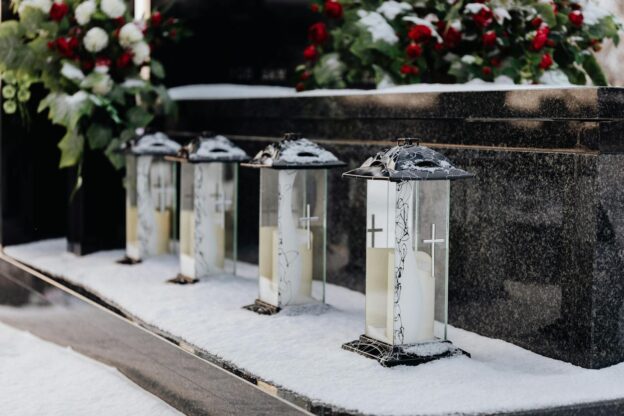
When my father had a health scare a few years ago, my Australian relatives called to check on me every day for weeks. My Danish friends sent a single message, then waited. Some brought food to my door without knocking. One left a candle burning on the stairwell outside my apartment. Nobody asked me how I was feeling. Nobody needed to.
I spent the weeks after wondering if something was wrong with the people around me, or if something was wrong with me for not finding their response cold. It took longer than I’d like to admit to understand that I was witnessing worry and care expressed in a completely different register: one that doesn’t perform emotion for an audience, doesn’t follow a prescribed timeline, and doesn’t ask you to narrate your pain before you’ve had a chance to sit with it.
That candle wasn’t a gesture instead of talking. It was a gesture instead of asking me to perform my fear for someone else’s comfort. And the distinction between those two things is, I think, the entire point.
The grief scripts we inherit
Every culture hands you a script for mourning. Some scripts are loud, communal, physically expressive. Others are restrained, internal, anchored in routine and proximity rather than catharsis. The problem arises when we mistake one script for the absence of feeling — when we confuse restraint with not caring.
Grief researchers have increasingly pushed back against the idea that mourning follows universal stages. As scholars writing in The Conversation have argued, grief doesn’t arrive in neat phases or follow a checklist. Like love, it endures, mutates, resurfaces. The stage model was never meant to be prescriptive. But it became the dominant cultural expectation in English-speaking countries: denial, anger, bargaining, depression, acceptance, in that order, please.
Scandinavians, broadly, never adopted that framework with the same enthusiasm. The cultural infrastructure for grief here looks different. It’s less about moving through stages and more about continuing to live alongside loss, without a public performance of progress. The absence of performance is not the absence of feeling. It’s a fundamentally different belief about what feeling requires.
What restraint actually looks like
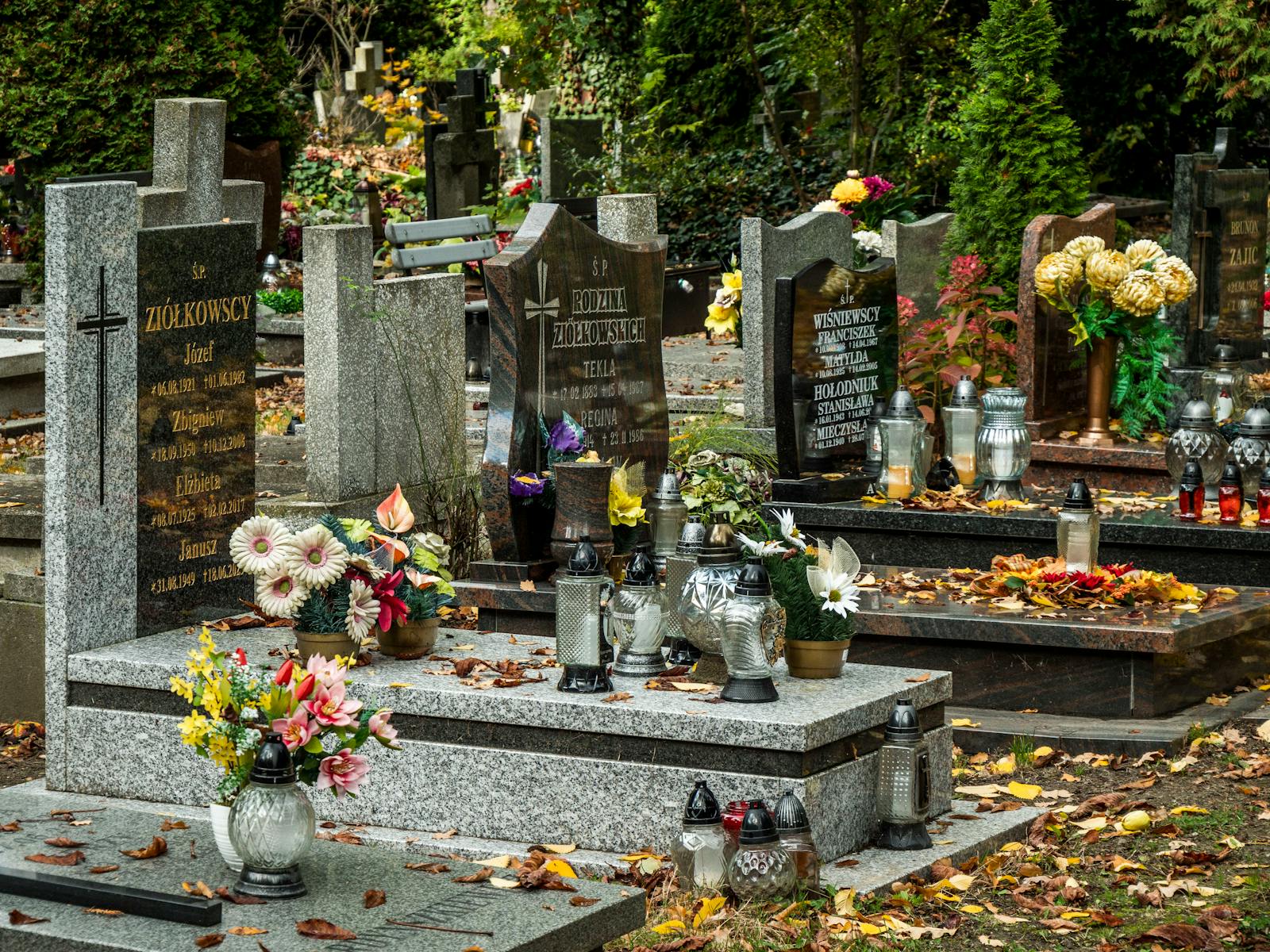
The word most people reach for when describing Nordic emotional expression is “reserved.” It’s accurate in the way that calling the sea “wet” is accurate. Technically correct. Entirely insufficient.
Danish restraint in grief isn’t suppression. It’s a different theory of what emotional expression is for. In cultures where grief is publicly displayed, the display itself serves a social function: it communicates the depth of your loss to others, it invites support, it signals that you are behaving appropriately as a mourner. The audience matters.
In Denmark, the audience is beside the point. Grief is understood as something happening inside you, and the people who care about you trust that it’s happening without needing proof. That trust — the willingness to believe in someone’s interior life without demanding evidence — is itself a form of profound care. Maybe the most generous form. It says: I know you’re in pain. I don’t need you to show me.
This distinction is easy to miss if you come from a culture where emotional legibility equals emotional authenticity. I did come from that culture. It took years of living in Copenhagen to understand that what I was reading as absence was actually a kind of fierce respect.
The body grieves regardless
Here’s what matters about the science: research from the University of Chicago shows how the stress of loss creates real physiological consequences — cardiovascular strain, immune suppression, disrupted sleep architecture. Grief isn’t metaphorical. It lives in your chest, your gut, your immune system. And none of it has anything to do with how grief looks from the outside.
A Scandinavian person sitting quietly at a funeral, face composed, is not experiencing less physiological grief than someone sobbing openly. Their cortisol levels don’t know about cultural norms. Their blood pressure isn’t performing restraint. The internal experience is just as devastating. The external expression follows a different grammar. This is what makes the misreading so painful — when someone watches a Dane grieve quietly and concludes they must not have loved very much. The body knows better.
Why the outside world reads Scandinavian grief wrong
There’s a broader pattern at work here. We tend to evaluate emotional expression through the lens of our own cultural norms, and when someone doesn’t match those norms, we assume something is missing. Not different. Missing.
Research on cross-cultural relationships describes how each culture has its distinct way of expressing emotions, resolving conflicts, and fulfilling family roles. What reads as directness in one culture reads as aggression in another. What reads as composure in Scandinavia reads as coldness to someone from Southern Europe or Latin America or, honestly, Australia.
I remember the confusion on my mother’s face during a video call a few weeks after I’d come back from Melbourne. She wanted to know why my partner’s family hadn’t called more, hadn’t organized a gathering, hadn’t done something visible. I tried to explain that they had done something: they had given me space, brought practical help, been physically present without demanding anything from me. She heard this as neglect. I understood it as care.
Neither reading was wrong. But only one of them required something from the person in pain. My mother’s tradition asked the griever to open up, to accept the embrace, to participate in their own consolation. My partner’s family asked nothing of me at all. They simply made sure I didn’t go hungry, and that a light was on when I came home.
I’ve come to think that’s the heart of the difference: not whether people care, but who the caring is designed to serve. Restraint, at its best, is care that centers the person in pain rather than the person offering comfort.
The Danish way of sitting with darkness
I once had dinner with a Danish friend during the deepest part of winter, the weeks when Copenhagen gets very few hours of daylight. The table was covered in candles. The food was warm and heavy. The conversation was quiet, not strained but deliberately unhurried. And I realized, sitting there, that hygge isn’t something Danes perform. It’s how they survive the dark season without falling apart. The candles, the warm drinks, the gathering together: these are psychological infrastructure, not an aesthetic choice.
Grief in Denmark draws from the same well. The culture has long practice in sitting with darkness, literal and figurative. You don’t fight the winter. You don’t pretend it isn’t happening. You light a candle and keep going.
This isn’t stoicism in the stiff-upper-lip British sense. British stoicism has a performance element: you’re being seen not to react, and the being seen is part of the point. Danish restraint is more private than that. It doesn’t particularly care whether you notice. It isn’t trying to impress you with its composure. It’s just composure, directed inward, for the self.
Where meaning gets made
Researchers studying how people rebuild after suffering have developed what they call the Existential Positive Psychology Model of Suffering, which proposes that suffering reveals core existential concerns — mortality, isolation, meaninglessness — and that cultivating meaning is the primary way people address those concerns. What struck me about this framework is how it illuminates why Scandinavian grief looks the way it does.
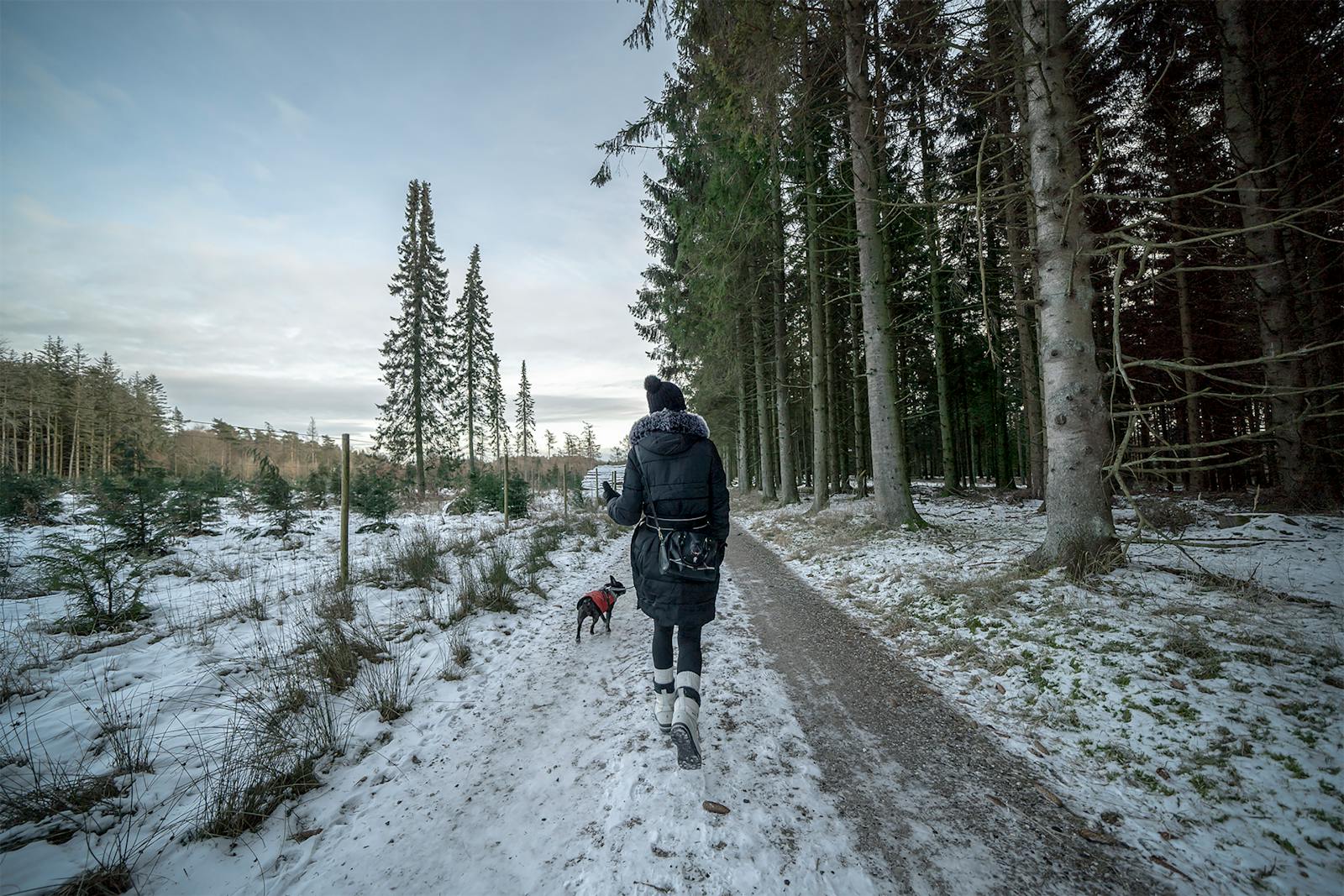
In cultures with strong religious traditions around mourning, meaning often comes through ritual, community prayer, shared narrative — meaning made together, in public. In Scandinavia, where religious participation is relatively low and religious identity is largely cultural rather than devotional, meaning-making after loss tends to happen in smaller, quieter ways: through nature, through work, through the steady continuation of daily life. Through a long walk along the harbor in weather that would keep most people indoors.
Danish funerals follow a recognizable structure. There are songs, there are speeches, there is coffee afterward. But the emotional processing happens mostly off-stage, in private, over time. The funeral is not the climax of the grief. It’s one point along a much longer, less visible path. And the meaning that emerges isn’t announced. It accumulates, the way sediment does. Slowly. Without anyone watching.
The cost of being misread
Being misread in grief is its own kind of injury. When the people around you assume you’re not grieving because you’re not grieving in a way they recognize, you end up carrying two burdens: the loss itself, and the work of either performing your pain for an audience or defending your right to grieve quietly.
This plays out in specific ways for Scandinavians living abroad, or for immigrants living in Scandinavia who come from more expressive grief cultures. The mismatch creates real friction. A Swedish person at a funeral in Italy may feel overwhelmed by the demand to display. A Brazilian person at a funeral in Stockholm may feel abandoned by the apparent composure around them. In both cases, care is present. It’s just inaudible across the cultural divide.
Neither response is a failure of empathy. Both are failures of translation.
The work of cross-cultural understanding, whether in marriage, friendship, or simply living in a place that isn’t where you grew up, is recognizing that emotional expression operates on different frequencies. Some cultures broadcast on AM. Scandinavia is on a frequency you might not know how to tune into unless someone shows you the dial. But the signal is there. Strong, steady, and deeply felt.
The limits of restraint
I want to be careful here. I’m not arguing that Scandinavian grief is superior to more expressive forms. I’ve seen the costs of restraint: the person who never talks about their loss because the culture doesn’t create obvious openings for it, the family that processes a death by simply not mentioning it, the quiet that tips from healthy composure into genuine isolation.
Mental health professionals in the Nordic countries are well aware of these risks. The same cultural infrastructure that allows people to grieve privately can also make it harder to ask for help when private grief becomes clinical depression. The line between “I’m processing this in my own way” and “I’m drowning and nobody can see it” is not always clear, least of all to the person in the water.
Research on professional grief experience and psychological detachment suggests that even trained professionals struggle with the boundaries between healthy processing and emotional withdrawal when confronted with repeated loss. If nurses and emergency workers find this line blurry, civilians can be forgiven for losing it entirely.
The Scandinavian approach to grief has genuine strengths: it respects autonomy, it doesn’t pathologize quiet processing, it trusts people to know what they need. But those strengths become weaknesses when someone doesn’t, in fact, know what they need. Or when what they need is for someone to insist, gently, on being present. Restraint as care requires attentiveness. Without that attentiveness, it’s just distance with a better reputation.
A register, not a ranking
The title of this piece uses the word “register” deliberately. In music, register describes the range in which an instrument or voice is operating: high, low, middle. A cello playing in its lower register isn’t less musical than a violin in its upper register. It’s producing a different kind of sound.
Scandinavian grief operates in a lower register. It’s felt deeply but expressed with restraint. It values presence over performance, action over narration, time over urgency. It doesn’t follow the scripts that most of the English-speaking world recognizes as mourning. And because of that, it gets misheard — as coldness, as indifference, as a failure to love hard enough.
But restraint, when it comes from a place of attentiveness rather than avoidance, is one of the most generous things you can offer someone in pain. It says: your grief belongs to you. I won’t take it from you. I won’t make it mine. I’ll just be here, quiet, with a candle and something warm, for as long as you need.
That doesn’t make it smaller. It doesn’t make it colder. It makes it harder to hear if you’re not listening for it.
The candle on my stairwell burned for three days. I never found out who left it. I didn’t need to. I knew what it meant.
Photo by www.kaboompics.com on Pexels