

Most advice about surviving winter assumes the darkness is a problem. That assumption itself may be the problem. The people I know in Copenhagen who seem least affected by November’s 3:45 p.m. sunsets aren’t the ones fighting it with SAD lamps and motivational podcasts. They’re the ones who rearranged their lives around it, the way you’d rearrange a room around a large, immovable piece of furniture you didn’t choose but now live with.
I’ve lived in Denmark for ten years. And the single most useful shift I ever made about winter here had nothing to do with buying a light therapy box or forcing myself to go running in the rain. It was the night I had dinner at a friend’s apartment in December, candles on every surface, blankets on every chair, and I understood that none of this was decorative. It was architectural. She had built a winter life the way you’d insulate a house.
The war metaphor is the first mistake
English-language wellness culture frames winter as a battle. “Beat the winter blues.” “Fight seasonal depression.” “Overcome the darkness.” The language is militaristic, and it sets you up for a particular kind of failure, the kind where you feel like you’ve lost a fight you were supposed to win.
Scandinavians don’t talk about winter that way. Or rather, the ones who cope well don’t. The framing here, when it’s honest and not packaged for export, is closer to coexistence. Darkness arrives. You adjust. You don’t defeat November any more than you defeat the tide.
This isn’t positive thinking. Positive thinking would say: “Winter is actually wonderful!” That’s not what’s happening. What’s happening is something more like: winter is real, it’s long, and reduced sunlight genuinely changes your brain chemistry, lowering serotonin and overproducing melatonin. Acknowledging that is step one. Step two is refusing to treat it as a personal failure.
What psychologists actually call this
The framework that comes closest to describing what thriving Scandinavians do with winter is what psychologists call psychological flexibility, the core principle behind Acceptance and Commitment Therapy. The idea is straightforward but counterintuitive: when you stop struggling against painful or uncomfortable experiences and instead accept them as part of reality, you suffer less.
The key word is “struggling.” If you spend December telling yourself you shouldn’t feel this tired, that you need to push through, that something is wrong with you for wanting to sleep at 7 p.m., you’re adding a second layer of distress on top of the first. The darkness makes you tired. Your judgment of the tiredness makes you miserable.
Psychologists working with Dialectical Behaviour Therapy use the term “radical acceptance” for something similar. It means fully accepting a painful reality without trying to change what genuinely cannot be changed. Not resignation. Not giving up. But a deliberate decision to stop wasting energy on resistance. When I describe winter coping in Scandinavia to friends back in Australia, this is the piece that’s hardest to translate. The darkness isn’t being defeated here. It’s being absorbed.
Researchers studying seasonal affective disorder have found that cultural attitudes toward winter significantly influence how people experience SAD. The same latitude doesn’t produce the same rates of seasonal depression everywhere. Expectations matter. If your culture treats winter as inherently hostile, you’re more likely to experience it as hostile.
Furniture, not enemy
So what does it actually look like to treat darkness as furniture?
It looks like my neighbour who shifts her entire daily schedule forward in October, eating dinner at five, going to bed at nine, rising before dawn to catch whatever pale light exists. She doesn’t apologize for this. She doesn’t frame it as temporary. It’s her winter life, and it has its own rhythm that she seems genuinely fond of.
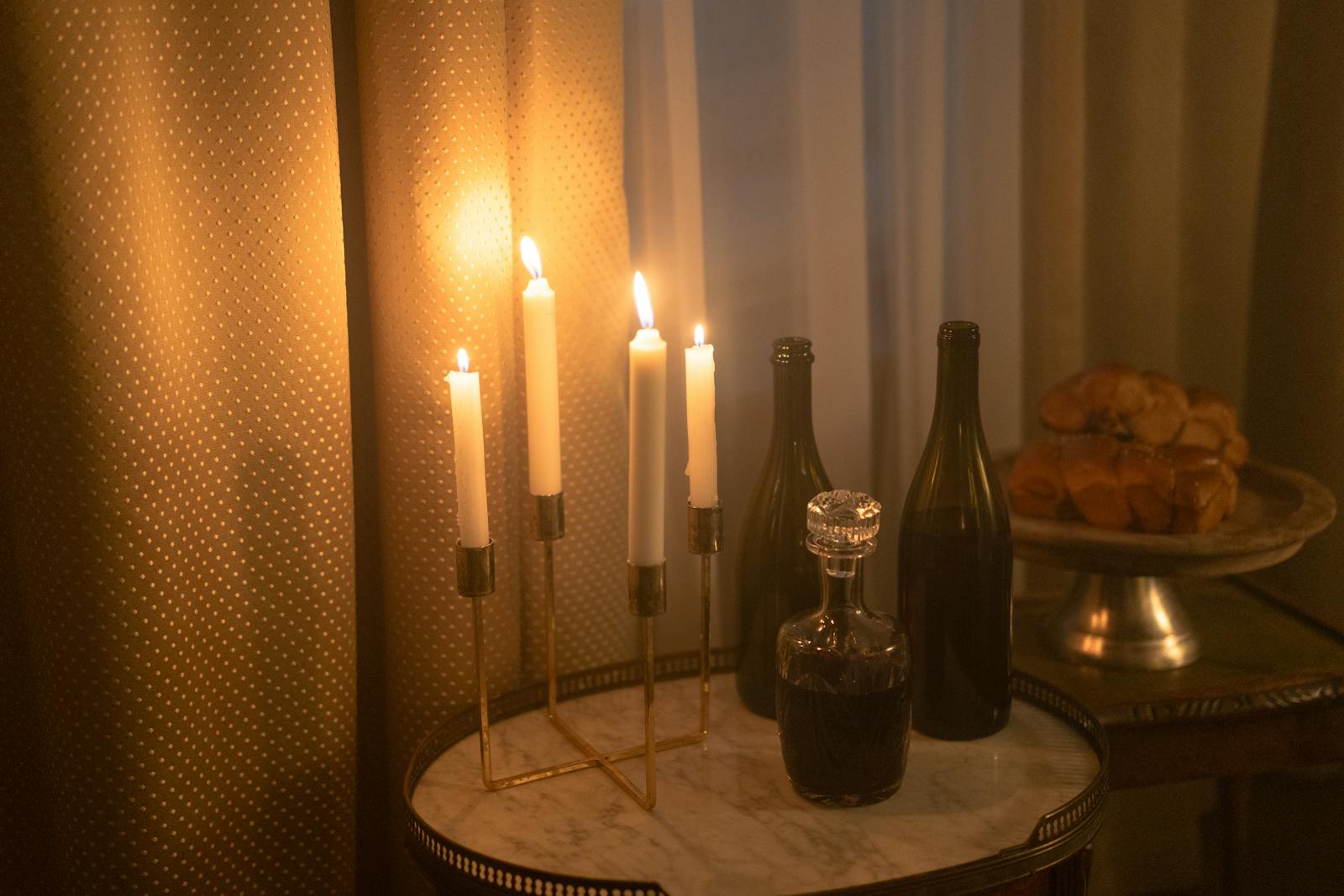
It looks like the way Danish apartments transform in November. The overhead lights go off. The candles come on. The lighting drops from functional to atmospheric, and it isn’t performative hygge for Instagram. It’s a practical response to a biological reality: reduced light exposure affects mood, energy, and motivation, and Danes have spent centuries calibrating their indoor environments to compensate.
It looks like the Norwegian concept of “friluftsliv,” open-air living, which doesn’t pause in winter. There’s a saying that gets attributed to Scandinavia so often it’s become a cliché: “There’s no bad weather, only bad clothing.” What makes the cliché useful isn’t that it’s clever. It’s that people here actually mean it. Going outside in the dark, in the cold, in the rain, is not an act of heroism. It’s Tuesday.
The distinction matters. Treating darkness as an enemy gives you two options: win or lose. Treating it as furniture gives you a hundred options. You arrange your life around it. You discover what works in the space that remains.
The activity gap and why it matters
One of the more useful findings in recent SAD research concerns what clinicians call “behavioural withdrawal.” As researchers are now recognizing, missing the activities you enjoy may be a key contributor to seasonal depression, not just a symptom of it. When it’s dark at 3:30 p.m. and the temperature is hovering near freezing, the walks, the outdoor coffee, the after-work socializing, all of it becomes harder to maintain. You lose the activities, and then the loss of the activities deepens the depression.
This is where the furniture metaphor becomes practical. When a large piece of furniture blocks the path you used to take through a room, you don’t stand in front of it every day being angry. You find a new path. The Scandinavians I know who handle winter best have winter-specific versions of the things they love. Summer cycling becomes winter swimming. Evening walks become evening baking. The park bench becomes the window seat.
Cognitive behavioural therapy for SAD works on exactly this principle, helping people find substitute activities that provide purpose and pleasure during darker months. But what I’ve noticed in Copenhagen is that long-term residents often arrive at this intuitively, without clinical language. They’ve simply learned, often through years of trial and error, what their winter life needs to contain.
What gets lost in the hygge translation
The global hygge industry, with its scented candles and chunky knit blankets and books promising the “Danish secret to happiness,” has turned a survival strategy into a product category. This drives me slightly crazy, because the commercial version removes the thing that actually makes hygge work: necessity.
Hygge isn’t an aesthetic choice. It’s a psychological one. Gathering people together in a warm, candlelit room when it’s been dark since mid-afternoon isn’t about creating a photo opportunity. It’s about maintaining social bonds during a season that biologically pushes you toward isolation. When your brain is producing more melatonin and you want nothing more than to cancel plans and sleep, the act of showing up at someone’s table becomes a small, deliberate choice against withdrawal.
The candles aren’t decorative. The warm drinks aren’t trendy. The blankets aren’t a brand collaboration. They’re infrastructure. And the fact that they happen to look beautiful in photographs is incidental to their function, which is keeping people connected and warm during a season that would prefer them apart and cold.

I spent a summer in a remote Norwegian cottage once, working on a story, and came away understanding something about Scandinavian minimalism that applies to winter, too. When your options are limited by geography, climate, or daylight, the things you choose to keep become more important. There’s a clarity that comes from constraint. Winter imposes a version of that clarity on everyone here.
The optimism trap
Optimism, in the pop-psychology sense, tells you to expect good things. It tells you the darkness will end, spring will come, the light is just around the corner. And that’s true. But it’s also a way of being somewhere other than where you are.
The problem with expecting winter to end is that it makes you experience every dark day as a countdown. December becomes something to get through, not something to live in. January is endured. February is a grim waiting room for March. You spend five months psychologically absent from your own life.
As we’ve explored before on Scandinavia Standard, quality of life in the Nordics sometimes involves long stretches of nothing happening, and learning that the nothing is the point. Winter is the most concentrated version of this lesson. The people who thrive here aren’t waiting for something better. They’re fully present in the dim, slow, candle-lit reality of now.
This is what psychological flexibility looks like in practice. Not pretending winter is wonderful. Not white-knuckling through it. But choosing to engage with life as it currently exists, darkness and all, rather than wishing it were different.
The practical architecture of a winter life
If you live at high latitudes, or if you’re considering it, here’s what I’ve observed from a decade of watching people do this well. None of it is glamorous. All of it works.
First: light exposure in the morning matters. A 10,000 lux light box used for 30 minutes before 10 a.m. is one of the most reliably effective treatments for SAD. My Danish colleagues who use these don’t think of them as medical devices. They’re just part of the morning routine, like coffee.
Second: restructure your schedule. Fighting your body’s desire for more sleep and less stimulation is exhausting. Working with it is freeing. Earlier dinners, earlier bedtimes, a slower pace. This doesn’t mean doing less. It means doing differently.
Third: go outside every day, even briefly. Getting light exposure early in the day is a key strategy. Even overcast Nordic daylight delivers more lux than indoor lighting. Fifteen minutes is enough to register.
Fourth: have winter-specific pleasures. Not substitutes for what you’ve lost, but things that only exist in winter. The specific quality of a very dark afternoon with a very bright kitchen. The feeling of coming inside from genuine cold. Stews that make no sense in July. The Scandi crime dramas I consume at a frankly embarrassing rate between November and February are a winter pleasure, and I refuse to watch them in summer. They belong to the dark.
Fifth: maintain social contact, especially when you don’t want to. The pull toward isolation during winter is strong and biological. Every cancelled plan reinforces the withdrawal. The people who do winter well here treat social commitments in December and January the way they treat medical appointments. Non-negotiable.
When furniture becomes a wall
I want to be careful here. There’s a line between accepting winter’s reality and ignoring a clinical problem that needs treatment.
SAD is a subtype of major depressive disorder. It affects millions of people, disproportionately women and people aged 20 to 30. When low mood persists for more than two weeks, when you can’t get out of bed, when work and relationships are suffering, that’s not a mindset issue. That’s clinical depression with a seasonal pattern, and it deserves professional support.
The furniture metaphor has limits. If the furniture has blocked every exit and you’re trapped in the room, you don’t need a new arrangement. You need help moving it.
Cognitive behavioural therapy specifically adapted for SAD, light therapy, and in some cases medication including SSRIs or bupropion are all supported by evidence. As we’ve written about before, there’s a version of low-grade suffering in Nordic culture where everything looks objectively fine from the outside, and that quiet suffering deserves as much attention as the obvious kind.
What I keep coming back to
Last week, I wrote about the people who leave Scandinavia and come back, and how many of them say the thing they missed wasn’t the design or the healthcare but the silence nobody expected them to fill. Winter, I think, is the most extreme version of that silence. It’s the season that asks the most of you by offering the least.
The people who do it well aren’t tougher. They aren’t more naturally cheerful. They’ve just stopped treating five months of their life as a problem to be solved and started treating it as a life to be lived. Different from summer, yes. Smaller in some ways. But complete.
The darkness here isn’t something to get through. It’s something to get good at.
And getting good at it starts with the least dramatic, least Instagrammable realization of all: this is what it is. Now, what are you going to do in it?
Photo by Cristina Anskaja 🇺🇦 on Pexels