

Most cultures treat silence between two people as a problem to solve. Scandinavians treat it as proof that the problem has already been solved.
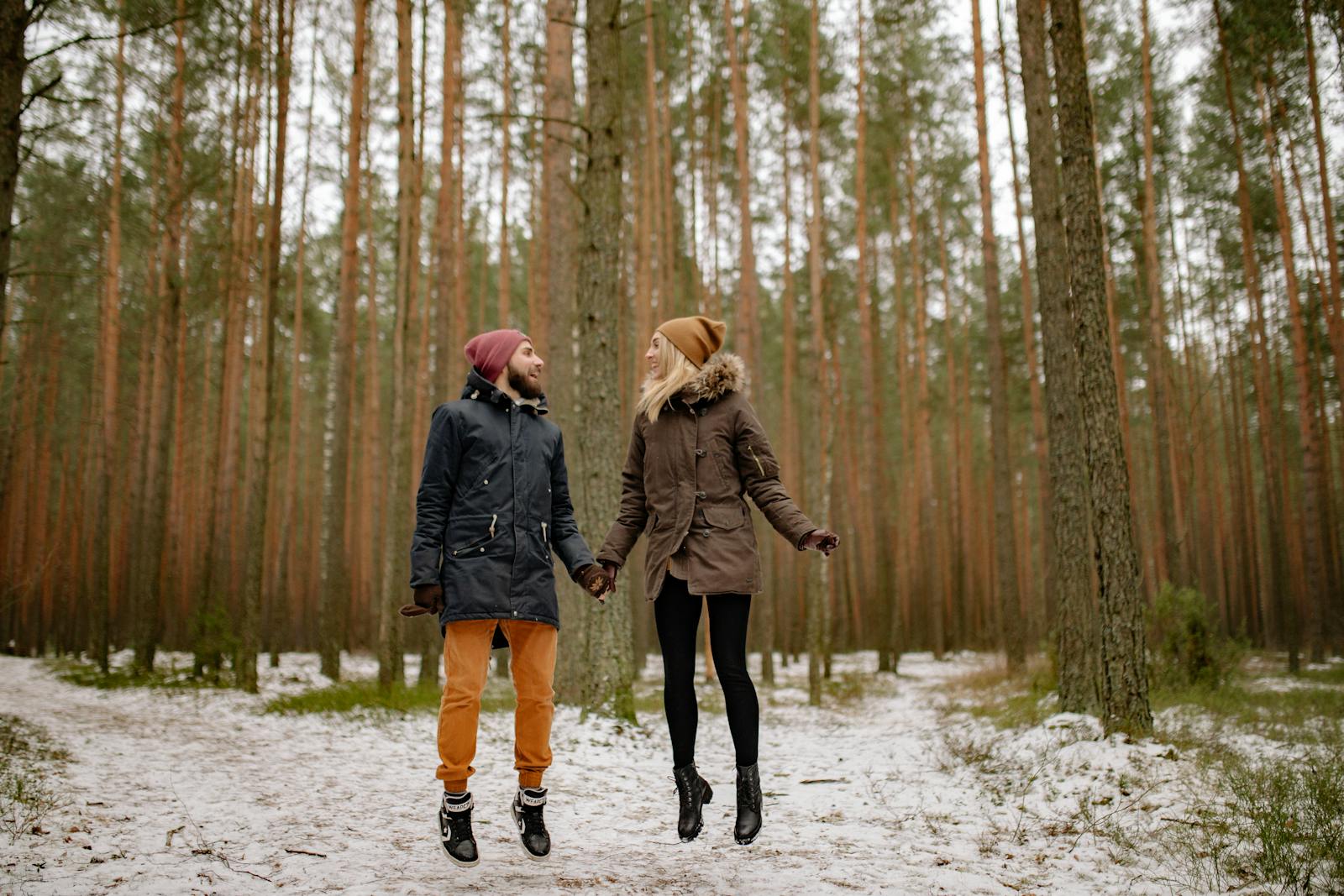
This distinction matters more than it might seem, but it’s also more culturally specific than it first appears. Walk through any Danish forest on a Sunday morning, or along the coastal paths outside Gothenburg, or through the birch-lined trails in southern Norway, and you’ll see couples, friends, parents and adult children moving together without speaking. Not because they’ve run out of things to say. Because they’ve arrived somewhere past the need to say them. Comfortable silence exists in close relationships everywhere. What’s different here is that the silence isn’t just tolerated within intimacy — it’s built into the social grammar itself, extended to colleagues, neighbours, acquaintances. The threshold for when silence becomes acceptable between two people is simply lower, and that reshapes how relationships form and deepen.
I’ve lived in Copenhagen for ten years now, and the thing I’ve come to understand about shared silence here is that it operates under completely different rules than it does in most English-speaking cultures. In Australia, where I grew up, silence between people is often treated as a gap, a vacancy that someone needs to fill before it becomes uncomfortable. In Denmark, it can be the whole point.
The performance that drops away
When I first moved here from Melbourne, Danish directness was the thing that caught my attention. People said what they meant without softening it. That took some getting used to. But the bigger cultural shift, the one I didn’t even notice for a long time, was what Danes didn’t say.
My partner and I walk together most weekends. Sometimes along the lakes in the centre of the city, sometimes further out toward the coast. We can cover an hour in near-total silence, and it doesn’t mean anything has gone wrong. The silence is the relationship operating without performance, without the low-grade social work of keeping conversation alive just because two people happen to be next to each other.
Research on conversational rhythm across cultures suggests that tolerance for silence in dialogue varies significantly by region. A study on how we experience gaps in conversation found that people process pauses differently depending on relational context — among close friends, silence reads as comfortable, while among strangers, the same gap creates anxiety. But what’s striking about Nordic conversational patterns is that the baseline tolerance for pause is longer even among strangers. Finnish and Swedish speakers, for instance, routinely leave longer gaps between conversational turns than speakers of English, Spanish, or Italian. The silence itself hasn’t changed. The cultural container around it has.
This is the key. Silence doesn’t create intimacy on its own. It reveals whether intimacy is already there. And in a culture that normalises silence across all social contexts, the signal it sends within close relationships is amplified.
What silence actually requires
Walking in silence with someone you love is easy to romanticise and hard to do. It requires, first, that you’ve stopped performing for each other. That you’ve moved past the stage where you need to prove you’re interesting, attentive, engaged. Most relationships never quite get there, even long ones.
The psychologist Carl Jung observed that loneliness comes from being unable to communicate the things that feel important to you. What he didn’t say, but what Scandinavians seem to grasp instinctively, is that sometimes the most important things don’t need to be communicated in words at all. They just need a witness. Someone walking beside you who already knows.
There’s a reason this habit is so embedded in Nordic life, and it goes deeper than personal temperament. The landscape invites it. Long coastal paths, deep forests, expanses of open terrain where the visual field is wide and uncluttered. The physical environment makes silence feel natural rather than loaded. You’re not sitting across a table staring at each other with nothing to say. You’re moving through space together, and the world is doing some of the emotional work for you.
But the landscape only provides the container. The culture fills it.
Silence as social grammar
In Danish (and Swedish, Norwegian, Finnish), conversational rhythm has a different beat than in English. Pauses between sentences are longer. Silence after a question isn’t rudeness; it means the person is actually thinking about their answer. Cross-cultural communication research has documented this pattern: Nordic speakers are significantly more comfortable with what linguists call “inter-turn silence” — the gap between one person finishing a thought and another beginning theirs. In English-speaking cultures, that gap averages roughly 200 milliseconds. In Finnish conversation, pauses of a full second or more are unremarkable. This isn’t a personality trait. It’s a linguistic norm, absorbed from childhood.
I wrote last week about how Scandinavians sit with you in difficulty rather than rushing to reassure you. That willingness to stay in discomfort without papering over it with words extends to all kinds of shared experiences, including the quiet ones.
This shapes how relationships function. When you grow up in a culture where silence is socially acceptable rather than socially threatening, you develop a different tolerance for it. You learn to read what silence contains instead of what it withholds. The difference isn’t that Scandinavians are naturally more introspective or emotionally secure — it’s that the social cost of silence is lower here, so it becomes available as a relational tool much earlier in a relationship’s development.
The Finnish concept of hiljainen yhdessäolo — quiet togetherness — captures this precisely. It refers to a form of companionable silence, being together without the need for conversation. Being together and being quiet aren’t competing states. They’re the same state. There’s no direct equivalent in English, which tells you something about what each language considers worth naming.
The intimacy of not needing to perform
I think about this a lot when I consider what actually makes relationships durable. The first phase of any close relationship, romantic or otherwise, is usually characterised by a kind of verbal abundance. You want to share everything. Every thought, every story, every opinion. Talking is how you map each other.
But there’s a second phase that gets less attention, the phase where speech becomes optional. Where you’ve mapped each other well enough that the territory is familiar, and you can just walk through it together without narrating every turn.
This is what I mean when I say silence is the version of intimacy that survives when performance falls away. Early-stage relationships run on mutual presentation: you’re showing someone who you are, and you’re working hard at it. Later-stage relationships, the ones that actually last, run on mutual presence. You’re not showing anything. You’re just there.
What makes Scandinavia different isn’t that this second phase exists — it exists everywhere — but that the culture accelerates entry into it. Because silence is already normalised socially, couples and friends don’t have to spend years earning the right to be quiet together. The permission is ambient. A Danish friend once told me that on her first date with her now-husband, they walked for twenty minutes without talking, and it was the moment she knew. In Melbourne, that same silence would have been the moment she assumed he wasn’t interested.
A dinner I had with another Danish friend during my second winter here changed how I think about a lot of Scandinavian social rituals. The candles were lit, the wine was poured, and we talked, but we also sat in long stretches of quiet. I kept wanting to fill them. She didn’t. And gradually I realised the quiet wasn’t empty; it was the most honest part of the evening. The talking was performance. The silence was trust.
Why this is hard for outsiders
When I first arrived in Copenhagen, the Danish communication style felt blunt. Occasionally cold. I spent my first two years here feeling like an outsider, reading curtness where there was actually just efficiency. The silence was even harder to decode.
I came from a culture where warmth is performed verbally. Australians fill space with words, with humour, with banter. Silence between friends felt like something had gone wrong. So when I’d walk with Danish acquaintances and the conversation would simply stop, I’d feel a spike of anxiety. Were they bored? Had I said something wrong?
I hadn’t. They were just comfortable.
This is one of the assumptions people unlearn after moving to Scandinavia, something I explored recently: that connection requires constant verbal evidence. In many cultures, silence reads as distance. In Scandinavia, it reads as closeness that doesn’t need proof.
The distinction between deliberate silence and the “silent treatment” is critical here. Psychologists have explored how withholding communication from a partner can function as a form of emotional control. The silent treatment weaponises the absence of words. Shared silence does the opposite: it disarms. It says, I don’t need you to entertain me. I just need you here.
And here, perhaps, is what makes the Nordic version of this distinct. In cultures where verbal expression is the primary currency of connection, silence always carries the shadow of withdrawal. You have to actively signal that your quiet is benign. In Scandinavia, the default assumption runs the other way. Silence is the steady state. Speech is what you add when you have something that genuinely needs saying. The relationship doesn’t live in the words. The words visit the relationship.
Ten years in, I’ve learned to let the quiet stay. And something in me settles when I do. Because the walk doesn’t need narration. The person beside you doesn’t need proof that you’re engaged. And the relationship — the real one, the one underneath all the talking — can finally breathe.
We’ve explored on this site how the people who age most gracefully in Scandinavia are the ones who learned early to be interested in ordinary things. Walking in silence is one of those ordinary things. It doesn’t photograph well. It doesn’t make for a good Instagram caption. It’s radically uninteresting from the outside. From the inside, it’s the whole architecture of a life shared well.
Photo by Hyukman Kwon on Pexels