

In engineering, there’s a concept called passive damping: a system designed to absorb energy and reduce oscillation without any visible, active mechanism. From the outside, the structure looks inert. Nothing appears to be happening. But inside, the material is doing precisely what it was built to do. Nordic confidence operates on a similar principle. It absorbs social friction, moderates group dynamics, and steadies the room, all while looking to outsiders like nothing is happening at all. The thesis I want to put forward is straightforward: what most outsiders interpret as coldness, withdrawal, or lack of personality in Scandinavian culture is actually a fully functional confidence system — one that was engineered, culturally, to work without producing noise.
I’ve lived in Copenhagen for several years now, and the thing that took me longest to recalibrate was my sense of what constitutes a confident person. In Melbourne, confidence was legible: you could hear it, feel it, watch it take up space. When I first arrived in Denmark, I kept meeting people who struck me as quiet, withdrawn, maybe even disengaged. It took roughly two years before I understood I’d been reading the room with the wrong dictionary. The problem wasn’t that these people lacked confidence. The problem was that I had only ever learned to recognize confidence in its loudest form. Nordic confidence doesn’t oscillate visibly. Like a passively damped system, it does its work internally, and the stillness on the surface is the evidence that it’s functioning, not that it’s absent.
The silence isn’t absence. It’s architecture.
Outsiders encounter Nordic social situations and notice the silence first. The pauses in conversation. The reluctance to fill dead air with small talk. The lack of what Anglophone cultures would recognize as warmth signalling: the broad smile at a stranger, the enthusiastic greeting at a work event, the reflexive compliment.
What gets missed is that the silence is structural. It has a purpose. In cultures where showing off is quietly punished, speaking carries more weight because it happens less. When a Danish colleague endorses an idea in a meeting, they typically mean it more literally than an American colleague making the same endorsement. The economy of expression concentrates meaning.
This isn’t shyness. Shyness involves wanting to speak and feeling unable to. What I observe in Scandinavia is closer to the opposite: the ability to speak with ease but the choice not to, because speaking without something to add would feel like a waste of everyone’s time.
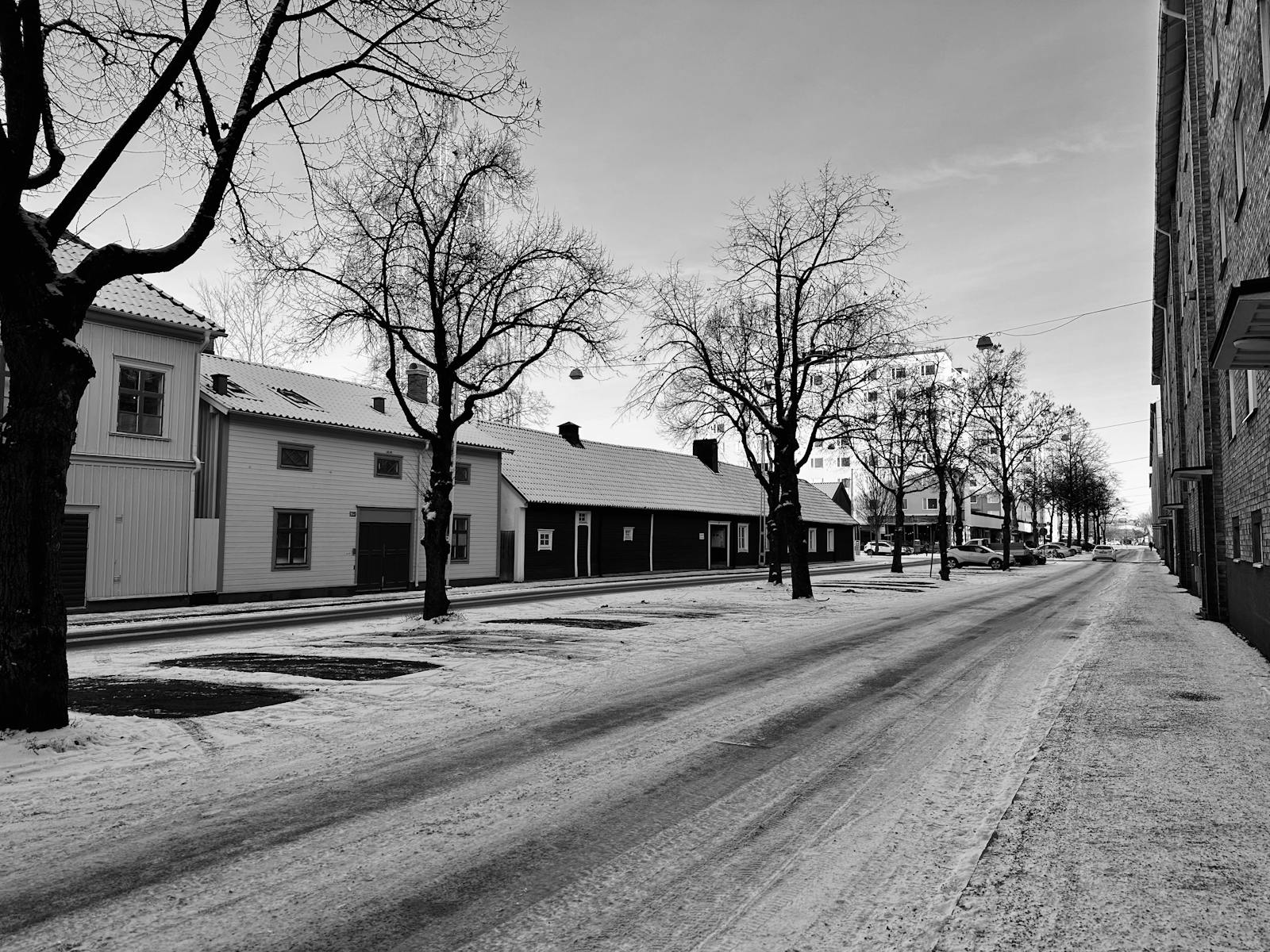
The coldness problem is a translation error
The narrative that Scandinavians are cold is one of the most persistent clichés about the region, and it survives because it maps so neatly onto a superficial reading of Nordic social behaviour. People don’t greet you effusively. They don’t ask how your weekend was if they don’t actually want to know. They don’t perform interest.
As we’ve explored on Scandinavia Standard, making friends in Copenhagen isn’t harder because people are cold. It’s harder because the friendships here were built slowly over years, and the social infrastructure doesn’t have unused capacity waiting for newcomers. That’s not coldness. That’s a different model of relational investment, one that prioritizes depth over breadth.
The directness that Danish culture runs on felt harsh to me initially. At Politiken, someone once looked at a draft of mine and told me bluntly, without any softening preamble, that it didn’t work and I should start again. In Melbourne, that exchange would have come wrapped in encouragement, qualifiers, reassurance. Here, the absence of packaging was the respect. They assumed I could handle honest feedback. And once I stopped hearing it as unkindness and started hearing it as efficiency, something shifted in how I understood the people around me.
Research in cross-cultural psychology published in Frontiers in Psychology has drawn attention to how Western frameworks for evaluating social behaviour tend to treat extraverted, high-disclosure communication styles as the norm. Cultures that favour restraint, indirect communication, or silence get coded as deficient versions of the “correct” social model rather than as distinct systems with their own internal logic.
How confidence gets built when nobody’s watching you perform
One of the things that separates Nordic confidence from, say, American confidence is the mechanism by which it develops. In cultures with strong individualistic performance norms, confidence tends to be built through external validation: praise, recognition, visible success, social proof. You demonstrate competence, the world reflects it back to you, and that feedback loop builds your sense of self.
In Scandinavia, the loop works differently. The Janteloven (the Law of Jante) is often cited as a cultural brake on boasting and self-promotion, and that’s accurate as far as it goes. But it describes the constraint, not what grows in the space the constraint creates.
What grows is a confidence that doesn’t depend on the audience. When you grow up in a system where visible achievement doesn’t earn you social status (and may actually cost you some), you either internalize your worth or you don’t develop it at all. The successful version looks like someone who knows what they’re capable of without needing you to know it too.
Research comparing children’s self-regulation in Norway and the United States, published in Frontiers in Psychology, found that Norwegian children showed distinct patterns of emotional self-regulation compared to their American peers. The cultural context of child-rearing, the researchers found, shaped how children learned to manage and express their internal states. The quiet self-containment that outsiders read as emotional flatness in Scandinavian adults has roots that go back to early childhood development, shaped by how parents and institutions model emotional expression.
This kind of confidence is difficult to spot if you’re looking for the outward markers. There’s no power stance. No strategic eye contact held for two beats too long. No self-deprecating joke designed to demonstrate that you’re so successful you can afford to be humble about it.
Research on prosociality in Nordic countries published in Frontiers in Psychology examined how people in these cultures express care and solidarity. The findings pointed to a pattern of quiet, structured generosity: high levels of institutional trust and cooperation, combined with relatively low levels of performative displays of individual virtue. People contribute. They just don’t announce it. The confidence to give without recognition is still confidence. It just doesn’t generate applause.

What happens when you mistake silence for emptiness
The real cost of misreading Nordic confidence is relational. Expats and visitors who interpret the silence as coldness often respond in one of two ways: they either withdraw (assuming they’re unwanted) or they overcompensate (turning up the warmth and enthusiasm to fill the gap they perceive). Both responses create distance.
We’ve written before about how people who move to Scandinavia for the quality of life sometimes discover that quality of life includes long stretches of nothing happening, and that the nothing is the point. The same logic applies to social interaction. The silence between two people isn’t a vacuum that needs to be filled. It’s often the relationship functioning correctly.
The displacement hypothesis studied in digital media research published in Frontiers in Human Dynamics offers an interesting parallel. The study examined how people who maintained high levels of face-to-face social connection reported greater well-being than those who replaced in-person interaction with online communication. The mechanism matters: the medium through which connection happens shapes its quality. In the same way, the mode through which confidence is expressed shapes how it’s received. A culture that expresses confidence through silence and action rather than verbal assertion isn’t offering a diminished version of confidence. It’s offering a different medium for the same substance.
When Scandinavians sit with you in difficulty rather than rushing to reassure you that everything will be fine, they’re enacting the same principle. The silence isn’t avoidance. It’s a form of respect for the reality of the situation.
The trap of legibility
There’s a broader question here about which forms of human expression we’ve decided count. Western psychology has historically treated extraverted, high-disclosure, verbally expressive behaviour as the healthy baseline and measured everything else as deviation. Research published in Nature has examined how higher education globally tends to push cultural similarity toward what researchers call WEIRD (Western, Educated, Industrialized, Rich, Democratic) norms, which privileged specific communication styles.
Nordic cultures are WEIRD by most definitions. But within that category, they occupy an unusual position: highly educated, highly developed, and yet culturally committed to a mode of social interaction that doesn’t reward the individual for being the loudest presence in the room. The confidence is there. It just refuses to perform on command.
I think about this in professional contexts constantly. In editorial meetings at Politiken, the person with the best idea was rarely the person who spoke first or most. The good ideas surfaced after silences. They came from people who had been listening, processing, building an argument internally before committing it to speech. Coming from an Australian media culture where the fastest talker often won, this was disorienting. And then it was liberating.
Living with it
After years here, I’ve stopped trying to translate Nordic social behaviour into the emotional vocabulary I grew up with. The two systems don’t map onto each other cleanly, and the attempt to force a translation is where most misunderstandings live.
The confident Dane who doesn’t smile at you on the street is not withholding warmth. They’re existing in a social contract where public space is neutral territory, not a performance venue. The confident Swede who deflects a compliment isn’t insecure. They’re operating in a system where absorbing praise too visibly would disrupt the social balance. The confident Norwegian who says nothing for the first hour of a dinner party is often the person who, when they finally speak, says the thing everyone will remember.
What looks like silence to outsiders is, from the inside, a very specific kind of signal. It says: I am here. I am capable. I do not need you to know that in order for it to be true.
That version of confidence is harder to see, harder to market, and almost impossible to fake. Which might be why it works.
As I wrote recently about the particular grief that Nordic culture doesn’t discuss, there’s a cost to this restraint. The same emotional architecture that produces a sturdy, self-contained confidence can also make it difficult for people to express when they’re struggling. The system optimizes for stability, and stability doesn’t always leave room for vulnerability.
But that’s a different conversation. For now, the point is simpler: the silence you’re hearing in Scandinavian social life is doing something. It’s not the absence of confidence. It’s confidence that decided it didn’t need to announce itself.
And if that makes you uncomfortable, the discomfort is worth sitting with. Because it might be telling you something about what you’ve been taught to expect from people, and whether those expectations serve you, or just serve the noise.
Think about the passive damping system one more time. The engineer who designed it doesn’t stand next to it explaining how it works. The structure doesn’t vibrate to prove it’s bearing a load. It just holds. It does what it was built to do, quietly, without oscillation, without fanfare. The people around you in Copenhagen, in Stockholm, in Oslo — the ones who seem so still, so self-contained, so unreadable — are doing the same thing. They are holding. And the fact that you can’t see the mechanism doesn’t mean nothing is happening. It means the system is working exactly as intended.
Photo by Efrem Efre on Pexels