

I found myself crying for no reason I could name. It was a few winters ago, at a friend’s kitchen table in Frederiksberg. She had lit candles and poured me a glass of red wine, and the tears just came. My job was going well. My apartment was warm. I had people who cared about me. Nothing was wrong, and yet something was so profoundly absent that I couldn’t even locate it to describe it. My friend didn’t ask me what was wrong. She just sat down across from me and let the silence hold. I remember thinking: this is the most Danish thing that has ever happened to me, and also the loneliest.
That feeling has a specific texture. You can’t grieve something you never lost, so the feeling doesn’t qualify. You can’t complain about a life that works on paper, so you don’t mention it. And in a culture that values emotional steadiness and quiet functionality as deeply as Nordic culture does, having no articulable problem feels like a disqualification from distress.
But the feeling is real. And it has a shape. What I’ve come to believe, after years of living inside this contradiction, is that Nordic emotional culture — with its calibrated silences, its preference for composure, its deep trust in systems — has created a specific blind spot: it has no container for the grief that arrives when everything is working. The system is not failing anyone. It’s that the system, by resolving so many external sources of suffering, leaves you face to face with an interior absence that the culture has no language for and no permission to name.
The problem with a life that works
Denmark, Norway, Finland, and Sweden consistently rank among the happiest countries in the world. The reasons are well-documented: strong social safety nets, free education, healthcare, reasonable work-life balance, high levels of institutional trust. Research comparing Nordic and developing-country mental health has found that the security these systems provide is deeply linked to reported wellbeing, with government trustworthiness directly correlating with citizen satisfaction.
So when everything in the system is performing as designed, and you still wake up at 3 a.m. with a hollow ache under your ribs, you’re left with an awkward question: what exactly are you mourning?
The answer, for many people living here, is nothing specific. It’s a sense of missing that exists without an object. A grief that can’t point to a loss.
This is different from depression, though it can live alongside it. Depression has clinical markers. What I’m describing is more like a quiet awareness that the life you have, the one you chose and built and maintain, still doesn’t contain something you were expecting to find. And in a culture where the structures genuinely function, where the buses run on time and parental leave is generous and the design of your daily life is thoughtful, this absence becomes harder to articulate, not easier. The very success of the system removes the vocabulary you’d need to explain what’s still wrong.
When the culture doesn’t have a container for it
Nordic emotional culture is often misread by outsiders as coldness. It isn’t cold. It’s calibrated. Scandinavians tend to reserve emotional intensity for contexts where it’s appropriate, and to trust silence and presence over verbal reassurance. Scandinavia Standard has explored how this approach to comfort can actually work better than the reflexive optimism more common in Anglo cultures.
But this calibration has a blind spot. If you’re dealing with recognizable grief (a death, a breakup, a job loss), the culture is extraordinarily good at meeting you. People show up. They sit with you. They bring food and don’t force conversation. The response is generous precisely because it’s action-based rather than performance-based.
The version of grief that trips the system up is the one without a triggering event. If you can’t name the loss, the cultural machinery doesn’t activate. You don’t get the quiet support because there’s nothing to support you through. And because emotional restraint is valued, you probably aren’t going to broadcast a feeling you can’t even explain to yourself.
I’ve watched this happen to friends who have everything they came here for. Good careers, beautiful apartments, functioning relationships. The life is in place. The feeling persists. And the culture, for all its sophistication in handling concrete hardship, offers them nothing — not because it’s indifferent, but because its emotional infrastructure is designed for grief that announces itself. This other kind slips through the system like water through a grate.
What psychologists call it (and why that only partly helps)
There are clinical concepts that circle around this experience. “Ambiguous loss” was coined by the therapist Pauline Boss to describe grief without closure or a clear object, originally applied to situations like having a family member with dementia or a missing person who may or may not be alive. But the framework has expanded. The idea that you can grieve something you never had, or can’t identify, has gained more ground in recent mental health discourse.
The term “languishing” entered mainstream vocabulary around 2021 when psychologist Adam Grant described it as the neglected middle child of mental health: not depressed, not flourishing, just… flat. Time magazine’s 2024 mental health review noted the growing urgency of mental health service demand, with the U.S. 988 lifeline fielding around 5.3 million contacts that year. The crisis isn’t limited to acute cases. The middle zone, the place where you function but don’t feel whole, is where millions of people live.
But “languishing” doesn’t quite capture it either, because the experience I’m describing is culturally shaped. In Nordic countries, the social infrastructure removes many of the external stressors that produce obvious unhappiness. What remains is an interior problem that the exterior has no answer for. You’ve been given the conditions for a good life. Whether you experience it as a good life is a different question entirely. And the culture that gave you those conditions is the same culture that makes it nearly impossible to say: this isn’t enough. Not because the conditions are inadequate, but because I still feel empty inside them, and I have no sanctioned way to say so.
The gap between the objective and the felt
A Psychology Today analysis on cultural differences in emotional expression draws on research by Kitayama and Salvador showing that cultural conditioning shapes not just how we express emotions but which emotions we allow ourselves to identify. Some cultures train people to locate distress externally: bad things happen, so I feel bad. Nordic culture, with its emphasis on self-sufficiency and emotional composure, can make it harder to locate distress internally when external conditions are stable.
You end up in a loop. The conditions of your life are good. You are not good. The conditions of your life are supposed to produce goodness. So either the conditions are wrong (they aren’t, by any reasonable measure) or you are wrong. And “I am wrong” is a conclusion people carry silently for years.
I’ve carried it. There were months, especially in my first few Copenhagen winters, when I questioned the fundamental choice to be here. Everything was working. I had the job I wanted, the city I’d dreamed about, the life that looked right from every angle. And I felt like someone had removed a load-bearing wall from inside me and I was structurally intact but hollow.
The distinction between loneliness and solitude is real, and I’ve come to understand it viscerally. But what I’m talking about here is a third thing, neither loneliness nor solitude. It’s the experience of being surrounded by a well-functioning life and feeling that the function itself is not enough.
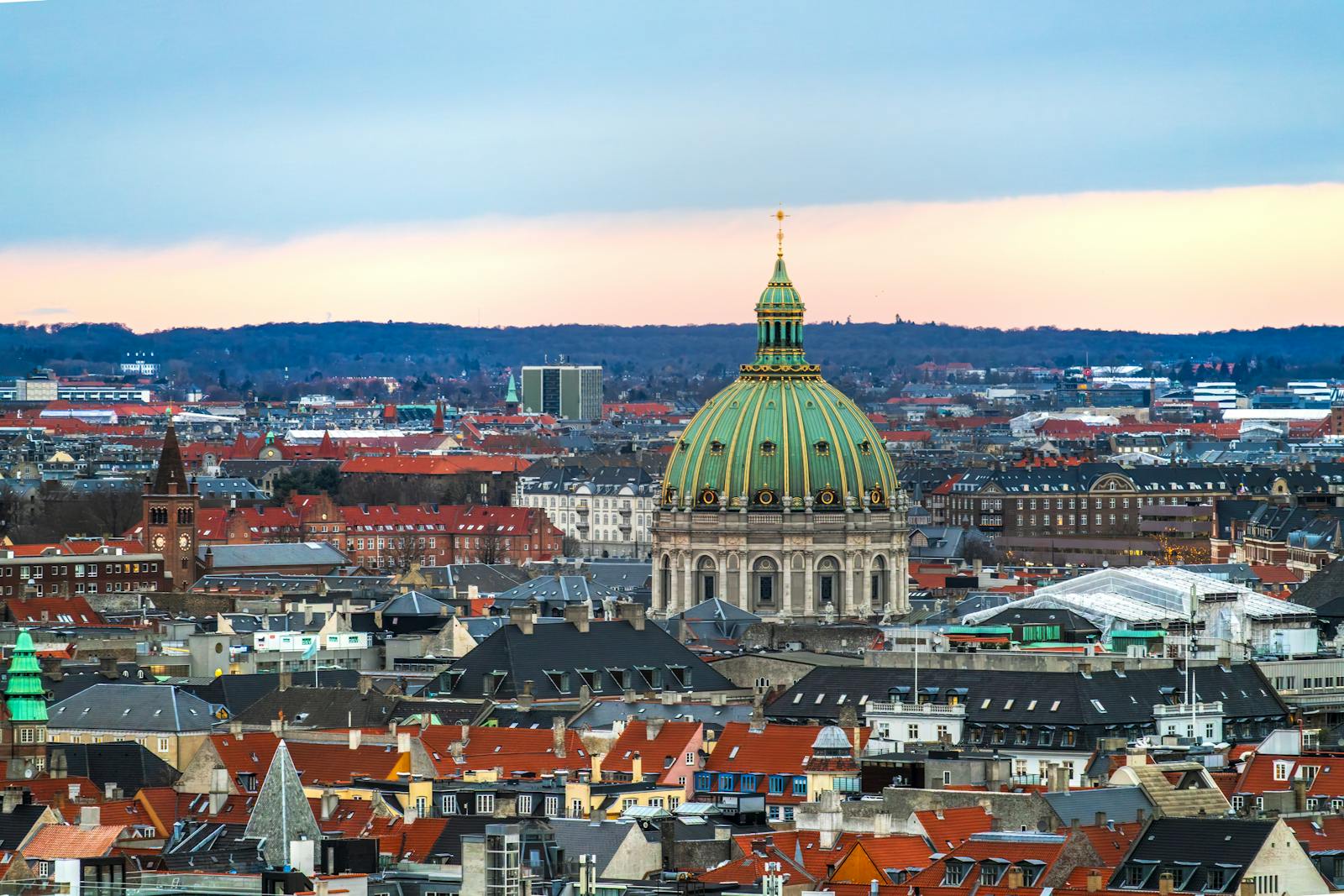
Hygge as survival, not symptom
The dinner at my friend’s table in Frederiksberg changed how I think about hygge. Before that evening, I understood it intellectually: candles, warmth, togetherness. After that evening, I understood it as survival infrastructure. Hygge isn’t an aesthetic choice. It’s how Danes get through the dark season without psychological collapse. The candles, the warm drinks, the gathering together, these are defensive measures against exactly the kind of formless absence I’m describing.
This distinction matters because it explains why hygge gets exported so badly. When you sell it as a lifestyle product (the candle, the throw blanket, the ceramic mug), you strip it of its function. The function is: it is November, it is dark by 3:30 p.m., you have not seen the sun in eleven days, and the only thing standing between you and a slow interior disintegration is the deliberate creation of warmth with other people.
That’s not cozy. That’s load-bearing.
The BBC’s exploration of friluftsliv, the Nordic concept of outdoor life, touches on a related idea: that Scandinavians have built cultural practices around managing the psychological weight of their environment. Friluftsliv isn’t recreation. It’s a habit of regularly exposing yourself to nature because the alternative is that the indoor months consume you. These practices are cultural medicine, developed over generations. But they address the environmental challenge. The existential one, the sense that something essential is missing even when everything is present, sits beneath them. Hygge and friluftsliv are the culture’s best attempts to manage a feeling it doesn’t have permission to directly name.
The expat version and the native version
I should be honest that the experience splits along a fault line. For people who moved to Scandinavia from elsewhere, the absent thing often has a name if you dig hard enough: the warmth of a previous culture, the casual sociality of a place where people talk to strangers, the version of yourself that existed before you started again in a new language. This is homesickness dressed in existential clothing, and while it’s real, it’s at least identifiable.
The version that interests me more is the one I see in people who grew up here. Danes and Swedes and Norwegians who have the system working exactly as it was designed to work for them, who never left, who are fluent in every social code, and who still feel the gap.
A friend once asked me if I felt Danish now. I realized I don’t feel purely anything anymore. I feel Copenhagen, which is its own thing. But the question revealed something about her, too: a native-born Dane who was also unsure what the feeling was supposed to be. If belonging doesn’t resolve the absence, then the absence isn’t about belonging.
Research on Scandinavian emotional tendencies points to something useful here. A 2025 Frontiers in Psychology study on emophilia in a Scandinavian sample explored how readily people share and experience strong emotions, finding significant individual variation even within a culture often perceived as emotionally restrained. The implication is that the cultural norm of composure doesn’t erase emotional need. It just determines which channels it’s expressed through, and which experiences go unnamed.
What doesn’t get said at dinner parties
There’s a specific conversation I’ve had some version of, probably twenty times, always in private, never at a dinner party. Someone says: I have a good life. I know I have a good life. But I feel like I’m missing something and I don’t know what it is. And then they immediately qualify it: I know I shouldn’t complain. I know how lucky I am. I know people have real problems.
The qualification is the problem. It seals the exit. By preemptively acknowledging that your suffering doesn’t count, you ensure that it never gets examined.
In Nordic culture, where Janteloven (the social code against thinking you’re special) still operates at a deep level, the idea that your perfectly functional life could be a source of grief feels like the most forbidden form of complaint. I wrote recently about the kind of confidence that develops when showing off is quietly punished, and the flip side of that confidence is this: if you can’t show off your successes, you certainly can’t show off your dissatisfaction with them. Janteloven doesn’t just regulate pride. It regulates grief. It tells you, quietly but firmly, that your unnamed suffering is not special, that it doesn’t deserve airtime, that other people manage just fine and so should you. The code was designed to keep egos in check. But it also keeps legitimate pain in check, and it does so with ruthless efficiency.
So the grief stays private. It circulates in late-night conversations, in therapy sessions (Denmark’s therapy culture has grown substantially in recent years), in the second glass of wine after the kids are asleep. It doesn’t enter public discourse because it sounds ungrateful. And gratitude, in the Nordic context, is practically a civic duty.
The winter paintings knew
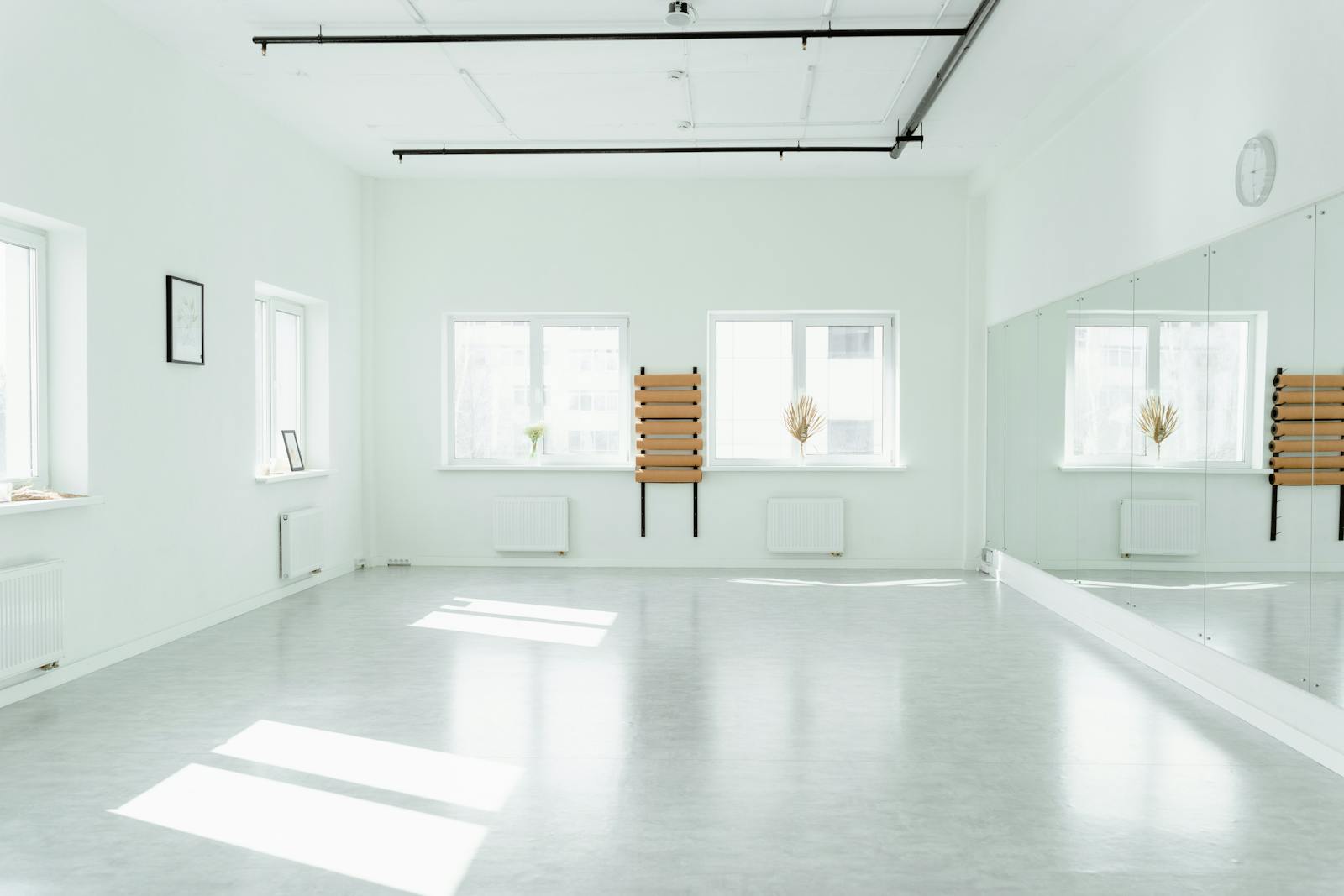
Nordic art has always understood this better than Nordic conversation. The BBC’s recent feature on Nordic paintings that help us rethink winter examines works by artists like Vilhelm Hammershøi and Harald Sohlberg that are full of this exact quality: rooms that are beautiful and empty. Landscapes that are gorgeous and desolate. The beauty and the absence coexist. There’s no contradiction because they are the same thing.
Hammershøi painted the same rooms in his Copenhagen apartment over and over, often with a single figure seen from behind. The rooms are calm, well-appointed, full of soft light. They are also unbearably lonely in a way the painter never explains. He just shows you the room. You feel what you feel.
This is the artistic tradition that Nordic culture produced, and it captures the experience I’m describing far more precisely than any clinical term. A life that is correctly assembled and still missing something. A room that has everything and feels vacant. The absence isn’t a flaw in the design. The absence is what the design reveals, once it’s removed every other distraction.
What happens when you stop trying to solve it
I don’t think this kind of grief has a solution, and I’ve stopped believing it should. The impulse to fix it, to identify the missing thing and acquire it, is probably the wrong framework entirely. The missing thing might not be a thing. It might be a condition of consciousness, a feature of being human in a well-ordered life, the awareness that meaning is never finished being made.
Scandinavia Standard has observed that the people who age most gracefully here are the ones who learned to be interested in ordinary things. I think about that often. The practice of attention, of noticing the small and unremarkable, might be the closest thing to an answer. Because the grief I’m describing is partly an attention problem: it’s what happens when you look at your life from the outside and see that it should be enough, instead of looking at it from the inside and seeing what’s actually in front of you.
The Danish winter darkness, which I used to dread, has become the season when I most reliably feel this. And paradoxically, it’s also the season when I most reliably address it. The deliberate construction of warmth (lighting candles, calling someone, making soup, walking in the cold because friluftsliv teaches you that there is no bad weather, only bad clothing) is not a cure. It’s a practice. It doesn’t fill the absence. It teaches you to coexist with it.
A couple of years into living here, I went through a stretch of anxiety about whether I’d made the right choice coming to Copenhagen permanently. Everything I’d wanted was here, and yet. I’ve come out the other side of that, not because the feeling disappeared, but because I stopped treating it as evidence that something was wrong. The absence is part of the furniture. It lives in the beautiful, well-lit room alongside everything else.
Saying it out loud
The reason I wanted to write this is that the feeling is so common and so rarely named. It’s not depression (though it can coexist with it). It’s not ingratitude (though it can feel like it). It’s not a failure of the Nordic system, which genuinely provides extraordinary conditions for human wellbeing. It’s the thing that remains after the system has done everything it can. And the culture’s inability to name it — the emotional calibration, the Janteloven instinct to suppress complaint, the quiet shame of struggling inside a life that should work — is what transforms an ordinary human experience into an isolating one.
And it deserves to be discussed, not because discussion will fix it, but because silence compounds it. When you can’t name a feeling in a culture that rewards emotional precision and punishes complaint, the feeling metastasizes into shame. Shame that you’re not happy enough. Shame that the beautiful life isn’t doing what beautiful lives are supposed to do.
So here’s what I’ll say, as someone who sits at kitchen tables in Copenhagen and has felt this thing with my whole body: you are not broken. The life is not broken. The gap between what is present and what feels present is just the space where meaning has to be actively built, again, every day, in the dark and in the light.
That is hard work. And it never finishes. But it’s the actual work of being alive somewhere you chose, in a room you filled with everything you wanted, wondering what else there is.
The answer is: you. You are also in the room. Start there.
Photo by Esra Korkmaz on Pexels