
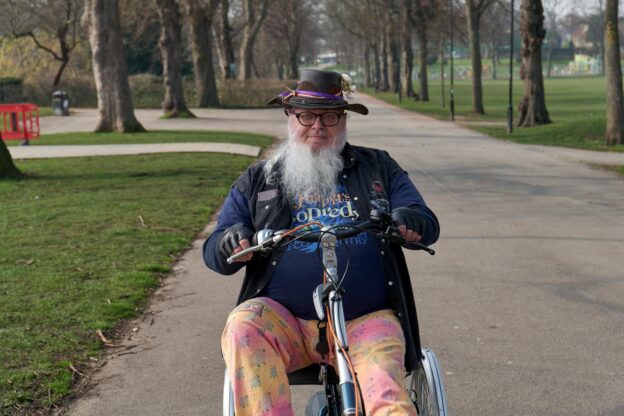
Denmark spends roughly a quarter of its GDP on social protection, and one of the things that money buys is something you can’t easily put on a balance sheet: a population of older people who do not apologize for existing.
This is not simply a nice cultural detail. It is evidence of a fundamentally different answer to a question every society must face: what are people worth when they stop producing? In countries where the safety net is thin and healthcare is employer-linked, the answer is delivered through withdrawal — of resources, of relevance, of visibility. In Denmark, the answer is delivered through infrastructure. And that infrastructure produces something specific and observable: older people who carry themselves with a quiet, settled confidence that has no equivalent in societies organized around the productivity-worth equation.
My argument is not that Denmark has solved aging. It is that the Nordic welfare model, by decoupling human worth from economic output at the structural level, achieves something that no amount of individual self-help or retirement planning can replicate. It makes dignity in old age the default rather than the exception.
I notice this most clearly when I’m around my parents’ generation in Aarhus, where I grew up. People in their seventies who walk slowly, read the newspaper for two hours, take the bus to the library, and do not seem haunted by the question of whether they are still contributing enough to justify their meals. They are not performing vitality. They are not branding their retirement. They are simply continuing to live, and the country around them has been structured so that this is permitted without shame.
That sounds unremarkable until you look at what happens elsewhere.
The Productivity Trap and Where It Leads
Research has found that productivity expectations and metrics are increasingly tied to employee anxiety. Studies have examined how real-time digital feedback (streaks, performance scores, dashboard notifications) affects people psychologically. The answer: it increases both engagement and anxiety simultaneously. The mechanism designed to drive performance also becomes a subtle amplifier of stress.
This is not a minor workplace complaint. It is a description of a culture that has taught people, from school age onward, that their worth is conditional on their output. And the psychological consequences of that teaching do not vanish when you retire. They intensify. When you spend forty years in a system where your value is measured, tracked, and gamified, the sudden absence of those metrics does not feel like freedom. It feels like disappearance.
As psychologist Mark Travers has written, when people equate their output with their worth, constant productivity feedback becomes a source of anxiety rather than motivation. People move from intrinsic motivation (doing something because it matters to them) to extrinsic motivation (doing something because a metric says they should). That shift changes how people relate to their own time. And it changes, profoundly, how they relate to aging.
What Danish Infrastructure Actually Communicates
The Danish welfare state is sometimes described as generous, which is accurate but incomplete. The more interesting word is unconditional. Healthcare, pensions, elder care, housing support: these arrive not as rewards for a lifetime of sufficient output but as features of citizenship. The folkepension is universal. You receive it because you lived here and you got old, not because you saved correctly or performed well enough in the labor market to merit comfort in your final decades.
This universality communicates something beyond policy. It communicates a philosophical position about human worth. You matter before you produce, and you continue to matter after you stop.
I studied political science at Copenhagen, and I covered Danish domestic policy for Berlingske for eight years. The welfare state was my beat in the most literal sense. But the thing I came to understand only gradually is that the system’s most important output is not economic security. It is a psychological posture. Danes who grow old inside this system carry themselves differently because the infrastructure beneath them has never asked them to earn the right to be cared for.
Compare this with countries where retirement savings are individually managed, healthcare is employer-linked, and the message to older people is unmistakable: you were valuable when you worked, and now you are a cost. The difference in how people carry their bodies, occupy public space, and talk about their days is visible to anyone paying attention.
The Productivity-Worth Equation and Its Cultural Roots
One of the most perceptive pieces I’ve read recently described the realization that a lifelong obsession with productivity was never about ambition. It was about proving the writer deserved to take up space. Rest was experienced as debt. Stillness felt like trespassing.
That language stopped me. Trespassing. The idea that existing without producing is a form of unauthorized presence. That your body in a room, on a bus, at a café table, needs to be justified by recent output.
This is the psychology that productivity culture produces over decades. And it is the psychology that the Nordic welfare model, at its best, was designed to prevent. Not through therapy or self-help but through the blunt mechanism of universal provision: by removing the material conditions under which people learn to equate their right to exist with their economic function.
I don’t mean this naively. Denmark has its own anxieties. Janteloven, the cultural code that discourages standing out, creates its own pressures. My wife is a Finnish academic, and she would be the first to point out that Nordic egalitarianism also flattens ambition and punishes difference. I wrote last week about the generation of Scandinavians now entering their forties who are quietly asking what all that freedom was for. The system produces its own discontents.
But what it does not produce, or produces far less of, is older people who feel they have become invisible because they stopped being economically useful.
How Slower Time Is Experienced
Research on subjective life tempo, published in Frontiers in Psychology, has explored how people across different ages and cultures perceive the speed and meaning of their time. The findings suggest that how people judge the value of slower periods depends heavily on the cultural framework they inhabit. In societies where speed and output are markers of relevance, slowness is experienced as loss. In societies where slower rhythms are structurally supported and culturally accepted, the same pace is experienced as presence.
This is where the Danish model produces something genuinely different. A retired postal worker in Frederiksberg does not need to become a consultant, a podcast host, or an inspirational speaker to maintain his place in the social order. He can simply be a person who walks to the bakery, reads in the park, picks up his grandchildren from school, and goes home. The country around him does not interpret this as decline.
I’ve observed how the people who age most gracefully in Scandinavia aren’t the ones who stay busy but the ones who learned early how to be interested in ordinary things. That observation points to something structural, not just temperamental. The welfare state makes it possible to be interested in ordinary things without the nagging suspicion that ordinary things are a waste of time you should be spending on something more productive.
What Confidence Looks Like When It’s Quiet
The confidence I’m describing is not loud. It does not announce itself. The version of confidence built in Nordic countries often looks like silence, and that silence is frequently mistaken for coldness. In older people, this quiet confidence is even more easily misread. Foreigners sometimes interpret Danish elders as withdrawn or disengaged.
They are neither. They are simply people who do not need to narrate their value.
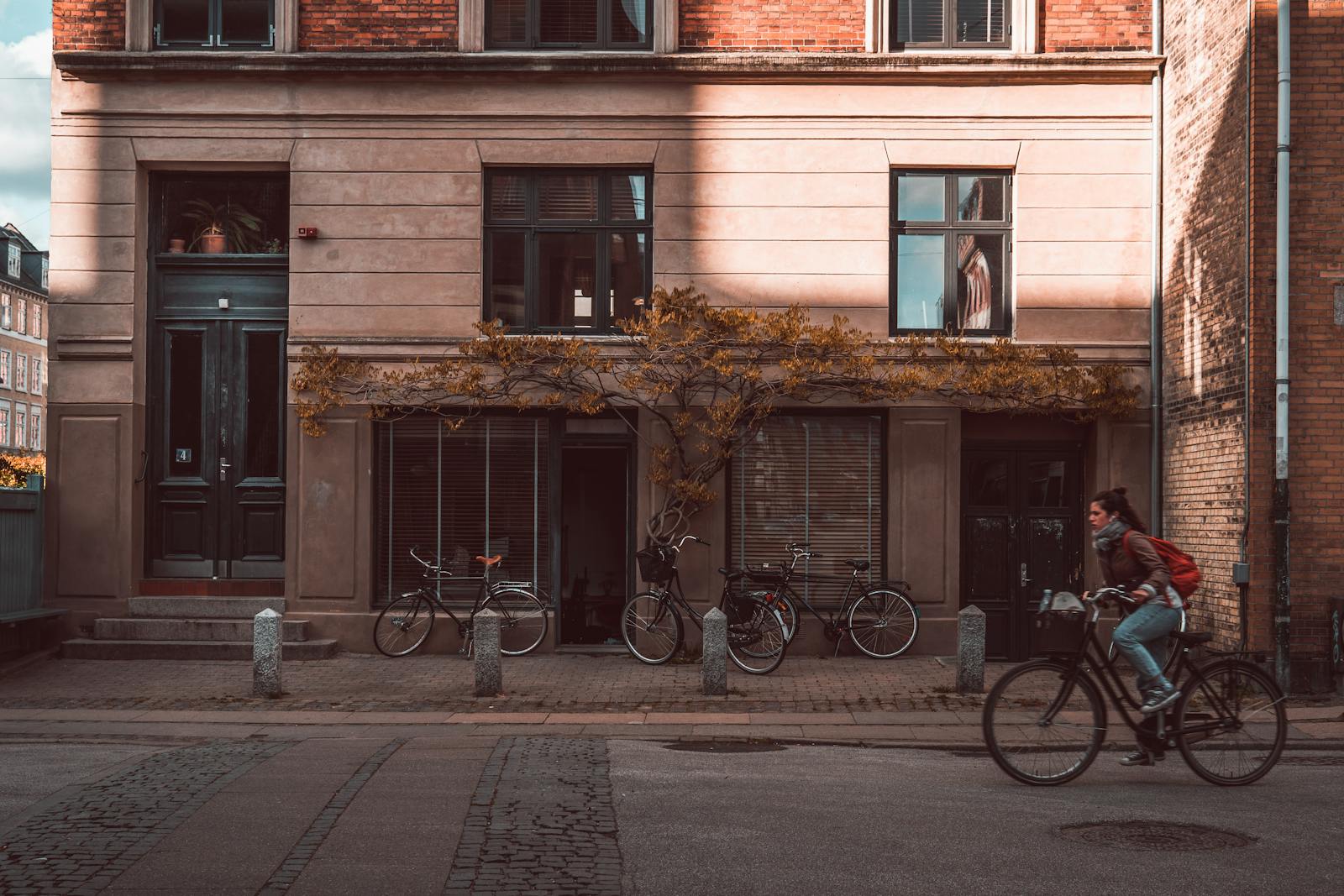
There is a particular body language to this. I see it in my neighborhood in Frederiksberg. Older women who sit alone at cafés without looking at their phones, without seeming restless or self-conscious about being alone. Older men who cycle slowly in the bike lanes without the hunched urgency of someone trying to prove they can still keep up. These are small things. But they accumulate into something visible: a population of older people who have not been told, either explicitly or through the withdrawal of resources, that their time is up.
Compare this with the cultural dynamic described by researchers who study how modern culture offers no framework for dignity without productivity, where once you stop producing economic value, social invisibility follows. In those contexts, aging requires a project. You must become something: an active grandparent, a late-blooming entrepreneur, a fitness enthusiast defying age. The alternative, simply being old, is too culturally terrifying to bear.

The Cracks in the Model
I should be honest about the system’s limits because the story is not pure. Danish elder care has come under real scrutiny. Staff shortages, time pressure on home care workers, concerns about institutional quality: these are ongoing debates in Danish politics, and they are not trivial. The folkepension, while universal, is not luxurious. Danes who relied solely on the basic public pension without supplementary savings live modestly.
And there is a subtler problem. The same egalitarian culture that protects older people from the pressure to perform also, at times, expects them to be content with less. Ambition in old age (wanting to start something new, wanting recognition, wanting more) can bump against the cultural expectation of modesty. Janteloven doesn’t disappear at sixty-five.
The flexicurity model, which I’ve written about extensively, was designed to make working life fluid and secure. But it was designed for working life. The transition out of work and into a period where flexicurity no longer applies reveals an older question the system hasn’t fully answered: what is this country for, beyond making work function well?
The best answer I’ve encountered is: it’s for living. Work is one part of living. Childhood is another. Old age is another. The system is structured so that none of these phases requires you to justify yourself to the others.
What the Self-Worth Research Actually Shows
Psychologist Mark Travers, writing in Forbes, has identified that building self-worth without external reassurance requires a deliberate shift away from contingent self-esteem, the kind that depends on accomplishment, praise, or visible results. He describes strategies centered on internal validation: learning to recognize your own value independent of metrics.
This is essentially individual therapy for a systemic problem. In cultures where self-worth is structurally tied to productivity (through employer-linked healthcare, means-tested benefits, or a media environment that glorifies hustle), asking individuals to simply build internal self-worth is like asking someone to stay dry in a rainstorm through positive thinking.
The Danish approach works differently. The internal self-worth that Travers describes is not something Danes build through psychological exercises. It is something the infrastructure assumes. The system says: you have worth. Here is your healthcare. Here is your pension. Here is the bus that runs on time. Now do what you want with your day.
That sounds simple. It is wildly expensive, politically difficult, and the product of decades of negotiation and social trust. But the psychological output is real. People who grow old inside a system that assumed their worth from the start carry that assumption with them into their final decades. They don’t need to build it from scratch at sixty-seven. The self-worth isn’t constructed in retirement; it is the accumulated residue of a lifetime spent inside institutions that never required you to earn it.
A Different Kind of Freedom
I’ve been writing recently about the version of ambition that doesn’t announce itself, the kind that builds something real over twenty years without requiring applause. There is a companion idea for old age: a version of dignity that doesn’t require performance. It doesn’t require you to prove you’re still sharp, still busy, still adding value. It simply lets you be present.
My children are eight and eleven. When I watch them interact with older relatives, what I notice is the absence of something. There is no underlying negotiation about whether the older person is still worth the time. No subtext of pity or obligation. The relationship is simply between a person and a smaller person, separated by decades but not by a hierarchy of usefulness.
That absence is the product of infrastructure. It is the product of a society that decided, through politics and taxation and argument, that human worth is not a performance metric.
Watching my parents age inside this system, I’m aware of something that’s hard to name precisely. It is not happiness, exactly. The Danes are famously happy in surveys, but that word is too bright for what I’m describing. It is closer to ease. A settled quality. The absence of a specific fear that eats at older people in countries where the safety net is thinner and the cultural message is harsher.
The fear I mean is this: Now that I am no longer useful, does anyone have a reason to keep me around?
In Denmark, the answer is structural. It is built into the pension system, the healthcare system, the elder care system, the bus routes, and the park benches. The answer is: yes. Not because of what you did. Because of what you are.
That answer produces a particular kind of confidence in old age. Quiet, undramatic, easy to miss if you’re looking for something flashier. But unmistakable once you see it. And deeply instructive for any society now grappling with aging populations, rising loneliness, and the dawning suspicion that decades of tying human worth to economic output may have been not just cruel but structurally unsustainable. Denmark didn’t solve aging. But it answered the question that makes aging unbearable everywhere else. And the answer, expensive and imperfect as it is, turns out to be enough.
Photo by Centre for Ageing Better on Pexels