
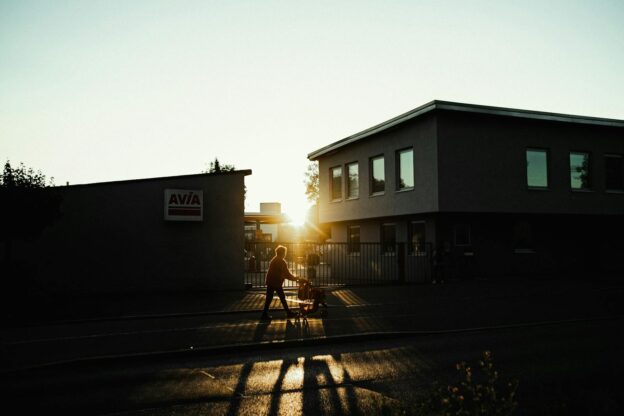
Trust between strangers is not a feeling. It is infrastructure, as real as plumbing or broadband, and most people never notice it until they move somewhere it actually works.
Think about what plumbing actually does. It runs beneath every wall and floor, invisible, and you never spare it a thought until the morning you turn the tap and nothing comes out. Then, suddenly, you cannot cook, cannot wash, cannot function. Trust operates the same way in a society. When it is present, it is silent. It shapes every interaction without announcing itself: the way you walk through a crowd, the way you leave a package at your door, the way you let your children out of sight. It requires constant maintenance, small repeated investments from millions of people. And when it breaks, everything above it, the commerce, the community, the ease of daily life, stops working in ways that are difficult to repair. I did not understand any of this until friends from other countries forced me to see it.
I have lived in Sweden my entire life. For most of that time I did not think much about the fact that parents park their strollers outside cafés with sleeping babies inside, that bicycles lean against lampposts with nothing more than a prayer holding them there, or that when I arrive at a dinner party in Södermalm, the host’s front door is almost always ajar. I walked through it, took off my shoes, and that was that. It was only when friends from other countries pointed out how strange this looked that I began to understand I was living inside a system most of the world finds unbelievable.
The stroller on the sidewalk
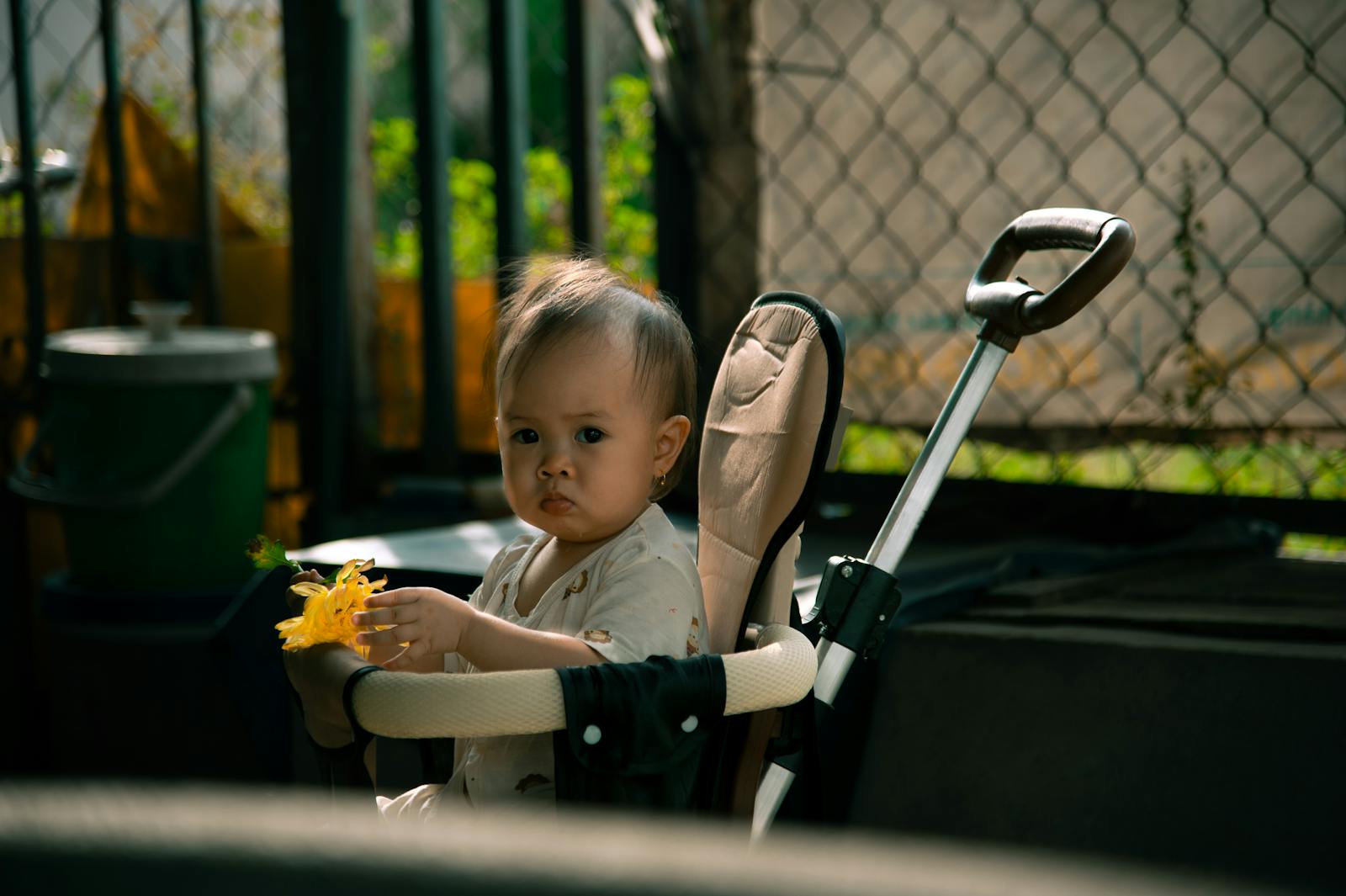
The image of Scandinavian babies sleeping in strollers outside restaurants has become something of an internet cliché. People share photos with a kind of awed disbelief: Who would leave their child unattended on a public street? The assumption embedded in the question is revealing. It presumes that strangers are dangerous by default, that public space is hostile, and that only a reckless parent would trust it.
But that is not how the calculation works here. Swedish parents leave strollers outside not because they are naïve but because decades of collective behavior have made it a reasonable bet. Social norms are strong. The person walking past the stroller is expected to be exactly what they almost always are: someone going about their day. The practice sustains itself because it is rarely violated, and it is rarely violated because the practice itself communicates a shared expectation.
This loop is fragile. It only takes a few betrayals to break it. But when it holds, it creates something psychologists call generalized social trust, the baseline assumption that most people, most of the time, will behave decently.
What trust actually is (and what it isn’t)
When I studied psychology at Stockholm University, much of the curriculum focused on individual cognition and clinical outcomes. Trust was discussed in the context of theories about relationships and therapeutic practice. What was less explored was the collective dimension: how entire societies develop or lose the capacity to take each other at their word.
The British Psychological Society explored exactly this question, examining why social trust is failing and how psychology might help restore it. Research suggests that high-trust societies operate with less need for constant negotiation in daily interactions. That phrase has stayed with me. Without constant negotiation. That is what the unlocked bike represents. Not carelessness, but the absence of a need to negotiate safety at every moment.
The analysis draws on Self-Determination Theory, the framework developed by Deci and Ryan, which identifies three universal psychological needs: relatedness, competence, and autonomy. The argument is that these needs build sequentially. Relatedness comes first. Before people can act responsibly, they need to feel connected and seen. What resonates with me is the idea that values like justice and accountability are more effectively transmitted through lived experience than through instruction.
That sentence describes Sweden to me more accurately than any tourism campaign ever has.
The architecture nobody talks about
Visitors to Stockholm or Copenhagen often attribute the trust they observe to some mysterious Nordic temperament. Scandinavians are calm. Scandinavians are honest. Scandinavians are built differently. This is flattering but wrong. The trust is not in the people; it is in the system the people maintain together, often without being fully aware of it.
Universal healthcare, subsidized childcare, strong labor protections, transparent government. These are not just social programs. They are trust infrastructure. When you do not fear that illness will bankrupt you, you carry less suspicion into every interaction. When your children are cared for regardless of your income, you are less likely to see your neighbor as a competitor for scarce resources. The stakes of being cheated are lower because the floor beneath you is solid.
There is a concept in Swedish we return to again and again: lagom, often translated as “just the right amount.” It is sometimes dismissed as a preference for mediocrity, but I think of it differently. Lagom is the social technology that keeps trust calibrated. Not too much generosity (which creates dependency), not too much self-interest (which creates isolation). Enough. The right amount.
When the front door is open
The open door during a dinner party might be the most telling of the three behaviors in this article’s title. Strollers and bikes involve property. An open front door involves your home, the most private space you have.
I have been to dinner parties in Södermalm where the host simply leaves the door unlocked and guests let themselves in. I have noticed a similar impulse in Denmark, where real hospitality sometimes means leaving people alone when they arrive, giving guests space rather than smothering them with attention. The open door is a Swedish cousin of the same idea. You are expected to walk in without ceremony. No buzzer, no host rushing to greet you. The door’s openness says: I am not worried about who comes in, because I already know who is coming, and the neighborhood knows, too.
This works because of what researchers describe as relational interactions characterized by empathy and cooperation. Studies on how values are internalized in community settings have found that trust takes root not through explicit instruction but through lived experience: dialogic interaction, inclusive institutional norms, and daily cooperation. People learn to trust by being trusted.
The shadow side of all this trust
Honesty about Scandinavian trust requires acknowledging its limits. The same social cohesion that allows babies to sleep on sidewalks can make it very difficult for outsiders to break in.
Anyone who has tried to make friends as an adult in the Nordics knows the challenge. It is not harder because people are cold. The difficulty is that people already built their friendships slowly and carefully, and they do not have empty slots. The trust network is tight, but tight networks have borders. If you did not grow up inside them, entry requires patience that not everyone has.
There is a tension I have written about before between Nordic egalitarian ideals and a quiet, sometimes fierce individualism. Swedes trust the system. They trust strangers in the abstract. But they also keep significant emotional distance from people they do not know well. The trust is wide but not always deep. You can leave your bike outside all day, but getting someone to tell you how they really feel can take years.
The BPS analysis captures this dynamic precisely. According to psychological research, when shared social norms weaken, people tend to become more cautious in their interactions and less confident in institutional predictability. Sweden is not immune to this. Rising inequality, political polarization, and the strains of rapid demographic change have put pressure on the old trust consensus. I notice it. Conversations about certain topics have become more careful. The doors are still open, but the openness is no longer automatic for everyone.

What trust teaches you about yourself
Living in a high-trust society changes you in ways that are hard to see until you step outside it. When I travel to cities where people clutch their bags on the metro or triple-lock their doors, I feel a specific kind of discomfort that I think is really just awareness. I become conscious of how much mental energy vigilance consumes.
Research on self-efficacy and psychological resilience published in Frontiers in Medicine shows that trust in one’s social environment is strongly linked to life satisfaction, partly because it frees up cognitive resources for other things. When you are not calculating risk in every interaction, you can think about something else. You can notice the quality of light on the water. You can let your mind wander during a walk across Södermalm, which is how most of my thinking gets done.
But the deeper lesson is about reciprocity. Trust is not a gift you receive passively. It is a practice you participate in. Every time I leave my apartment door unlocked during a gathering, every time I do not chain my bike with military-grade hardware, I am making a small investment in a shared account. The return is not guaranteed. Sometimes bikes get stolen. Occasionally, trust is broken. But the alternative, a life organized entirely around the prevention of loss, costs more than it saves.
The practiced belief underneath
What I have learned, after four decades in this country, is that trust is not optimism. Swedes are not starry-eyed about human nature. They know people cheat, steal, and lie. The Nordic approach to disappointment is not optimism and not stoicism. It is a practiced belief that most bad outcomes are simply weather, and weather passes.
Trust operates on the same principle. It is not a conclusion about people. It is a bet you keep making because the odds, in this particular society, with this particular infrastructure, tend to work out. The stroller stays safe. The bike is usually still there. The door opens to familiar faces.
Drawing on Karen Stenner’s research, some psychologists describe the anxiety that arises when people perceive common standards are weakening as a form of normative threat. Under these conditions, increasing social complexity and diversity can trigger anxiety and a desire for simplified certainties. I see this happening in Sweden now, and it worries me. The country’s trust infrastructure took generations to build. It can erode much faster than that. But erosion is not collapse, and awareness is not defeat. The fact that Swedes are talking about trust, arguing about it, feeling anxious about its future, tells me something important: we still know what we have, and we have not yet decided to let it go.
But the practices persist. Just last week I walked past a café in the Mariatorget neighborhood and counted three strollers parked outside, two of them with sleeping children. No parent was watching. No one walking past gave it a second thought. The trust was so ordinary it was invisible.
That invisibility is the point. When trust works, you do not notice it. It is only when it breaks that you realize what you had. The unlocked door, the unchained bike, the baby on the sidewalk: these are not quaint customs. They are the visible surface of a psychological contract that runs on interpersonal synchrony and shared expectation, renewed silently every day by millions of people who have decided, for now, to keep the bet going.
I plan to keep making that bet. Not because I am sure it will always pay off, but because the alternative, a life behind locked doors and suspicious glances, is not the life I want. The stroller on the sidewalk says: I believe in the street I live on. The bike leaning against the lamppost says: I do not need to defend myself from everyone. The open door says: come in, you are expected, and this place is safe enough for both of us. These three small acts of faith, repeated across a country every single day, are what trust looks like when it stops being a theory and becomes the way you actually live. And if you have ever felt the relief of walking into a place where the door was already open, you know exactly what I mean.
Photo by Bayram Er on Pexels