
Norway’s agreement to produce Ukrainian drones on its own soil isn’t simply another defense cooperation deal — it’s the clearest signal yet that frontline NATO states are building their own bilateral defense-industrial ties with Ukraine, bypassing slower multilateral channels and betting that the technology forged in Ukraine’s war will define European security for decades. For Oslo, this is a calculated wager: by embedding Ukrainian drone expertise into its own defense infrastructure now, Norway is positioning itself as an indispensable node in a new European security architecture — one organized not around Brussels consensus but around shared threat perception and technological access.
What the agreement involves
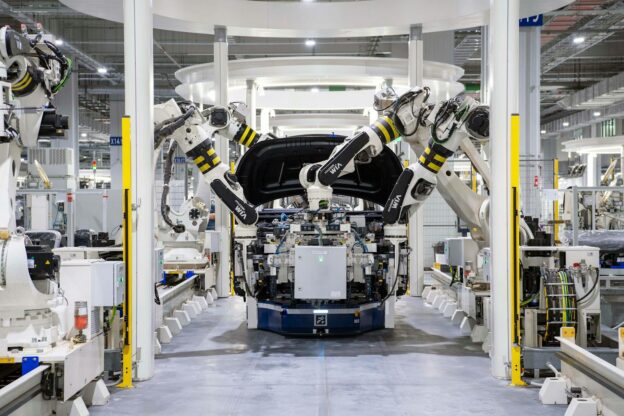
Under the deal, Norway will facilitate drone production facilities both domestically and within Ukraine. In return, Ukraine will share combat-tested data and technical expertise gained from its ongoing conflict with Russia. The arrangement is two-directional: Norway gains access to some of the most battle-proven drone technology in the world, while Ukraine diversifies its manufacturing base beyond its own borders, where production sites remain vulnerable to Russian strikes.
The specific types of drones to be produced in Norway, the scale of production, and the timeline for getting facilities operational have not yet been publicly detailed. What is clear is that the partnership positions Norway as one of Ukraine’s key European defense-industrial partners at a moment when drone warfare has fundamentally reshaped the conflict.
Why Norway — and what Oslo actually gets
Ukraine has been aggressively expanding its drone production capacity across allied nations, recognizing that keeping all manufacturing within its own borders carries obvious risks. A drone factory recently opened in Mildenhall, England, reportedly operated by a major Ukrainian drone manufacturer, with the capacity to produce up to 1,000 drones per month as part of a significant investment. Reports indicate the facility was attended at its opening by Ukraine’s ambassador to the UK, Gen Valerii Zaluzhnyi.
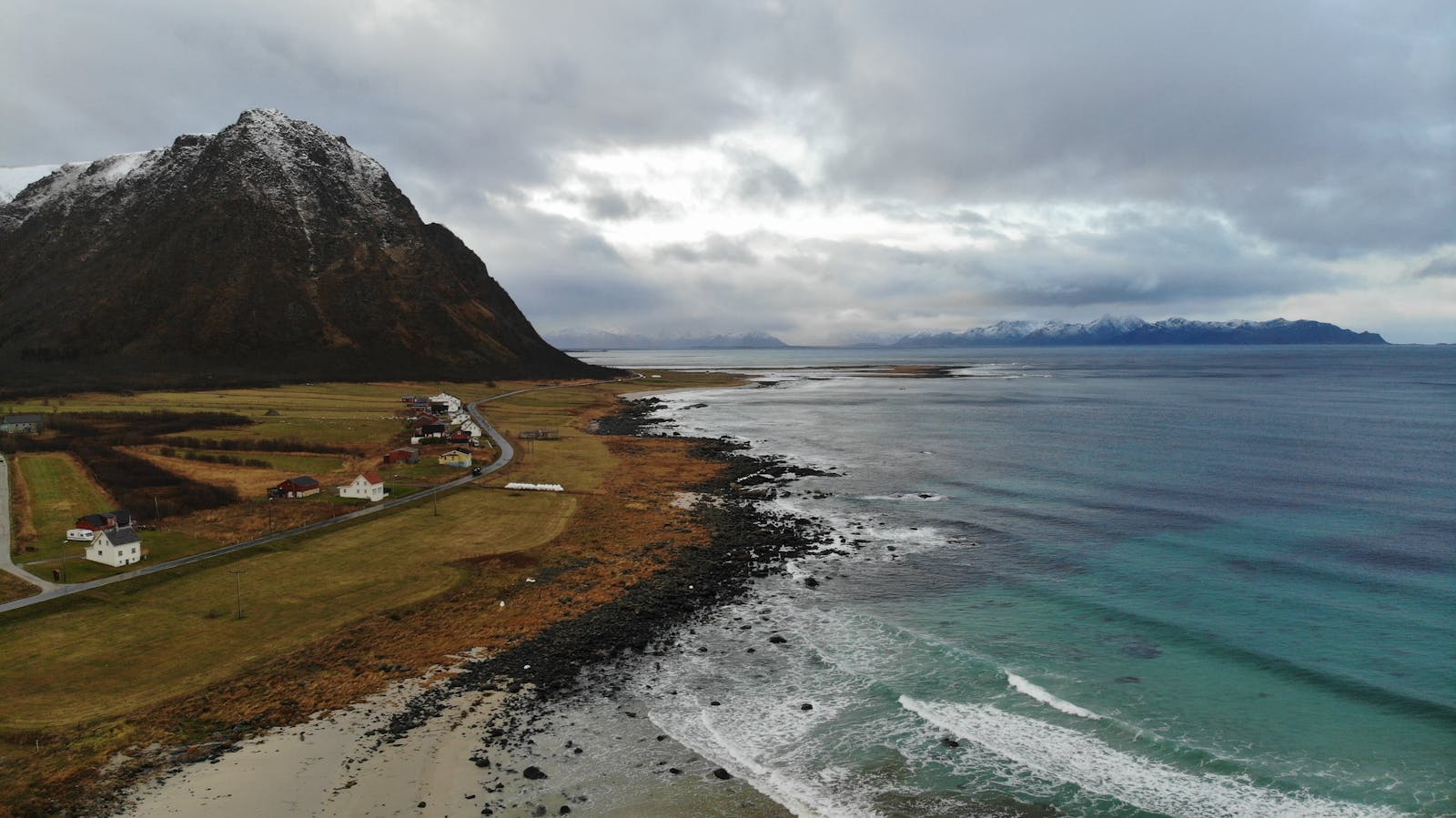
But Norway’s involvement carries strategic weight that the UK arrangement does not. As a NATO member with a border with Russia spanning nearly 200 kilometres, Norway isn’t partnering with Ukraine out of solidarity alone — it’s acquiring technology directly relevant to its own territorial defense. The Arctic and northern Norwegian littoral present exactly the kind of surveillance and denial challenges that Ukrainian drone systems have been solving in real time for three years. Norwegian forces patrolling the Finnmark region face conditions — vast distances, sparse infrastructure, a peer adversary across the border — that make drone capability not a nice-to-have but an operational necessity.
The UK recently committed to doubling its troop numbers in Norway as part of broader efforts to deter Russian aggression in northern Europe. That reinforcement is welcome in Oslo, but it also underscores Norway’s dependency on allied deployments for its own security. Domestic drone production changes that equation. It gives Norway an indigenous capability built on combat-proven designs — something that years of peacetime R&D spending alone has not delivered.
For Støre’s government, the political logic is equally compelling. Norway’s defense budget has been climbing, but spending alone doesn’t translate into capability without the right technology partnerships. By tying itself to Ukraine’s iterative development cycle — where designs are tested, adapted, and improved in weeks rather than years — Oslo is essentially buying a shortcut past the glacial timelines of traditional defense procurement.
The knowledge asymmetry that makes this work
The centrality of drone technology in the Ukraine conflict is difficult to overstate. What began as a supplement to conventional forces has become the backbone of both offensive and defensive operations. Industry observers have noted that drones have fundamentally changed the character of the conflict at every level, from squad tactics to strategic targeting.
Ukraine’s advantage in this space is less about any single piece of hardware and more about the iterative cycle between battlefield use and manufacturing adaptation. Ukrainian forces have been refining drone tactics and designs in real time, creating a feedback loop that no amount of peacetime R&D can replicate. That accumulated knowledge is what Ukraine brings to the table in partnerships like the one announced in Oslo.
This creates an unusual power dynamic in the relationship. Traditionally, smaller nations receiving defense assistance are the junior partners. Here, Ukraine holds something Norway cannot generate on its own: years of continuous, high-intensity combat data on drone performance, electronic warfare countermeasures, and operational integration. Norwegian defense firms and research institutions — including those clustered around Kongsberg and the FFI defense research establishment — stand to gain not just production contracts but an entirely new dataset for their own development programs. The transfer isn’t charity in either direction; it’s a genuine exchange of complementary assets.
Bilateral deals as the new European default
This partnership arrives against a backdrop of intensifying divisions within Europe over Ukraine support. Hungary has faced criticism for its approach to EU aid measures. Ukrainian Foreign Minister Andriy Sybiga recently condemned leaked audio that appeared to capture Hungarian counterpart Péter Szijjártó offering to help Moscow with EU sanctions, describing it as disgraceful.
Against that fractured landscape, bilateral defense agreements like the Norway-Ukraine drone deal take on added significance. They represent a parallel track of cooperation that bypasses the consensus requirements of EU decision-making. Nations that want to support Ukraine can do so directly, without waiting for unanimity in Brussels.
For Norway — which sits outside the EU but within NATO — this kind of bilateral arrangement is a natural fit. It allows Oslo to deepen its support for Ukraine on its own terms while strengthening its own defense posture in a region where Russian proximity makes these questions existential rather than theoretical. But it also reveals something about where European defense cooperation is actually heading: not toward the integrated EU defense identity that Brussels has long aspired to, but toward a patchwork of bilateral and small-group arrangements driven by geographic proximity to the threat. The UK’s drone factory, Norway’s production agreement, the Baltic states’ ammunition purchases — these are the building blocks of a defense architecture that is emerging from the bottom up, shaped more by urgency than by institutional design.

Norway’s bet — and its risks
Significant details remain to be filled in. Where in Norway will production take place? Which Ukrainian drone designs will be manufactured? What role will Norwegian defense firms play, and how will intellectual property and export controls be managed? These are not trivial implementation questions — they will determine whether the agreement delivers genuine capability or remains a political gesture.
But the strategic trajectory is already visible. Norway is positioning itself as the Nordic anchor of a distributed Ukrainian drone production network, and in doing so, it is acquiring defense-industrial relevance that extends well beyond its population of five million. If the arrangement works — if Norwegian facilities are producing combat-tested drone systems within the next two to three years — Oslo will have transformed itself from a wealthy but militarily modest NATO ally into a critical supplier of the technology that is redefining European warfare. That’s a significant upgrade in strategic weight, and it comes at a moment when Norway’s Arctic resources, its NATO flank position, and its proximity to Russia make that weight matter more than it has in decades. The question is no longer whether Norway belongs at the center of Europe’s defense-industrial future. It’s whether Oslo can execute fast enough to get there before the next crisis demands it.
Photo by Hyundai Motor Group on Pexels