
On 30 November 1939, the Soviet Union sent roughly a million men across the Finnish border, and Moscow was working on a short clock. When the Soviet Union invaded, its commanders expected a quick win over a small country. Finland had a fraction of the men, a fraction of the tanks, and almost no air force. On paper it looked less like a war than an occupation with a start date.
The paper was wrong. Finland held for the better part of three and a half months. It’s worth asking plainly how a country supposed to fold inside two weeks kept fighting through the darkest, coldest months of the year.
How does a two-week war become a months-long war?
Part of the answer is that the Soviets picked the worst possible season and the worst possible ground. The Red Army made little headway against the Finnish defense until heavy artillery finally broke through the main Finnish line, the Mannerheim Line, in February 1940. Until then, a much larger force spent weeks getting almost nowhere.
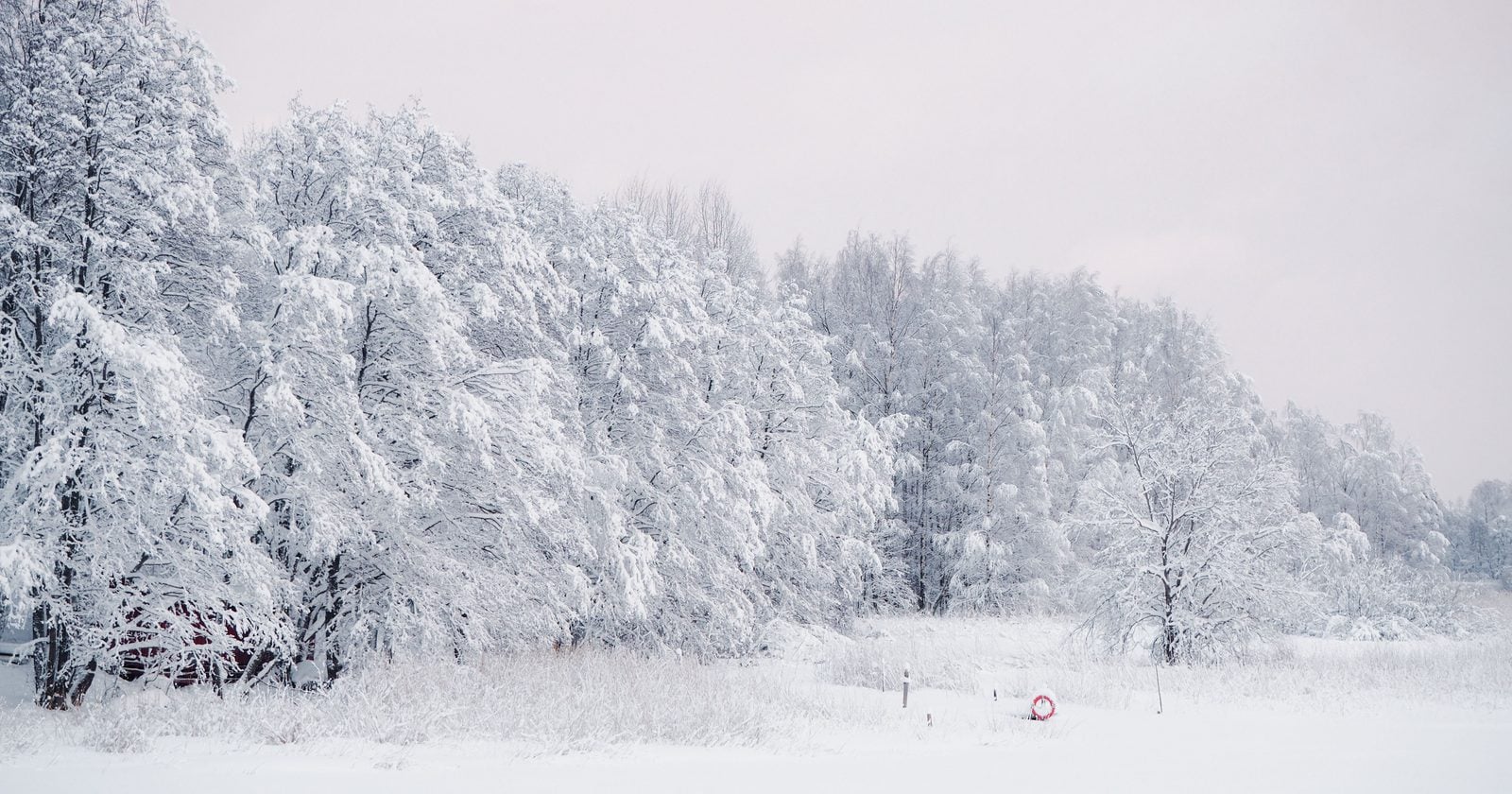
The cold did a lot of the fighting. The winter of 1939–40 was among the coldest on record in Finland, with temperatures on some fronts dropping toward minus 40. Machines seize up at those temperatures. Fuel thickens, metal turns brittle, and men who aren’t dressed and trained for it stop working. The Finns were. They moved on skis in white camouflage, hit stalled Soviet columns, and vanished back into the forest.
Then there was the tactic the Finns became known for: the motti. Instead of meeting a Soviet column head-on, small mobile Finnish units cut a road-bound formation into isolated pockets, then picked off each pocket at their own pace. A Soviet division strung out along a single forest track, unable to get off the road in deep snow, was not really an army. It was a line of targets. The smaller force used the land and the weather to turn Soviet numbers into a liability for the Soviets.
Who was the farmer with the rifle?
The most famous figure of that defense was Simo Häyhä, a farmer and hunter from Rautjärvi who was called up and sent to the front as a sniper. He fought at the Battle of Kollaa, where the temperature ran from around minus 20 to minus 40. He is credited with more than 500 kills, made without a telescopic scope.
The figure usually repeated is around 505 confirmed kills in less than 100 days, often called the highest recorded sniper total in any major war. His biographer, Major Tapio Saarelainen, a Finnish Army sniper instructor, records that Häyhä could judge distances up to 150 meters to within about a meter, and that he did not get sniper training until 1938.
Häyhä is separately credited with a large number of kills using a Suomi submachine gun so the clean headline of “500-plus” is really two different jobs added together, one with a rifle and one with a spray weapon.
Asked once how he had learned to shoot like that, Häyhä reportedly gave a one-word answer: “Practice.” It’s a good line, and like a lot of good lines from this story it comes to us secondhand, through popular retellings rather than a primary interview.
Why refuse a scope?
The scope question is where the myth gets interesting, because the choice was practical, not stubborn. A telescopic sight in that cold was a liability. The glass fogs and frosts over when warm breath meets freezing air, and moisture on the lens can freeze solid. Iron sights have nothing to fog.
There was a tactical reason too. A scope sits high enough that the shooter has to raise his head to use it, and raising your head above a snow bank is exactly how a sniper gets spotted. Firing over iron sights let Häyhä keep his head down and his outline small, which matters more than magnification when you are lying in white cloth in white snow trying not to be seen. He used a M/28-30 rifle, a Finnish weapon he knew well. In light that failed by mid-afternoon that far north, and at the ranges he worked, plain sights were the reasonable tool.
How did it end, and how should we read the number?
The defense was extraordinary and it still lost. By early February 1940 the Finnish Army was exhausted, its lines were being overrun, and the outside help it had hoped for never came. Finland signed the Treaty of Moscow on 12 March 1940, handing a large share of its territory to the Soviet Union. Independence held; western Karelia did not.
Häyhä nearly didn’t see the end. On 6 March 1940 an explosive round hit him in the jaw, and he woke up around the day peace was declared. He lived quietly for another six decades. Asked later about what he had done, he is quoted as saying, “I only did my duty, and what I was told to do, as well as I could.”
The casualties on both sides were real and lopsided. Finland recorded around 24,923 dead or missing; Soviet losses ran far higher, into six figures on most estimates. Those are numbers we can stand behind. The individual kill count is a different kind of number, one that comes out of a war, from unit credits and later retellings, and has grown a legend around it the way these figures tend to do.