

My mother’s last email arrived with a subject line that read, simply, a tentative question. The question mark was new. Five years ago, she would have written something declarative and attached a link to an Australian design magazine with three paragraphs of commentary about why I was wrong about something. The question mark sat there on my screen for a long time before I opened it.
That tiny punctuation shift contains the whole feeling I want to talk about. The moment when you notice your parents have started handling you gently, and you can’t quite pinpoint when it started.
The shift nobody announces
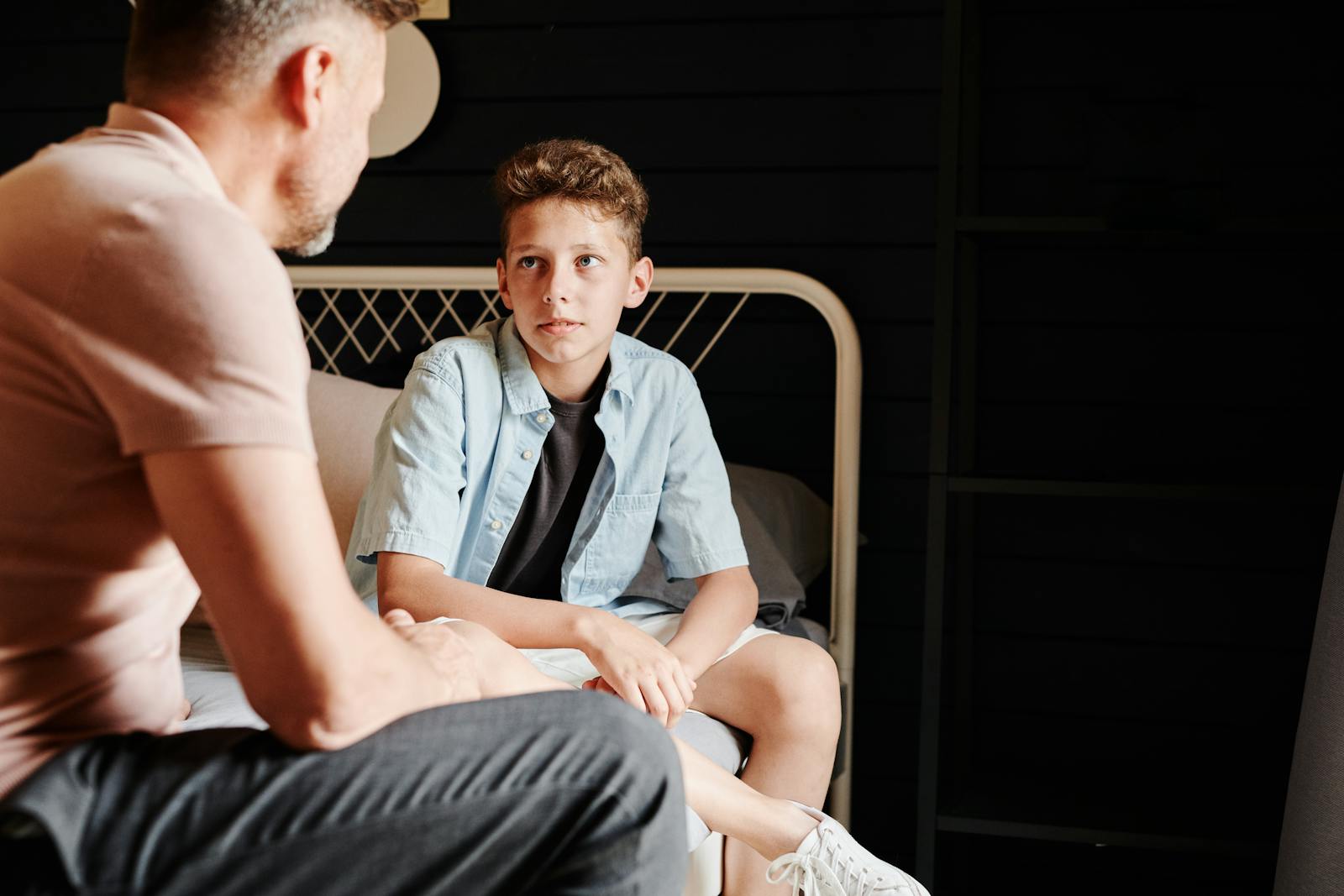
Most parents who experience this shift can’t recall when it began. It’s a gradual process: pausing several times before responding to their adult child’s texts, softening their opinions to avoid sparking conflict, biting their tongues on certain topics altogether. The carefulness creeps in without a starting date.
From the child’s side, the recognition is just as slow. You’re thirty-six, thirty-seven, thirty-eight, and one day you realize your father asked your opinion about his retirement plan. Not because he needed your input. Because he wanted you to feel consulted. Or your mother stopped correcting your pronunciation of a word you’ve been saying wrong for decades. These are small surrenders, barely visible. But they accumulate.
My mother once mentioned, carefully, that she wasn’t sure design criticism needed quite so much skepticism. I told her that skepticism is exactly what good design writing needs. We both understood where the other was coming from. But the conversation itself, the way she framed it as observation rather than correction, was different from how she would have delivered it when I was twenty-three. At twenty-three, it would have been an argument. At thirty-seven, it was a discussion between two people who had quietly renegotiated their positions.
Carefulness as a language
The word “careful” carries two meanings that matter here. There’s careful as in cautious, walking on eggshells. And there’s careful as in full of care, paying close attention. When parents become careful around their adult children, both meanings are usually operating at once. And the discomfort comes from the fact that nobody asks for this. You didn’t request that your parents start treating you like a colleague instead of a subordinate. You didn’t send a memo. It just happened, somewhere between your late twenties and late thirties, and when you finally notice, you feel a strange mix of gratitude and grief.
Recognition that you have become a person with your own centre of gravity. That your life has its own logic, its own weather system, and they are no longer the ones setting the thermostat.
When my mother sends a package from Melbourne with Australian design objects she thinks I should see, it’s her way of staying present without directing. She could call and tell me I’ve spent too long in Copenhagen and lost touch with where I came from. Instead, she wraps up some magazines and a ceramic piece and lets the objects speak for her. It’s careful. Both definitions.
What changes and what stays
The physical facts of parenthood don’t evaporate. As one piece on the psychology of parent-child dynamics describes, parents who provided well materially sometimes struggle with emotional presence as their children grow older. Emotional neglect is often characterized by absence rather than action. The interesting thing about the carefulness I’m describing is that it’s the inverse. It is an event. It is active. Your parent is choosing, in real time, to hold back.
Holding back is not the same as withdrawing. I’ve learned that maintaining relationships across continents requires showing up, calling regularly, sending photos, sharing the texture of daily life. But I’ve also learned that the way people show up changes as everyone gets older. My showing up has become more deliberate. My parents’ showing up has become more tentative. And the space between deliberate and tentative is where the actual relationship lives now.
The respect you didn’t earn the way you expected
We carry ideas about how we’ll earn our parents’ respect. Good grades. A career they can describe at dinner parties. A partner they approve of. Children of our own. These are the obvious milestones, the ones culture tells us will trigger the shift in how parents think of their children—from child to independent adult.
But the respect I’m talking about doesn’t arrive with milestones. It arrives with accumulation. Your parents have watched you make enough decisions, absorb enough consequences, and build enough of a life that they can no longer pretend they know better. They might still think they know better. The respect is in the restraint.
Research published in Frontiers in Psychology on support between mothers and their adult children found that felt obligation and perceived reciprocity both shape how the relationship functions. When adult children begin to reciprocate support (not just receive it), the relationship shifts from hierarchical to something approaching mutual. That mutuality is what I think parents are responding to when they become careful. They sense the power has redistributed, and they’re adjusting their grip.
My partner’s mother taught me to cook traditional Danish food when I first moved here. Frikadeller, rødgrød, the basics. There was no carefulness in those early lessons. She corrected me directly, moved my hands on the knife, tasted things and shook her head. Now, ten years later, she asks what I’m making. She eats what I serve and comments gently. The shift is the same one I notice with my own parents, just expressed through a different kitchen in a different hemisphere.
The grief inside the gratitude
I want to be honest about the less comfortable part of this feeling. When your parents become careful around you, something is lost. The brashness of a parent who tells you exactly what they think, who barges into your decisions with unsolicited certainty, that energy is annoying when you’re twenty-five. It’s missed when you’re thirty-eight.
My father had a health scare a few years ago, and I had to sit with the reality of being someone who’d moved away. That period forced a reckoning with identity: being in Copenhagen doesn’t erase being Australian, it just means holding both. But it also clarified something about the carefulness. Part of what makes parents careful is their awareness of time. They know, in a way that still feels abstract to you in your late thirties, that the relationship has a finite number of conversations left. They don’t want to waste any on fights about your choices.
As I wrote in a recent piece about becoming fluent in a second language as an adult, discovering a new version of yourself requires that an older version step back. The same thing happens in families. Your parents’ carefulness is the older version of your relationship stepping back to make room for whatever comes next.
There’s something in the Scandinavian approach to family that speaks to this. The cultural emphasis on individual autonomy, on not burdening others with your expectations, creates relationships where the carefulness I’m describing is built into the social contract. Danish parents, in my observation, arrive at this careful stage earlier. The autonomy is more structurally supported. But the emotional complexity is the same everywhere. No matter the culture, watching your parents restrain themselves on your behalf produces a feeling that is hard to name.
What the carefulness actually looks like
It’s in the questions that have replaced statements. Tentative suggestions instead of commands. It’s in the pause before they respond to news you’ve shared, the half-second where you can almost see them choosing their words.
It’s in the topics they no longer raise. The ex they used to mention. The career path they once pushed. The city they wished you’d moved to instead. These subjects haven’t been forgotten. They’ve been filed away, consciously, as things that are no longer their business.
It’s in the way they ask about your partner. Genuine curiosity with a thin border of reserve, as if they’ve learned that too much enthusiasm might be as intrusive as too much criticism.
Parents who maintain strong long-term relationships with their adult children share certain habits, and the one that stands out to me is respecting privacy. Staying connected requires parents to adapt continuously: present without becoming intrusive, supportive without taking over. That balance is exactly what carefulness looks like in practice.
And it’s in the gifts. Thoughtful rather than prescriptive. My mother used to buy me clothes she thought I should wear. Now she sends objects she thinks I might find interesting. The difference between “should” and “might” is the entire distance between parenting a child and respecting an adult.
How adult children respond (or don’t)
The tricky part is that adult children often don’t realize they’re being respected until they compare their situation to someone else’s. You hear a friend describe their mother calling four times a day with opinions about their apartment, their diet, their partner’s job, and you think: mine doesn’t do that anymore. When did mine stop doing that?
The answer is usually: gradually, and in response to signals you sent without meaning to. You set a boundary once, firmly, and they heard it. You stopped calling as often during a busy period, and they adjusted rather than escalated. You made a decision they disagreed with and it turned out fine, and they filed that information away.
There’s a parallel truth that runs in both directions: adult children who live their choices without seeking parental approval actually earn a different kind of parental attention. Less controlling, more observational. Less anxious, more admiring.
We’ve explored at Scandinavia Standard the idea that people who grew up eating dinner with their family every night carry a particular kind of calm into their thirties. I think the feeling I’m describing is adjacent to that calm. It’s the calm of realizing that the relationship with your parents has survived its most volatile phases and settled into something quieter, something that requires less maintenance and more presence.
What to do with the feeling
You don’t have to do anything with it. That might be the most important thing to say. The feeling of noticing your parents’ carefulness doesn’t demand action. It demands recognition.
Recognize that their restraint is not distance. It’s discipline. They are choosing, every day, to let you be the person you’ve become, even when that person makes decisions they wouldn’t make.
Recognize that you probably do the same thing in reverse. You’ve stopped trying to change them, too. You’ve accepted the volume at which your father watches television. You’ve stopped suggesting your mother try a different approach to something. You’ve become careful with them, and your carefulness is also a kind of respect.
The reciprocity is the whole point. Two people, formerly locked in the most unequal relationship humans can have (total dependence on one side, total responsibility on the other), slowly finding their way to something like peers. Not equals, exactly. The history is too asymmetric for that. But something close. Something careful.
I opened my mother’s email eventually. The question mark, it turned out, was attached to something small. She wanted to know if I’d seen a particular exhibition at the Louisiana Museum. She thought I’d find the ceramic work interesting. Not that I should see it. That I might. I could hear the restraint in the phrasing, the care in the choice of words. The way she’d written and probably rewritten the sentence until it landed on the right side of suggestion rather than instruction.
I wrote back and told her I had seen it, and that she was right, and that the ceramics reminded me of a piece she’d sent me from Melbourne last year. Then I added a question of my own. Something about her garden. Something small and careful.
The gratitude didn’t need explaining. Neither did the grief. Both just sat there, comfortable, traveling along a quiet line stretched between Copenhagen and Melbourne, doing what they always do: coexisting in the space that careful people make for each other.
Photo by Mikhail Nilov on Pexels