
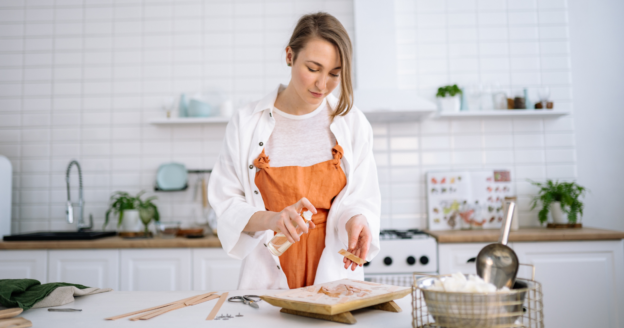
When I step into my friend’s kitchen in Minnesota, something feels different from the moment I cross the threshold.
There’s the soft glow of candlelight on the counter, even though it’s 2 PM. Fresh dill sits in a mason jar like a tiny forest. The wooden cutting board shows years of use but somehow looks loved rather than worn. And here’s what really gets me: she’s making soup for dinner, started it this morning, and she’s actually enjoying the process.
After decades of rushing through meal prep between grading papers and parent conferences, I’ve been rethinking my entire relationship with cooking. What if the kitchen didn’t have to feel like another item on the to-do list? What if cooking could actually become something restorative?
That’s when I started paying attention to how my Scandinavian neighbors approach their kitchens. Not the Pinterest-perfect ones, but the real ones where people actually cook. And I discovered something surprising: they’ve quietly mastered the art of making cooking feel less like work and more like, well, living.
1) Keep your most-used tools visible and beautiful
Walk into any Scandinavian kitchen and you’ll notice something right away: the things they use daily aren’t hidden in drawers. Their wooden spoons stand proudly in ceramic crocks. Cast iron pans hang from hooks. Even the dish soap sits in a pretty bottle.
At first, this seemed purely aesthetic to me. But then I tried it. I brought my mother’s old mixing bowls out of the cabinet and displayed them on open shelving. I hung my favorite copper pot where I could see it. Suddenly, cooking didn’t feel like dragging out equipment for a task. It felt like reaching for old friends.
The psychology makes sense when you think about it. When your tools are beautiful and accessible, you’re more likely to use them. When cooking feels like an event requiring excavation of multiple cabinets, of course it feels like work. But when everything you need is within arm’s reach and pleasant to look at? That’s when chopping vegetables starts to feel meditative rather than tedious.
2) Embrace the art of doing one thing well
Here’s something that took me years to understand: Scandinavian cooks rarely make complicated meals on weeknights. Instead, they’ll make one thing and make it really well. A simple fish with dill and potatoes. Fresh bread with good butter and cheese. Soup that’s been simmering since morning.
Jodi Moreno, natural foods chef and author, puts it perfectly: “Once you get cooking this way, you realize that making things simple and delicious is not that intimidating.”
This completely changed my approach. Instead of trying to juggle three side dishes while the main course burns, I focus on one element. Maybe it’s the perfect roasted chicken. Or carrots cooked just right with butter and caraway seeds. When you’re not frantically multitasking, you can actually taste what you’re making, adjust the seasoning, and enjoy the process.
3) Make your kitchen a place you want to linger
Scandinavian kitchens aren’t just functional spaces. They’re designed for living. You’ll find a comfortable chair tucked in the corner with a wool throw. Plants on the windowsill. A radio playing softly. Maybe a cookbook open on a stand, more for inspiration than instruction.
I used to eat standing at my counter, rushing through meals between tasks. Now I’ve added a small cushioned stool to my kitchen island. I light a candle while I cook. I play music that makes me want to move slowly, not efficiently. These tiny changes shifted everything. Now I find myself sitting with my morning coffee, actually tasting it, while Biscuit lounges at my feet instead of gulping it down while checking emails.
4) Prep in stages throughout the day
My neighbor taught me this one: she doesn’t cook dinner, she assembles it. Throughout the day, whenever she has five minutes, she’ll do one small task. Chop an onion after breakfast. Marinate the fish at lunch. Set the table in the afternoon.
This approach completely eliminates that rushed, chaotic energy that used to define my dinner prep. By the time evening rolls around, half the work is already done. You’re not starting from scratch when you’re already tired. You’re just bringing together pieces you’ve been gently working on all day.
It reminds me of how my grandmother used to cook when she lived with us. She’d putter in the kitchen throughout the day, never seeming stressed, and somehow a full meal would appear by evening. I thought it was magic then. Now I realize it was just good planning disguised as relaxation.
5) Honor the seasons in the simplest ways
Scandinavian cooking follows nature’s calendar religiously. But not in a complicated, farmers-market-every-Saturday way. In simple, almost obvious ways. They eat soup when it’s cold. Salads when it’s warm. Root vegetables in winter. Berries in summer.
This sounds basic, but how often do we force ourselves to make elaborate salads in January or heavy stews in July because that’s what the recipe we found calls for? When you cook seasonally, everything tastes better because you’re working with ingredients at their peak. Plus, your body actually craves what you’re making.
Now I keep it simple. When the weather turns cold, I make soup on Sundays and eat it throughout the week. When summer comes, it’s all about simple preparations that don’t heat up the kitchen. This natural rhythm makes meal planning almost automatic.
6) Clean as you cook, but gently
In Scandinavian kitchens, cleaning isn’t a frantic post-meal scramble. It’s woven into the cooking process itself. While the onions soften, you wash the knife. While the bread rises, you wipe the counter. It’s almost meditative, this gentle maintaining of order.
I used to let dishes pile up until the meal was over, then face a daunting mountain of cleanup that made me dread cooking in the first place. Now I keep a bowl of warm soapy water ready while I cook. Tools get a quick wash between uses. Spills get wiped immediately. By the time dinner’s ready, the kitchen is still peaceful, not a disaster zone.
Finding your own slow kitchen rhythm
These principles aren’t about perfection or following rules. They’re about finding a rhythm that makes cooking feel sustainable, even enjoyable. After years of treating my kitchen like a pit stop, I’m finally learning to treat it like a place of restoration.
Some evenings, I still grab something quick. But more often now, I find myself enjoying the weight of my knife in my hand, the sizzle of butter in the pan, the simple satisfaction of feeding myself well without rush or fuss.
What small change could you make in your kitchen today that might shift cooking from chore to ritual?