
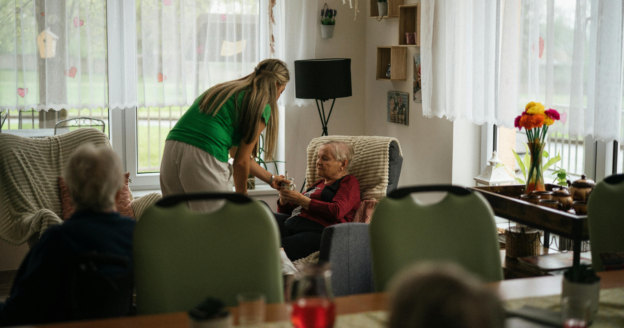
Last month, I visited a friend who’d just moved her 82-year-old father into an assisted living facility here in the Midwest. The place was nice enough — clean hallways, pleasant staff, scheduled activities.
But what struck me was how separate it felt from the rest of the world. Like a well-appointed island for the elderly, cut off from the energy and rhythm of everyday life.
Then I stumbled across an article about Finland’s approach to senior housing, and it completely shifted my perspective. While we’re building more facilities that isolate older adults, the Finns are reimagining what it means to create homes for their elders — and what they’re doing reveals something profound about how they value aging itself.
After teaching for 34 years and now navigating my own retirement journey, I’ve been thinking a lot about what makes a good life as we age. Here are six things Finland does differently that might just change how you think about growing older.
1) They design for independence, not just safety
When my grandmother lived with us during her final years, we immediately started “elder-proofing” everything. Grab bars everywhere, removing throw rugs, simplifying the layout. Safety first, always.
Finnish homes for older people take a different approach. Yes, they include safety features, but they’re designed to be almost invisible. Wide doorways and hallways aren’t just about wheelchair access — they’re about maintaining dignity while moving through your own space. Kitchens stay fully functional rather than being stripped down to basics. The message is clear: you’re still capable, still independent, still you.
This reminds me of something Khoi Vo, CEO of the American Society of Interior Designers, said: “Design is not just about aesthetics—it’s about dignity.” That’s exactly what Finnish design prioritizes — maintaining the dignity of choice and self-sufficiency rather than assuming decline.
2) They mix generations intentionally
Here’s something that would seem radical in most American communities: Finland actively creates housing where young people and seniors live side by side. Not just in the same neighborhood, but in the same building, sharing common spaces and daily interactions.
Some Finnish senior housing complexes offer reduced rent to young people who commit to spending time with elderly residents. They might share meals, help with technology, or simply chat over coffee. It’s not charity or obligatory volunteer work — it’s designed as mutual benefit. Young people get affordable housing in expensive cities, older residents get connection and vitality.
I think about my volunteer work at the community literacy programme, where I work with people of all ages. That intergenerational energy keeps me sharp, curious, engaged. Finland has figured out how to build this into the very structure of their housing.
3) Natural light becomes a priority feature
Finnish winters are long and dark, so perhaps it’s no surprise they’ve mastered the use of natural light in senior housing. But it goes beyond just adding windows. They position buildings to maximize daylight exposure, use light colors and reflective surfaces to amplify what light there is, and incorporate artificial lighting that mimics natural circadian rhythms.
This isn’t just about mood (though that matters tremendously as we age). Research shows that proper lighting affects everything from sleep patterns to cognitive function to the risk of falls. Finnish designers treat light as medicine, essentially. They understand that as our eyes age and our sleep patterns shift, we need environments that work with these changes, not against them.
4) Communities are built into the neighborhood fabric
Finnish senior housing rarely exists in isolation. They’re integrated into regular neighborhoods, near shops, cafes, libraries, and public transport. Residents aren’t shuttled to activities — they walk to the local market, take the tram to the theater, meet friends at the neighborhood cafe.
Compare this to many American senior communities built on the outskirts of town, accessible only by car. We create beautiful facilities but forget that connection to the wider community is what keeps people engaged with life. Finland gets it: aging doesn’t mean retreating from society.
When I retired, one of my biggest fears was becoming irrelevant, invisible. The Finnish model ensures that older adults remain visible, active participants in community life simply through thoughtful placement of housing.
5) Flexibility is built in from the start
Finnish homes for seniors are designed to adapt as needs change. Walls can be moved to accommodate caregivers. Bathrooms are built with space for future mobility aids. Technology infrastructure is installed but can be upgraded as new assistive devices emerge.
This forward-thinking approach means people can truly age in place. You don’t have to move when your needs shift slightly — your home shifts with you. It’s practical, economical, and emotionally intelligent. Moving is hard at any age, but especially difficult when you’re older and deeply rooted in your space.
6) Nature access is non-negotiable
Even in urban settings, Finnish senior housing includes substantial green space. Not just decorative landscaping, but functional gardens where residents can grow vegetables, sit among trees, or simply watch the seasons change. Many facilities include greenhouse spaces for year-round gardening despite the harsh winters.
They understand something fundamental: connection to nature isn’t a luxury for older adults, it’s essential for wellbeing. Gardening provides purpose, gentle exercise, and sensory engagement. Natural spaces encourage outdoor time, which supports everything from vitamin D production to mental health.
What this reveals about valuing our elders
Looking at these six differences, a pattern emerges. Finland doesn’t design for older people as a separate category of humans who need to be managed. They design for people who happen to be older, who deserve beauty, connection, autonomy, and purpose just as much as anyone else.
The Finnish approach reveals a society that sees aging as a natural continuation of life, not a problem to be solved or hidden away. They invest in creating environments that support older adults in living fully, not just existing safely.
Here in America, we often approach aging with fear and denial. We fight it, hide it, or reluctantly accommodate it. But what if we took a page from Finland’s book? What if we started designing our communities, our homes, and our lives with the assumption that we’ll all be old someday, and that future self deserves spaces that inspire rather than merely contain?
As I navigate my own retirement and watch friends care for aging parents, I keep coming back to this question: What would change if we truly valued the experience, wisdom, and continued growth potential of our elders?
Maybe it starts with reimagining the spaces we create for them — and ultimately, for ourselves.