
Last month, I visited my friend in Copenhagen, and at 73, she was busier than most thirty-somethings I know. Meanwhile, many of my retired friends here complain about feeling sluggish, disconnected, and frankly, a bit lost.
What struck me wasn’t just my friend’s energy — it was how naturally it flowed from her daily routines. No gym memberships or complicated wellness programs. Just simple, consistent habits that seemed almost effortless.
After spending time observing older Scandinavians during my visits and diving into research on Nordic aging, I’ve noticed seven daily practices that keep them thriving well into their seventies and beyond. These aren’t revolutionary — which might be exactly why they work.
1) They treat morning light like medicine
Every Scandinavian senior I’ve met prioritizes getting outside within the first hour of waking, regardless of weather. My Danish friends think nothing of a morning walk in freezing rain — they just layer up and go.
This isn’t just Nordic stubbornness. Stephen Smagula, Ph.D., Assistant Professor of Psychiatry and Epidemiology at the University of Pittsburgh, notes that “Older adults who consistently get up early and remain active throughout the day are happier and perform better on cognitive tests than those with irregular activity patterns.”
I’ve adopted this habit myself with my morning walks with Biscuit, my rescue dog. Rain or shine, we’re out there. The difference in my energy levels? Night and day. Those dark winter mornings used to defeat me, but now I understand what my Scandinavian friends have always known — you don’t wait for perfect conditions.
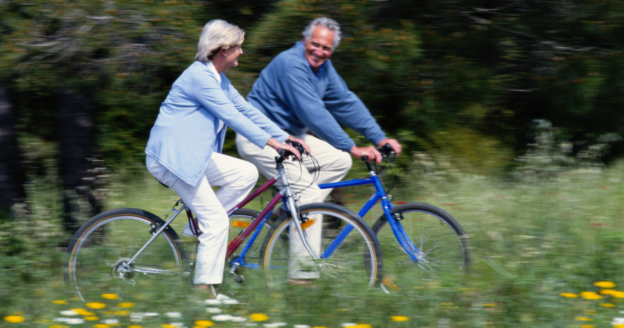
2) They bike everywhere, even at 75
In Stockholm, I watched a woman who must have been pushing 80 pedal past me on an icy path, grocery bags hanging from her handlebars. She wasn’t exercising — she was just getting groceries.
This casual, functional movement is everywhere in Scandinavia. They don’t drive to the gym to walk on a treadmill. They bike to the library, the market, their friend’s house. It’s transportation, not a workout program.
The University of Tsukuba Research Team confirms what Scandinavians seem to know instinctively: “Cycling might be one of the simplest ways for older adults to stay healthier, longer.”
When I mentioned this in a previous post on resilience, readers pushed back — “But it’s not safe here!” Fair point. But the principle remains: movement as transportation, not obligation.
3) Coffee isn’t rushed — it’s ritual
Fika in Sweden. Hygge in Denmark. Kos in Norway. Different words, same concept: slow down, connect, savor.
My friend’s mother, in her mid-seventies, has coffee with neighbors every single afternoon at 3 PM. Not a quick cup — a proper sit-down with real conversation. No phones, no rush.
This isn’t about the caffeine. It’s about the pause, the connection, the ritual of it. During my teaching years, I’d gulp coffee between classes, barely tasting it. Now in retirement, I’ve learned to make my morning coffee sacred — quiet reading time, no screens, just presence.
That daily rhythm of pause and connection? It’s protective against the isolation that ages us faster than any physical decline.
4) They maintain their independence fiercely
Scandinavian seniors resist help until they genuinely need it. Not out of pride, but because they understand that capability breeds more capability.
I’ve watched 78-year-olds in Finland split their own firewood, maintain vegetable gardens, and fix their own bikes. They’re not trying to prove anything — they just keep doing what they’ve always done until they truly can’t.
This reminds me of the adults in my literacy program. The ones who thrive aren’t necessarily the quickest learners — they’re the ones who insist on doing the work themselves, even when it’s hard.
5) Sauna or cold exposure happens weekly
Nearly every older Scandinavian I know has a weekly sauna ritual. In Finland, it’s practically religion. But here’s what surprised me — many follow it with a cold plunge, even in their seventies.
One friend’s father, 74, swears his weekly sauna-and-ice-swim routine is why he hasn’t had a cold in years. Science or placebo? Who cares if it works?
The real magic might be the commitment to something challenging and uncomfortable. That weekly practice of deliberately stepping outside comfort zones — literally — keeps them mentally tough.
6) They eat dinner early and light
Most Scandinavian seniors I know eat their main meal at lunch and keep dinner small and early — usually before 6 PM. No elaborate evening meals, no late-night snacking.
Initially, this seemed like just another cultural quirk. But they sleep better, have more evening energy, and wake up actually hungry for breakfast. Compare that to my former routine of heavy dinners at 8 PM, followed by restless nights and sluggish mornings.
Since shifting to lighter, earlier dinners, my energy patterns have completely changed. Those long evenings I worried would drag? They’ve become my most productive hours for reading and correspondence.
7) Nature isn’t optional — it’s daily bread
“There’s no bad weather, only bad clothes” — every Scandinavian child grows up hearing this. By seventy, it’s so ingrained they don’t even think about it.
Forest walks, berry picking, mushroom hunting — these aren’t special occasions. They’re Tuesday. Or any day. My friend’s mother, at 71, knows every mushroom spot within walking distance and checks them religiously each season.
This daily nature connection does something profound. It maintains purpose, provides gentle exercise, and keeps them tuned to rhythms beyond themselves. No meditation apps needed when you’re tracking seasonal changes in your local forest.
The pattern beneath the habits
Looking at these seven practices, the thread connecting them becomes clear: integration, not isolation. Movement isn’t separate from daily life — it IS daily life. Social connection isn’t scheduled — it’s woven throughout the day. Nature isn’t visited — it’s inhabited.
Most importantly, these habits compound. Morning light makes afternoon biking easier. Early dinner improves sleep, which makes morning walks more appealing. Each practice supports the others.
After decades in education, I learned that the best students weren’t necessarily the smartest — they were the ones with the best daily systems. Scandinavian seniors have mastered this principle. Their vitality isn’t about extraordinary efforts but ordinary habits, practiced extraordinarily well.
What single Nordic-inspired habit could you weave into tomorrow? Not as another task, but as a replacement for something that isn’t serving you?