
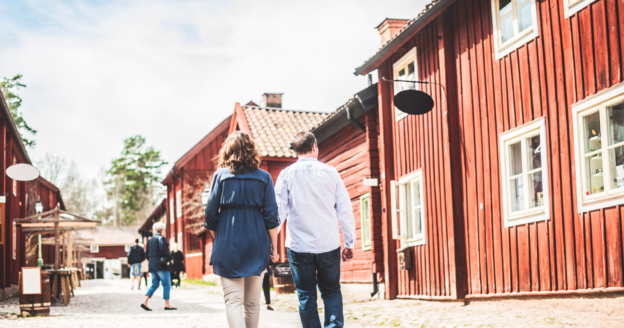
Last year, I spent three weeks in Denmark visiting a colleague who’d moved there from Portland. On my fourth day, she left her bike unlocked outside a café while we had lunch. When I pointed this out — my American anxiety showing — she laughed. “Everyone does this here,” she said.
And she was right. The bikes lined the streets like promises kept, and that small detail stayed with me longer than any museum or palace I visited.
The data backs up what I observed: Scandinavian countries consistently report the highest levels of relationship satisfaction and trust between partners globally. Denmark, Norway, Sweden, and Finland occupy the top spots in nearly every study on relational wellbeing.
After years of working with clients, I’ve become fascinated by what they’re doing differently — not because I think we can import their entire culture wholesale, but because understanding their approach reveals something essential about how trust actually works.
1) They normalize long courtships without social pressure
In Stockholm, the average couple dates for four to five years before moving in together. Four to five years. When I shared this with friends back home, they assumed it meant Scandinavians were commitment-phobic. But it’s the opposite — they’re so committed to getting it right that they refuse to rush the foundation.
What struck me most when talking with Swedish friends wasn’t just the timeline but the absence of external pressure. No one’s aunt is asking at Christmas why they haven’t moved in together yet. The culture recognizes that trust builds slowly, through accumulated experiences rather than declarations.
They understand what I saw repeatedly in my practice: couples who felt pressured to hit relationship milestones often confused meeting expectations with actual readiness.
2) They separate financial independence from emotional intimacy
Anu Partanen, a Finnish journalist, puts it perfectly: “In the family, it’s realising that relationships can only really flourish between individuals – parents, children, spouses – who are equal and independent.”
This isn’t about keeping score or protecting assets — it’s about ensuring that both partners choose the relationship daily from a position of strength rather than dependency. In Norway, even married couples often maintain separate bank accounts alongside a shared one for household expenses.
They’ve institutionalized what attachment theory has long suggested: secure attachment comes from knowing you can stand alone, which paradoxically makes it safer to lean on someone else.
3) They practice radical honesty about relationship status
In Danish, there’s no real equivalent to our vague “seeing someone” or “it’s complicated.” You’re either together or you’re not. This linguistic clarity extends to how they handle relationship conversations — they have them early, directly, and without the elaborate dance of trying to seem less invested than they are.
During my time there, I noticed couples had a remarkable ability to discuss their relationships without the meta-anxiety we often bring to these conversations. They could say “I’m not sure where this is going” without it being a crisis. They could express doubt without it meaning doom. This directness creates its own form of safety — when everything is speakable, nothing festers in silence.
4) They view conflict as information rather than threat
Swedish couples argue less frequently than American couples, but when they do disagree, they’re more likely to see it through to resolution rather than avoiding or escalating. They’ve mastered what we call in psychology “productive conflict” — disagreement that actually deepens understanding rather than creates distance.
The difference seems to lie in their fundamental assumption about what conflict means. Where many of my clients interpreted any disagreement as a sign of incompatibility, Scandinavians tend to view it as useful data about differences that need negotiating. They don’t expect harmony; they expect honest negotiation.
5) They maintain individual friendships as relationship infrastructure
In Finland, there’s a cultural expectation that married people maintain their own friend groups. Not couple friends — their own friends. The idea that your partner should be your everything would strike most Finns as both unrealistic and slightly suffocating.
This isn’t about keeping secrets or maintaining escape routes. It’s about recognizing that no single person can meet all your emotional needs, and expecting them to try creates a pressure that erodes rather than builds trust. When both partners have robust support systems outside the relationship, they bring more resilience and less neediness to their connection.
6) They normalize equal parental leave
In Sweden, parents receive 480 days of paid parental leave to split between them, with 90 days reserved specifically for each parent. This isn’t just policy — it’s a cultural statement about shared responsibility that begins before the child is even born.
What fascinated me wasn’t just the policy but how it shapes relational dynamics from the start. When both partners experience the vulnerability and intensity of early parenthood equally, it creates a different foundation for trust. They both know what 3 AM with a crying infant feels like. They both understand the particular exhaustion of constant caregiving. This shared experience becomes shared understanding.
7) They trust systems which allows them to trust each other
Perhaps the most profound difference is that Scandinavians can afford to trust their partners because they trust their societies. With robust social safety nets, universal healthcare, and strong labor protections, the stakes of relationship decisions are different. You can leave a bad relationship without losing your health insurance. You can divorce without facing poverty.
This systemic trust creates space for personal trust to develop more organically. When you’re not staying together out of economic necessity or social pressure, the fact that you’re together at all means something different. It means you’re choosing it.
What we can learn without moving to Oslo
I’m not suggesting we can recreate Scandinavian relationship culture in Portland or anywhere else. Culture doesn’t work that way. But understanding their approach illuminates something crucial: trust isn’t built through grand gestures or declarations. It’s built through systems — both personal and societal — that make honesty safer than pretense.
The clients I worked with who struggled most weren’t usually dealing with betrayal or dramatic breaches of trust. They were dealing with the slow erosion that comes from a thousand small moments of choosing appearance over truth, of prioritizing harmony over honesty, of rushing timelines to meet external expectations rather than internal readiness.
What Scandinavians have figured out, perhaps without meaning to, is that trust thrives when we remove as many reasons as possible to be dishonest — whether that’s about our feelings, our needs, or our doubts. They’ve created cultures where you can say difficult things without losing everything, where independence strengthens rather than threatens partnership, where taking time is seen as wisdom rather than hesitation.
We might not be able to import their social systems, but we can import their basic insight: trust grows not from promising to be everything to each other, but from being honest about what we actually can be.