
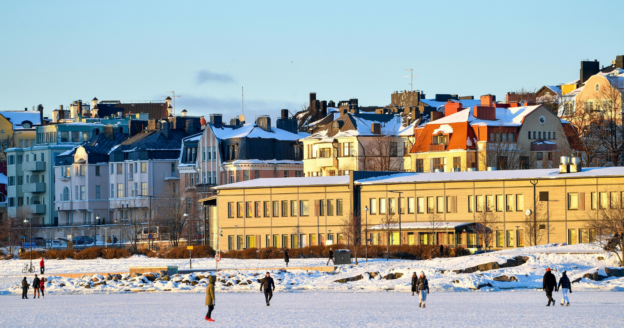
The Nordic countries consistently dominate global happiness rankings, with Denmark, Finland, Norway, Sweden, and Iceland all placing in the top 10 year after year. Yet they endure some of the harshest winters on the planet, pay some of the highest taxes, and spend months in near-darkness.
What’s their secret? It’s not genetic lottery or oil money. It’s a collection of daily habits so ordinary that visitors often miss them entirely.
These aren’t morning routines that require 4 AM wake-ups or meditation apps with monthly subscriptions. They’re simple practices baked into everyday Scandinavian life that behavioral scientists are now recognizing as foundational to mental health.
Here are eight daily habits that explain why a Finnish office worker might feel more content than someone earning triple their salary in Manhattan.
1) They treat nature like a daily vitamin, not a weekend escape
In Norway, they have a word that doesn’t translate cleanly into English: friluftsliv. It literally means “free air life,” but that misses the point. It’s the practice of getting outside every single day, regardless of weather.
Helga Synnevåg Løvoll, Professor of friluftsliv at Volda University College, explains it perfectly: “Spending time in nature, whether it is a walk in the woods or several days’ simple camping, gives us some distance from daily life and seems to increase our ability to change perspective.”
This isn’t about Instagram-worthy hikes on Sundays. It’s walking to work through a park when it’s sleeting. It’s eating lunch outside in November. It’s letting kids play in mud puddles instead of keeping them inside.
The research backs this up consistently. Time in nature reduces cortisol, improves focus, and resets emotional regulation. But while Americans treat nature like a special occasion, Scandinavians treat it like brushing their teeth—non-negotiable daily maintenance.
2) They embrace “lagom”—the art of having enough
The Swedish concept of lagom roughly translates to “just the right amount.” Not too much, not too little. It shows up everywhere: portion sizes, work hours, home decor, social interactions.
This runs counter to the optimization culture that dominates self-improvement content. While we’re tracking 47 metrics and trying to squeeze productivity from every minute, Scandinavians are asking a different question: what’s sufficient?
I tested this recently. Instead of my usual decision paralysis over which project management system to adopt, I picked one that was “good enough” and moved on. The mental space I reclaimed was worth more than any marginal improvement a perfect system might have delivered.
Lagom isn’t about settling. It’s about recognizing when additional effort yields diminishing returns and redirecting that energy somewhere it matters.
3) They protect darkness like a resource
While Americans wage war on darkness with screens and LED everything, Scandinavians embrace it. They light candles at dinner. They dim lights in the evening. They create what the Danes call hygge—a cozy atmosphere that signals to your nervous system that it’s time to wind down.
The behavioral science here is straightforward: artificial light after sunset disrupts circadian rhythms and suppresses melatonin production. But knowing this and doing something about it are different things.
Try this experiment: after 7 PM, switch to warm, dim lighting. No overhead lights. No screens without blue light filters. Watch how your sleep quality changes after a week. The Scandinavians figured this out generations before sleep researchers confirmed it.
4) They separate work from identity
Ask an American what they do, and they’ll tell you their job. Ask a Scandinavian the same question, and they might talk about their hobbies, their family, or their plans for the weekend.
This isn’t laziness—Nordic countries are highly productive economies. But they’ve mastered something we struggle with: work is something you do, not something you are.
They leave the office at reasonable hours without apology. They take their full vacation allocation. They don’t check email on weekends. And their economies haven’t collapsed.
The research on work-life balance consistently shows that recovery time improves performance more than extra hours at the desk. But it takes cultural permission to act on this knowledge, and Scandinavian culture provides it.
5) They move without calling it exercise
In Copenhagen, 40% of commutes happen by bicycle. Not sport bikes. Not special cycling clothes. Just regular people in regular clothes getting from point A to point B.
They’ve built movement into the structure of daily life rather than segregating it into gym sessions. Kids walk to school. Adults walk to the store. Elderly people walk to social gatherings.
This solves the consistency problem that kills most fitness routines. When movement is transportation, not exercise, you don’t need motivation. You just need to get where you’re going.
6) They practice collective responsibility without keeping score
The Nordic model includes robust social safety nets, but the interesting part isn’t the policies—it’s the mindset behind them. They view societal wellbeing as everyone’s responsibility.
This shows up in small ways. They return shopping carts without being asked. They follow rules even when no one’s watching. They contribute to communal spaces without tracking who does what.
Løvoll notes that “The five documented ways to wellbeing can be achieved through friluftsliv (they are ‘connect’, ‘be active’, ‘take notice’, ‘keep learning’ and ‘give’).”
That last one—give—isn’t about charity. It’s about contributing to collective resources that everyone benefits from, including yourself.
7) They schedule mandatory fun
Finnish workplaces have mandatory coffee breaks called kahvitauko. Swedish companies have fika—a daily pause for coffee and pastries with colleagues. These aren’t optional team-building exercises. They’re built into the workday.
The genius here is removing the decision fatigue around social connection. You don’t have to plan it, initiate it, or feel guilty about it. It just happens.
Connection is a biological need, not a nice-to-have. But in our productivity-obsessed culture, we treat it like an indulgence. Scandinavians treat it like infrastructure.
8) They normalize talking about mental health
In Norway, seeing a therapist carries about as much stigma as seeing a dentist. Mental health isn’t a crisis response system—it’s preventive maintenance.
They’ve integrated mental wellbeing into primary healthcare, workplace policies, and education curricula. When everyone acknowledges that brains need maintenance just like bodies do, seeking help becomes logical rather than shameful.
This creates a positive feedback loop. Early intervention prevents crises. Reduced crises mean less stigma. Less stigma means more early intervention.
Bottom line
The Nordic model of wellbeing isn’t about adding more to your morning routine. It’s about restructuring daily life around sustainable practices rather than heroic efforts.
Start with one habit. Pick the one that requires the least willpower. Maybe it’s dimming your lights after dinner. Maybe it’s walking for ten minutes at lunch. Maybe it’s leaving work on time without apologizing.
The point isn’t to become Scandinavian. It’s to recognize that wellbeing comes from ordinary habits repeated daily, not extraordinary efforts attempted occasionally.
These cultures have run a decades-long experiment in prioritizing life satisfaction over GDP growth, work-life balance over career advancement, and collective wellbeing over individual achievement. The data says it’s working.
The question isn’t whether these habits work—behavioral science has validated them repeatedly. The question is whether you’ll choose sustainable daily practices over unsustainable optimization. The Scandinavians made their choice. The happiness rankings show the results.