
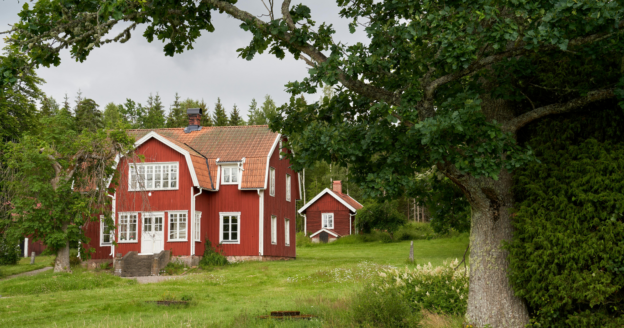
You walk into a friend’s apartment—500 square feet, rented, furniture from three different decades. But somehow it feels… peaceful. Like you could sit down and actually think straight. Then you visit another friend’s newly renovated house—3,000 square feet, custom everything, probably cost more than you’ll make this decade. Same feeling.
What’s going on here?
I spent the last month studying Scandinavian design principles, not for aesthetics but for psychology. Turns out those Nordic countries figured out something about creating calm that has nothing to do with square footage or bank accounts.
Here’s what I found: eight specific choices that show up in Scandinavian homes regardless of size or budget. These aren’t design trends. They’re environmental decisions that directly impact your nervous system.
1) They treat natural light like a performance drug
Scandinavians don’t just “like” natural light. They structure their entire day around it.
Watch someone from Stockholm arrange their living space. The desk goes near the window. The reading chair follows the sun’s path. Curtains stay sheer or nonexistent. They’ll sacrifice wall space, storage, even privacy to maximize daylight exposure.
This isn’t aesthetic preference—it’s survival strategy. When you get four hours of December daylight, you learn to capture every photon. But here’s what they discovered: natural light regulation directly impacts cortisol rhythms, focus duration, and decision quality.
I tested this myself. Moved my laptop setup from the back corner (better for video calls) to the window wall (worse for screen glare). The productivity shift was immediate. Not motivation or inspiration—just cleaner thinking from 9 AM to noon.
Small apartment? One window? Put your primary work or relaxation spot there. Forget what looks balanced in photos.
2) They pick a base color and stick with it
Open any Scandinavian home tour: white walls, beige walls, light gray walls. Occasionally someone rebels with sage green. That’s the range.
But this isn’t about following trends. It’s about cognitive load.
Every color shift demands micro-attention. Your brain processes it, categorizes it, decides if it matters. Multiply that by every wall, piece of furniture, and decoration. You’re burning decision calories on paint.
Scandinavians figured out the hack: pick one neutral base and let everything else be the exception. When 85% of your visual field stays consistent, your brain stops monitoring it. That freed-up attention goes somewhere useful.
My place has white walls because I rent and can’t paint. Used to bother me. Now I see it as accidental optimization. The visual consistency means I notice when something’s actually off—dishes piling up, papers scattered—instead of everything competing for attention.
3) They leave space between things
Here’s what Americans get wrong about minimalism: it’s not about owning less stuff. It’s about creating buffer zones.
Walk through a Scandinavian home. There’s space between the couch and wall. The coffee table doesn’t touch anything. Bookshelves have gaps. Kitchen counters have empty sections.
This isn’t emptiness—it’s breathing room. Each object gets its own territory. Your eye can rest between focal points instead of ping-ponging between competing elements.
The psychological impact is immediate. Crowded spaces trigger threat detection. Your peripheral vision stays activated, scanning for problems. Open spaces signal safety. Your nervous system downshifts.
I keep my desk against the wall with nothing on either side. Not because I read some productivity article, but because flanking clutter makes me feel cornered. That physical openness translates to mental space. Simple mechanism, reliable outcome.
4) They choose materials that age instead of decay
Scandinavians buy wood, wool, leather, linen, metal. Notice what’s missing? Plastic, particle board, synthetic fabrics that pill after three washes.
This isn’t snobbery. It’s physics.
Natural materials develop patina. That oak table gets smoother and darker. The leather chair softens and molds. The wool blanket felts slightly and becomes warmer. These materials get better with use.
Synthetic materials just deteriorate. The laminate chips. The polyester pills. The plastic yellows. Every interaction degrades them slightly. Your environment is literally falling apart at a molecular level.
When your surroundings improve with age, you relax into them. When they’re degrading, you’re constantly noticing flaws, planning replacements, managing decay.
Can’t afford solid wood furniture? One real piece beats five fake ones. A single quality wool throw transforms a cheap couch. Start with one authentic material and build from there.
5) They hide visual chaos
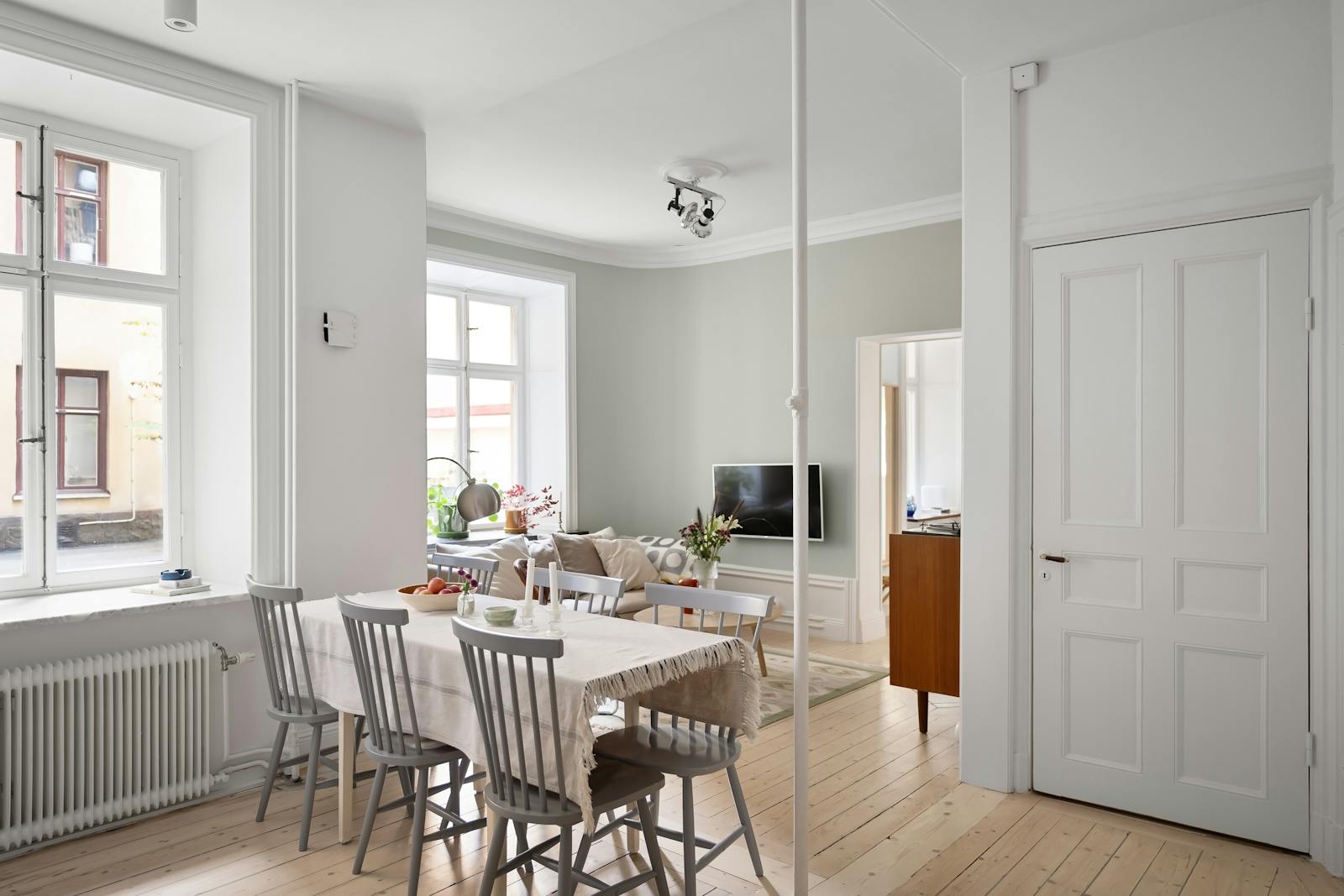
Open a Scandinavian closet: boxes, bins, drawer organizers. Everything has a container. But open their living room: clean surfaces, no visible storage, maybe three objects on display.
They’re not neat freaks. They just understand attention economics.
Visible objects make claims on your focus. That pile of mail whispers about unpaid bills. The remote control suggests Netflix. The exercise band triggers guilt about skipping workouts. Each item runs a small background process in your brain.
Scandinavians discovered the workaround: hidden storage for anything that creates mental tasks. Closed cabinets, drawer systems, boxes with lids. The stuff still exists, but it can’t interrupt.
My whiteboard sits inside a closet door now. When I’m working on something, door opens, current experiments visible. When I’m done, door closes, mind clears. The physical barrier creates a psychological one.
6) They use repetition as a design strategy
Count the different shapes in a Scandinavian room: maybe four. Circle, square, rectangle, straight line. That’s it.
They’ll have six identical dining chairs. Same pendant light repeated three times. One type of picture frame in four sizes. The same plant in multiple pots.
This isn’t lack of imagination—it’s pattern recognition optimization. Your brain loves patterns. It processes them efficiently, groups them automatically, relaxes when it finds them.
Random variety forces constant evaluation. Is that different chair special? Why is that frame unique? What’s the logic here? Mental energy bleeds out through these micro-questions.
When you repeat elements, your brain creates a single category: “the chairs,” “the lights,” “the plants.” Processing efficiency increases. Stress decreases.
7) They treat floors like negative space
In Scandinavian homes, floors stay empty. Furniture has legs. Storage goes vertical. Cables run along walls. The floor plane remains clear.
This serves a practical purpose (easier to clean), but the psychological impact is bigger. Clear floors create movement freedom. Your body knows it can move without obstacle navigation. That physical freedom translates to mental openness.
Cluttered floors trigger caution. You’re subconsciously mapping paths, avoiding obstacles, protecting your shins. Even sitting still, your body maintains slight vigilance.
I learned this from an injury. Had to keep pathways completely clear for weeks. After recovering, I kept the floors empty. The sense of flow through space was too valuable to give up for storage.
8) They make peace with winter darkness
Here’s the paradox: Scandinavians maximize natural light but also excel at artificial lighting. They layer it: overhead, task, ambient, accent. Every room has multiple light sources at different heights.
They’re not fighting darkness—they’re working with it. When winter means 15 hours of night, you stop pretending one ceiling fixture solves the problem.
The lesson translates beyond lighting. Instead of forcing brightness, they create graduated transitions. Bright for focus work, medium for conversation, dim for relaxation. The environment adjusts to activity, not the reverse.
My apartment has five lamps and rarely uses the overhead light. Each creates a different zone: work, reading, relaxation. Switching lamps is faster than rearranging furniture but achieves the same psychological shift.
Bottom line
Scandinavian calm isn’t about buying Swedish furniture or painting everything white. It’s about recognizing how environment shapes mental state, then making specific choices to support clarity over chaos.
Start with light placement. Clear your floors. Pick a base color and stop negotiating with it. Hide anything that creates mental tasks. Create buffer zones between objects.
These aren’t aesthetic choices—they’re cognitive ones. Your environment is either burning your mental energy or conserving it. Scandinavians figured out how to make space work for them instead of against them.
The size of your space doesn’t matter. Neither does your budget. What matters is understanding that every visual input costs attention, and attention is the resource you’re actually managing.
Your move: Pick one principle. Test it for a week. Watch what shifts.