
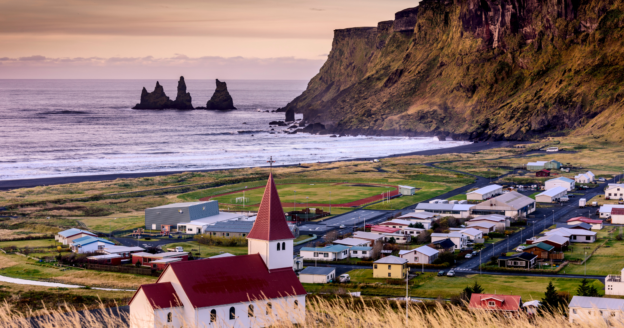
You walk out of a coffee shop in Reykjavik and realize you left your laptop on the table. Twenty minutes later, you return to find it exactly where you left it—untouched, with your half-finished latte still beside it. The locals barely look up. This isn’t unusual here.
In Iceland, people routinely leave cars running while they shop. Kids walk themselves to school in the dark winter mornings. Many rural homes don’t even have locks. And before you write this off as small-town quaintness, remember that Reykjavik is a capital city with 140,000 people.
This isn’t blind faith or Nordic naivety. Iceland has deliberately engineered one of the highest-trust societies on Earth through specific choices about how communities function. They’ve solved a problem most of us don’t even realize we’re dealing with: the exhausting mental load of constant vigilance.
Trust isn’t luck, it’s infrastructure
Most places treat trust like weather—something that just happens to you. Iceland treats it like roads or electricity—infrastructure you build and maintain.
Start with their approach to inequality. Iceland consistently ranks among the most equal societies globally, with one of the smallest gaps between rich and poor. This isn’t accident or culture. It’s policy. Strong unions, progressive taxation, and universal services mean your neighbor’s kid goes to the same school as yours, uses the same healthcare, swims in the same public pools.
When everyone uses the same systems, those systems get better. When the CEO’s kid and the cashier’s kid are in the same classroom, that classroom gets resources. More importantly, those families know each other. They’re not abstractions or statistics. They’re the people you see at the pool on Saturday morning.
I spent years working on team performance, and the pattern was always the same: shared stakes create shared trust. When everyone wins or loses together, behavior changes. Iceland figured this out at a national level.
The swimming pool Parliament
Every Icelandic town has public thermal pools, and they’re not tourist attractions. They’re social infrastructure. These pools serve the same function that pubs do in Ireland or cafes do in France—neutral ground where the community mixes.
But here’s the genius part: everyone has to shower naked before entering. No exceptions. Prime minister, teenager, tourist—everyone follows the same rule. Try maintaining pretense or hierarchy when you’re all standing there in your birthday suits, following the same posted shower diagram.
The pools become unofficial town halls. Business deals happen in the hot tubs. Parents coordinate childcare while their kids swim. Local politics get sorted between the steam room and the cold plunge. When conflict arises—and it does—you’re arguing with someone you’ll see half-naked next week. Changes the dynamics entirely.
This forced equality and regular contact creates something behavioral economists call “repeated games.” When you know you’ll interact with someone repeatedly, cheating becomes irrational. The short-term gain isn’t worth the long-term cost.
Names that force connection
Iceland doesn’t use family surnames like most countries. You’re Erik’s son (Eriksson) or Anna’s daughter (Annadóttir). No family dynasties hiding behind inherited names. No assumptions based on whether you’re a Smith or a Vanderbilt.
This system forces introduction on equal terms. You can’t google someone’s family history or make assumptions based on their last name. Every interaction starts fresh. The phone book—yes, they still use it—lists people by first name. The president is listed under ‘G’ for Guðni, right between the plumber and the professor.
When I worked as a trainer for high performers, we’d sometimes remove titles and credentials from discussions to see whose ideas stood on merit. Iceland built this into their naming system centuries ago.
Crime and consequences in a transparent society
Iceland has one of the lowest crime rates globally. Not because Icelanders are inherently moral, but because crime is almost impossible to hide in a society this connected and transparent.
The country has 380,000 people. That’s smaller than most mid-sized cities. Everyone is separated by maybe two degrees. Commit a crime, and your mother’s coworker’s cousin knows about it by lunch. Your kids go to school with the victim’s kids. You shop at the same stores, use the same services, swim in the same pools.
But it goes deeper than social pressure. Iceland publishes everyone’s tax returns annually. Want to know what your neighbor makes? It’s public record. This radical transparency makes corruption and financial crimes extremely difficult. Hard to hide stolen money when everyone can see your income.
The justice system focuses on rehabilitation over punishment. Prison sentences are short, facilities are humane, and the goal is reintegration. Because where else are you going to go? It’s an island. That person you locked up will be your neighbor again. Better make sure they come out better, not worse.
The dark December advantage
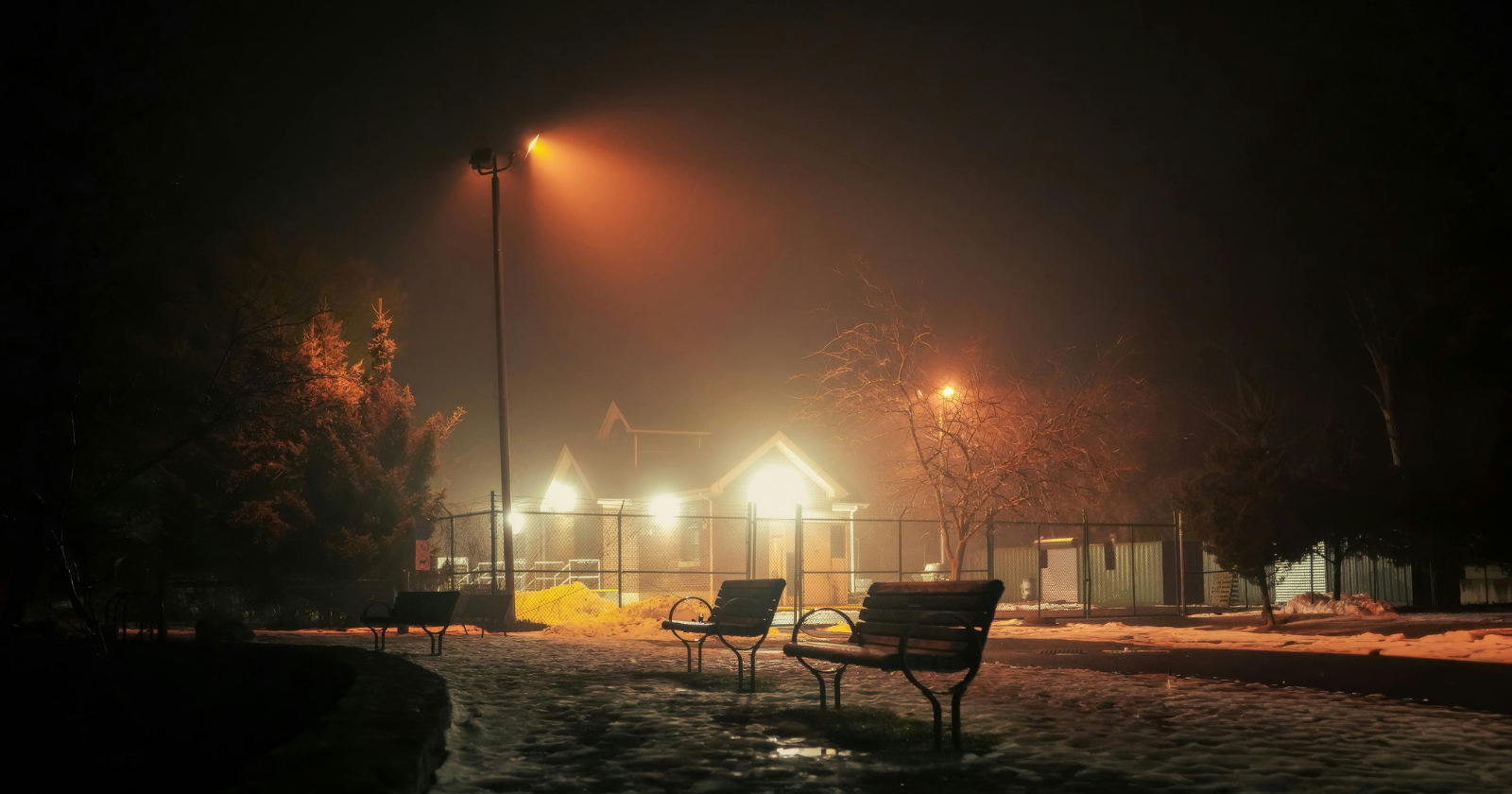
Iceland’s winter darkness—20 hours of night in December—forces a kind of interdependence most places never develop. You can’t pretend to be fully self-sufficient when survival literally depends on collective infrastructure and cooperation.
During the long darkness, communities create light together. Literally. Every December, houses and public buildings glow with elaborate light displays. Not competing, but contributing to a collective brightness that makes the dark bearable.
This shared challenge creates what psychologists call “collective efficacy“—the belief that the group can solve problems together. When you’ve survived decades of dark winters through cooperation, trusting your neighbor to grab your package or watch your kid becomes trivial.
Building trust where you are
You’re not moving to Iceland. But you can engineer trust in your immediate environment using their principles.
Start with forced intersection. Create reasons to regularly interact with neighbors beyond emergencies. Share tools. Coordinate bulk deliveries. Start a monthly poker game. The activity doesn’t matter—the repetition does.
Increase transparency in your dealings. Be open about your constraints and challenges. When neighbors know why you’re doing renovation at odd hours (working two jobs) or why your dog barks (rescue with anxiety), irritation transforms into understanding.
Reduce inequality in your immediate circle. If you’re organizing a block party, make sure costs don’t exclude anyone. If you’re sharing childcare duties, ensure the single parent isn’t always giving more than they get. Small inequalities compound into resentment.
Focus on rehabilitation over punishment when conflicts arise. The goal isn’t to win or be right. It’s to continue living near each other peacefully. That neighbor who plays music too loud will be your neighbor tomorrow. Better to find a solution than escalate to war.
Create your own “swimming pool”—a neutral space where different types of neighbors naturally mix. Could be a community garden, a regular BBQ, a kids’ playground meetup. The space should require participation, not just proximity.
Bottom line
Iceland’s trust isn’t magical thinking or cultural luck. It’s engineered through systems that force equality, transparency, and repeated interaction. They’ve built a society where trusting others is rational, not naive.
You can’t transform your entire country, but you can engineer trust in your immediate environment. Start with one apartment building, one block, one cul-de-sac. Create systems that make cooperation logical and defection costly.
The mental energy you spend on vigilance—double-checking locks, watching your stuff, wondering about neighbors’ intentions—is energy you could spend on actual problems. Iceland figured out how to redirect that energy collectively.
Your move: Pick one Iceland principle and implement it in your immediate environment this week. Maybe it’s radical transparency about something you usually hide. Maybe it’s creating a repeated interaction with neighbors. Maybe it’s addressing inequality in some small system you control.
Trust isn’t built through grand gestures or declarations. It’s built through systems that make trusting others the smartest choice available.