
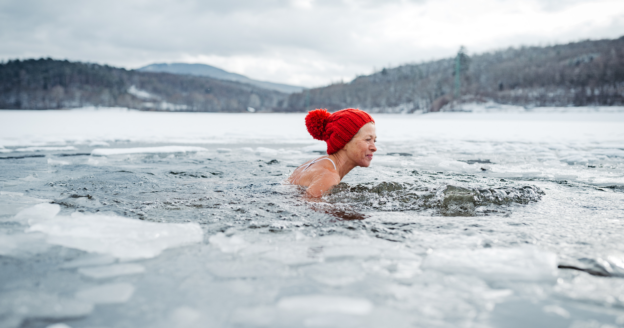
You’ve probably seen them on social media: people gasping as they plunge into icy lakes, their breath forming clouds in the frozen air.
The comments section fills with variations of “you’re insane” and “why would anyone do this to themselves?” Most assume it’s just another wellness trend, something Scandinavians do because they’re built different or because they ran out of Netflix shows during winter.
Here’s what they’re missing: cold water swimming isn’t about proving toughness or collecting Instagram likes. It’s a deliberate practice that rewires how your body and brain handle stress. And the Nordic approach treats it less like an extreme sport and more like brushing your teeth—routine maintenance for mental clarity.
I’ve watched locals walk calmly into frozen lakes like they were heading to the coffee machine. No dramatic gasps. No performative shivering. Just people getting their daily dose of controlled discomfort before heading to work.
The science behind the shock
When you hit cold water, your body doesn’t just feel cold. It launches a full biological response that most of us never experience in our temperature-controlled lives.
Your blood vessels constrict. Your heart rate spikes. Your brain floods with norepinephrine—the same chemical that gets released during fight-or-flight situations. As Dr. Solomon, a licensed psychologist and CEO of Forward Recovery, explains: “Cold exposure [is thought to increase] the production of the hormone and neurotransmitter norepinephrine.”
This isn’t random biological chaos. It’s your system learning to handle acute stress and recover quickly. The interesting part happens after you get out. Your body doesn’t just return to baseline—it overshoots, creating a rebound effect that leaves you feeling alert but calm.
Think about your typical stress response at work. Someone drops a crisis on your desk, and your body launches the same stress chemicals. But without the physical resolution that cold water provides, that stress just sits there, marinating in your system for hours.
Cold water gives you the complete cycle: stress, response, recovery. Your body gets to practice the entire sequence in three minutes instead of carrying it around all day.
What Nordic culture gets right about discomfort
In Nordic countries, cold water swimming isn’t marketed as biohacking or optimization. It’s just something you do, like taking walks or eating breakfast. They’ve stripped away the performance aspect that Americans love to add to everything.
No one’s timing their sessions or tracking their heart rate variability. They’re not competing to see who can stay in longest. They get in, experience the cold, and get out. The whole thing takes five minutes.
This matters because the mental benefits only work when you approach it correctly. If you’re white-knuckling through the experience to hit some arbitrary time goal, you’re just adding more stress to your system. The Nordic approach is about presence, not performance.
I learned this the hard way during my first attempt. I was counting seconds, fighting the cold, treating it like another gym workout where suffering equals progress. A local swimmer told me I was missing the point entirely. “Stop fighting the water,” he said. “Just be cold.”
That shift changed everything. Instead of battling through discomfort, I started observing it. The cold became data, not an enemy.
The depression connection nobody talks about
Here’s something that doesn’t make it into the trendy cold plunge videos: regular cold water swimmers report significant improvements in depression and chronic pain.
TIME Health reports that “Cold-water exposure may eliminate chronic pain and alleviate depression by boosting mood-regulating chemicals.” This isn’t just endorphin buzz—it’s a sustained change in how your brain processes negative stimuli.
The mechanism is surprisingly straightforward. Depression often involves rumination—your brain stuck in loops, replaying the same thoughts. Cold water acts like a circuit breaker. You literally cannot maintain those thought patterns when your body is managing extreme cold. The mental chatter stops because your brain has more urgent business to handle.
After regular practice, this effect starts bleeding into daily life. You get better at interrupting your own negative patterns because you’ve trained that muscle in the water. Those ten seconds before opening a scary email or making a difficult call become manageable because you’ve practiced managing much more intense discomfort.
I notice this most clearly with sleep. Poor sleep reliably makes me more avoidant and reactive—I’ll postpone difficult conversations and snap at minor frustrations. But on days when I’ve done cold water immersion in the morning, that reactive pattern weakens. The emails get opened. The calls get made.
Building your own practice without the drama
You don’t need a frozen lake or expensive cold plunge setup. A cold shower works. So does a bathtub with ice. The temperature matters less than the consistency.
Start with thirty seconds of cold at the end of your regular shower. Don’t set goals about working up to five minutes. Don’t track anything. Just experience thirty seconds of cold water, then get out.
The key is making it boring. The more routine it becomes, the more benefits you’ll see. This isn’t about conquering fear or pushing limits. It’s about giving your nervous system regular practice at handling and recovering from stress.
Pay attention to your breathing. Most people hyperventilate or hold their breath. Neither helps. Slow, controlled breathing tells your body you’re choosing this discomfort, not surviving it.
After two weeks of daily practice, you can extend the time if you want. But don’t chase duration for its own sake. One minute of focused cold exposure beats five minutes of suffering through it.
Beyond the physical response
The real value of cold water swimming shows up in unexpected moments. You’re sitting in traffic, late for a meeting, and instead of spiraling into stress, you notice you’re just… handling it. Someone delivers harsh feedback at work, and rather than getting defensive, you process it calmly.
This isn’t because you’ve become tougher. It’s because you’ve trained your nervous system to recognize the difference between actual danger and temporary discomfort. Most of our daily stressors fall into the second category, but our bodies react like they’re the first.
Cold water teaches that distinction at a biological level. Your body learns that intense sensations don’t require panic. Discomfort doesn’t mean danger. You can feel terrible and be completely safe.
This shifts your relationship with all forms of discomfort. The gym becomes less about forcing yourself through workouts and more about exploring your edges. Difficult conversations become data-gathering exercises instead of conflicts to avoid.
Bottom line
Cold water swimming works, but not for the reasons most people think. It’s not about mental toughness or shocking your system awake. It’s about giving your body regular, controlled practice at the complete stress cycle.
The Nordic approach strips away the performance metrics and treats it as basic maintenance. Get in, experience the cold, get out. No drama, no goals, just practice.
Start with thirty seconds of cold water tomorrow morning. Don’t overthink it. Don’t time it. Just let your body remember what it’s like to handle acute stress and recover completely.
Your nervous system already knows what to do. You just haven’t given it the chance to practice in years.