
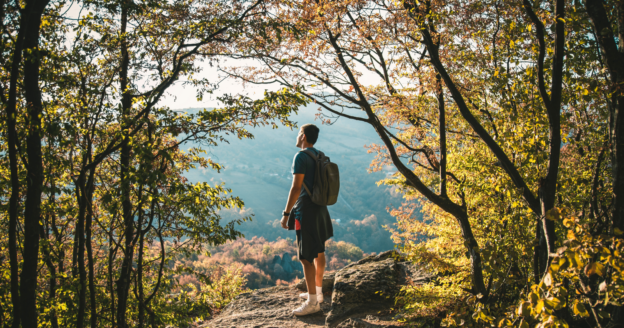
Picture this: You’re hiking through a Swedish forest when you come across a perfect lakeside spot. In most countries, you’d need to check for “No Trespassing” signs, worry about property lines, maybe even risk getting chased off by an angry landowner.
But in Sweden? You can pitch your tent, pick some berries for breakfast, and wake up to swim in that lake. Legally. For free. No permission needed.
This isn’t some loophole or tourist perk. It’s allemansrätten—Sweden’s constitutional right that gives everyone access to nature, regardless of who owns the land. And before you dismiss this as quirky Scandinavian policy, consider what it reveals about how societies draw the line between “mine” and “ours.”
The freedom that comes with shared responsibility
Sweden.se notes that “Allemansrätten is a part of the national identity of Sweden. School groups explore the forests from an early age and families often fish, pick berries or go for walks in the woods together.”
But here’s what makes this work: with freedom comes strict responsibility. You can camp on private land, but only for one night without asking. You can pick berries, but not in someone’s garden. You can build a fire, but not during dry seasons. Break these rules, and you lose the privilege.
This isn’t naive trust. It’s engineered accountability.
Think about your local park. Probably has rules posted everywhere, maybe a fence, definitely closing hours. Sweden flipped the script: instead of restricting access and hoping people behave, they granted access and demanded people behave. The psychological difference is massive. When you’re trusted with something valuable, you’re more likely to protect it. When you’re kept out, you’re more likely to resent it or abuse it when you finally get in.
What happens when everyone owns everything
The practical mechanics of allemansrätten reveal something deeper about collective ownership. Swedish kids don’t learn about nature from behind classroom windows—they’re out there from age five, learning which mushrooms are poisonous by actually finding them. This isn’t helicopter parenting; it’s the opposite. When nature is yours to explore, you learn to navigate risk instead of avoiding it.
I’ve watched this principle work in smaller settings. When teams manage shared workspaces with locked supply cabinets, sign-out sheets, constant monitoring—people hoard supplies, blame others for shortages, treat common areas like hotel rooms. But with open access, simple restock systems, peer accountability—within weeks, people bring in extra supplies from home, fix things without being asked, call out waste when they see it.
The shift wasn’t about the supplies. It was about ownership psychology. When everything is restricted, you grab what you can. When everything is available, you take what you need.
The invisible infrastructure of trust
Allemansrätten works because Sweden built invisible infrastructure around it. Not physical barriers, but social ones. Becky Waterton describes how “Allemansrätten is often referred to in English as the ‘right to roam’, and it is often seen as a uniquely Swedish right, even regarded as somewhat of a national treasure.”
That phrase—”national treasure”—matters. When something becomes part of cultural identity, protecting it becomes personal. Swedes don’t follow allemansrätten rules because of fines or enforcement. They follow them because violating them would mean betraying something essential about being Swedish.
This is behavioral economics in action. Traditional enforcement says: make the cost of bad behavior high enough to deter it. Allemansrätten says: make the value of good behavior high enough to encourage it. One approach creates compliance. The other creates commitment.
Why most societies can’t pull this off
Here’s where it gets uncomfortable. Allemansrätten isn’t just policy—it’s a mirror reflecting what a society values and whom it trusts. Most places can’t implement this because they’ve already decided their citizens can’t be trusted with shared resources. And maybe they’re right. Once you’ve built a low-trust society, you can’t suddenly flip a switch to high trust.
Look at any shared resource in your community. Public bathrooms locked behind keys. Shopping carts that require deposits. Parks that close at sunset. Each restriction sends a message: we expect you to abuse this, so we’re preventing you from trying. After enough messages like that, people internalize the expectation. They become the irresponsible citizens the system assumes they are.
Sweden did the opposite calculation. They bet that giving people dignity and responsibility would create dignified, responsible behavior. For the most part, that bet paid off. But it required starting from a baseline of social cohesion that many societies have already lost.
The everyday version in your own life
You can’t implement allemansrätten in your neighborhood tomorrow. But you can apply its core principle: expanded access with embedded accountability creates better outcomes than restricted access with external enforcement.
Start small. That information you’re hoarding at work because knowledge is power? Share it freely and watch how it comes back multiplied. The tools you keep locked up because someone might break them? Create an open system with clear expectations and see who steps up. The boundaries you’ve built around your time and expertise? Experiment with selective openness and measure the return.
I learned this through trial and error with my writing process. For years, I protected ideas like finite resources, keeping research notes private, sharing work only when polished. Then I started working openly—sharing rough drafts, unfinished research, half-formed theories. The result? Better ideas came back to me, refined and expanded by others who had different angles I’d missed.
The risk is real. Some people will take advantage. Some resources will be wasted. But the alternative—building higher walls, tighter restrictions, more enforcement—creates a different kind of waste. It wastes human potential.
Bottom line
Allemansrätten isn’t really about camping rights or berry picking. It’s about deciding whether humans are problems to be managed or assets to be trusted. Sweden chose trust, backed it with clear expectations, and built a culture around protecting what everyone shares.
You can’t change your whole society’s trust level. But you can change how you handle shared resources in your immediate sphere. Start with one area where you currently restrict access. Define the responsible behavior you expect. Open access with those expectations clear. Then watch what happens.
Most people will rise to meet trust when it’s genuinely offered. The few who don’t were never going to follow your restrictions anyway. They were just waiting for you to look away.
The Swedish forest example isn’t a fairy tale about a perfect society. It’s proof that ownership isn’t binary. Between “mine” and “yours” lies “ours”—and how we handle that category determines what kind of society we build. One locked gate at a time. Or one open forest at a time.
Your choice.