
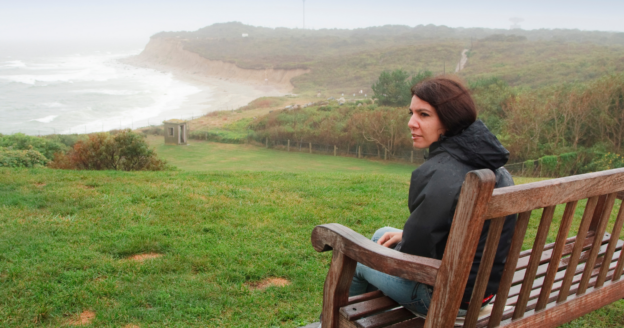
Last week, I watched a colleague shut down his laptop at 3 PM on a Friday, pour himself a coffee, and sit by the window doing absolutely nothing for thirty minutes. No scrolling, no calls, no side projects. When another teammate joked about “must be nice to slack off,” he just smiled and said, “This is part of my work.”
That exchange captures something I’ve been wrestling with since working with high-performing teams. What they call essential, we call lazy. What they protect fiercely, we guilt ourselves for even considering.
The art of niksen and why it terrifies productivity culture
The Dutch have a word for doing nothing: niksen. Carolien Hamming, managing director of CSR Centrum, explains that niksen “literally means to do nothing, to be idle or doing something without any use.”
Read that again. Something without any use.
In my “don’t complain—handle it” upbringing, that concept would’ve gotten you a lecture about wasting potential. Every moment needed purpose. Every hour needed output. I kept a running list of tasks even during vacations, because empty time felt like failure.
But here’s what I learned watching certain colleagues: they’re not less productive than their counterparts. They’re often more effective. They just refuse to confuse motion with progress.
The engineer who stares out windows for half an hour? He solves complex problems faster than teammates who grind through twelve-hour days. The project manager who takes “thinking walks” with no agenda? She spots issues others miss after staring at screens until their eyes burn.
They’re not doing nothing. They’re doing something we’ve forgotten how to value.
Why your brain needs deliberate downtime
Every morning, I anchor myself with coffee and a quick note: “What am I avoiding?” Usually, it’s the thinking work. The stuff that doesn’t look productive. The pause before the decision. The space between stimulus and response.
We’ve built a culture that rewards visible effort over invisible processing. Open office plans where looking busy matters more than being effective. Slack channels that ping constantly. Calendar blocks that treat “thinking time” like a luxury we can’t afford.
But cognitive science tells us something different. When you stop actively working, your brain doesn’t shut down. It shifts into what researchers call the default mode network. This is where connections form. Where solutions emerge. Where the subconscious sorts through the mess and finds patterns.
I learned this the hard way. I was confusing being liked with being safe, saying yes to everything, filling every gap with tasks. My personal document titled “Excuses That Sound Like Reasons” grew longer every month. “I don’t have time to think” was at the top.
The gym saved me, but not for the reasons you’d expect. Yes, the physical stress release mattered. But more importantly, it was the only place I couldn’t multitask. Forty-five minutes where emails couldn’t reach me. Where my brain could wander while my body worked.
Those “wasted” gym hours generated my best ideas. Solved my toughest problems. Helped me see patterns I’d been too busy to notice.
The hygge principle and strategic restoration
Scandinavians have another concept we struggle to translate: hygge (Danish) and kos (Norwegian). We usually reduce it to “cozy,” but that misses the point. It’s about creating pockets of restoration inside regular life. Not as reward after work, but as part of the work itself.
An executive I worked with scheduled “restoration blocks” like client meetings. Non-negotiable. When I asked if her boss minded, she looked confused. “Why would he mind me maintaining my cognitive capacity?”
That’s the disconnect. We treat mental energy like it’s infinite. Like pushing through fatigue is noble. Like rest is what you earn after proving yourself.
But high performers flip this. Rest isn’t the reward—it’s the requirement. Downtime isn’t what’s left over—it’s what you protect first.
They’re not soft. They’re strategic.
How to practice productive emptiness without the guilt
Start small. You can’t go from hustle culture to hygge overnight.
Pick one ten-minute window tomorrow. Not a break where you scroll Twitter. Not a transition where you’re mentally planning the next task. Ten minutes of genuine nothing. Sit. Stare. Let your mind drift.
You’ll feel guilty. Your brain will generate seventeen “urgent” tasks. You’ll convince yourself this is wasteful.
Document these resistance patterns. I keep a section in my notes called “Fake Urgency Alerts”—all the things my brain insists can’t wait ten minutes. Spoiler: they all can.
After a week, extend to fifteen minutes. Notice what emerges in the space. Not immediately—your brain needs time to trust that you’re actually going to give it room to breathe.
A colleague told me it took six months before his “window time” started generating insights. Six months before his brain stopped treating downtime like a threat and started using it as a tool.
The competitive advantage of doing less
Here’s what Scandinavian cultures understand that we’re missing: sustainable performance requires sustainable practice.
Their tech companies compete globally. Their innovation rates match or exceed ours. Their quality of life metrics consistently rank highest. They’re not succeeding despite doing less—they’re succeeding because they protect their capacity to think.
Meanwhile, we’re burning out at record rates. Mistaking exhaustion for dedication. Wearing busy-ness like a badge of honor.
I still struggle with this. That “don’t complain—handle it” programming runs deep. But I’ve added a new question to my morning routine: “What would happen if I did less today but did it better?”
Usually, the answer is: exactly what needs to happen, minus the performative suffering.
Bottom line
The most productive thing you’ll do today might be nothing at all.
Not nothing as in scrolling. Not nothing as in half-watching TV while answering emails. Actual nothing. The kind that makes Americans uncomfortable and Scandinavians successful.
Your brain needs fallow time like soil needs fallow seasons. Fight the guilt. Resist the urge to optimize every second. Stop confusing motion with progress.
Schedule fifteen minutes of nothing tomorrow. Protect it like you’d protect a client meeting. When your brain screams that you’re wasting time, remember: you’re not doing nothing. You’re doing what high performers in the happiest countries on Earth consider non-negotiable.
The real laziness isn’t in doing nothing. It’s in being too busy to think.