
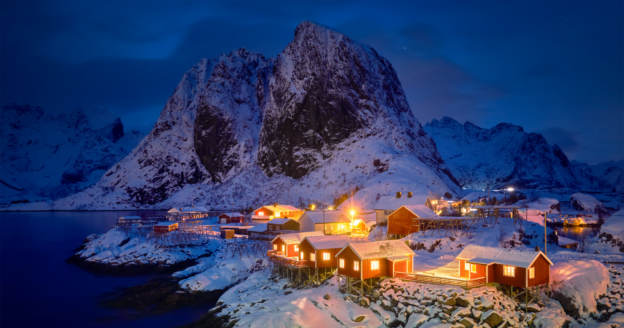
I want to be honest about something before this goes any further: I have not spent a winter in Scandinavia. I have read about it extensively, spoken to people who have, and spent a fair amount of time thinking about what the research on seasonal mood, light exposure, and cultural attitude toward winter actually says versus how it gets reported.
That distinction — between what something says and how it gets reported — is a preoccupation of mine that predates any interest in Nordic winters specifically.
What drew me to this subject is not the travel angle. It is the psychology underneath it. Because the thing that Scandinavian winter culture has stumbled onto — or, more accurately, built deliberately over generations out of climatic necessity — is a fundamentally different relationship with discomfort than the one most of us were handed.
And that relationship, it turns out, has measurable consequences for how people move through the hard seasons of their lives, not just the dark ones on the calendar.
I live in Portland, Oregon, where we have our own version of this problem. We are not short on grey months. What we are short on is a cultural framework for inhabiting them well, which means that most people I know — myself included, in previous years — spend roughly four months of the year in a low-grade argument with the weather, waiting for conditions to improve before they allow themselves to be fully present in their own lives.
That argument, the research suggests, is a significant part of the problem.
What the Scandinavian approach actually is
The concept most often cited in discussions of Nordic winter wellbeing is the Danish notion of hygge — a word that gets translated, inadequately, as cosiness, but that functions in practice as something more specific: the deliberate cultivation of warmth, connection, and atmosphere as an active response to darkness rather than a passive endurance of it.
Candles lit not because the power is out but because the act of lighting them changes the quality of the space. Meals eaten slowly, with people, without rushing toward the next obligation. The decision, made consciously, that the season is not an obstacle to living well but a particular set of conditions within which living well looks different than it does in summer.
This is not a small cognitive shift. It is a reorientation of the relationship between external conditions and internal permission — the permission to be comfortable, present, and engaged regardless of what the weather is doing. And that reorientation, when it becomes cultural rather than individual, has cumulative effects that surveys of wellbeing in Nordic countries have documented consistently.
The World Happiness Report, which has tracked self-reported wellbeing across countries since 2012, regularly places Denmark, Finland, Norway, and Iceland at or near the top of its global rankings — despite, or perhaps partly because of, the climatic conditions that an outside observer would expect to produce the opposite result.
The researchers behind the report point to several structural factors: strong social support systems, high levels of institutional trust, low corruption, freedom of life choices. But embedded within those structural factors is a cultural relationship with difficulty that is worth examining separately.
These are societies that have not organised themselves around the elimination of hardship. They have organised themselves around the capacity to be well within it.
What the psychology of acceptance actually shows
There is a body of research in clinical psychology, developed substantially through the work on Acceptance and Commitment Therapy, that maps directly onto what Scandinavian winter culture has arrived at by a different route.
The central finding of that research — replicated across multiple contexts and populations — is that the psychological suffering associated with difficult experiences is not primarily produced by the experiences themselves. It is produced by the ongoing effort to avoid, resist, or escape them.
This is sometimes called experiential avoidance in the clinical literature: the attempt to control or eliminate unwanted internal experiences — thoughts, feelings, physical sensations, memories — which paradoxically intensifies those experiences and narrows the behavioural repertoire available to the person doing the avoiding.
The person who spends winter waiting for it to be over is not just enduring the season. They are investing significant psychological resources in a resistance that the season is entirely indifferent to, and that investment has a cost.
The alternative, which ACT research describes as psychological flexibility, is not the elimination of the difficult experience. It is the capacity to be in contact with it — to acknowledge what it is, to stop fighting it, to continue acting in accordance with one’s values regardless of its presence.
This is not the same as pretending winter is wonderful. It is the recognition that winter is present, that the resistance to winter is more costly than the winter itself, and that warmth and connection and engagement are available within the season rather than only after it.
The Scandinavian cultural practice of hygge is, in behavioural terms, a community-scale implementation of this principle. It does not deny that winter is dark, cold, and long. It reorganises the response.
Why the people who struggle most are often the ones trying hardest
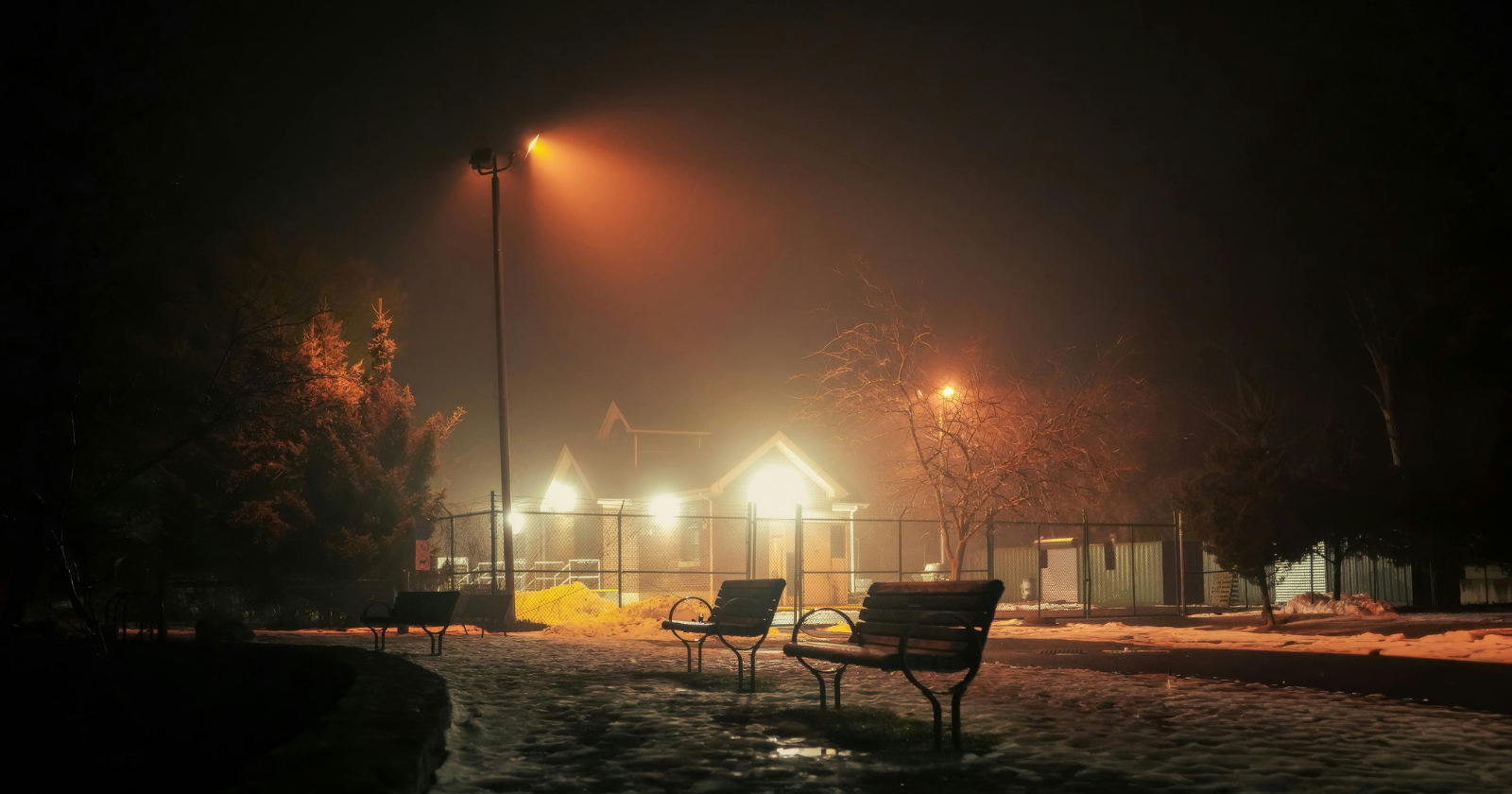
The pattern I find most interesting — and most recognisable — is the one where the difficulty with darkness is directly proportional to the effort being made to overcome it. The people I know who find winter genuinely depleting are not, in most cases, people who are doing nothing about it.
They are people who are running light therapy lamps, taking vitamin D supplements, booking holidays to somewhere warm in February, and counting down the days to the clocks changing. All of which are reasonable responses to seasonal mood change. None of which address the underlying relationship with the season.
The effort itself communicates something to the nervous system. It communicates that winter is a problem requiring active management — a threat to be contained rather than a season to be inhabited. And the nervous system takes that communication seriously. The vigilance required to manage the problem keeps the problem salient in a way that makes the season feel longer and more oppressive than it would if the management energy were redirected toward engagement.
This is not an argument against light therapy or vitamin D. The evidence on both is reasonable and worth attending to. It is an argument about what they are and are not addressing. They are biological interventions for a biological component of a larger experience. The larger experience also has a cognitive and behavioural component — the story being told about the season, the permission being withheld until conditions improve — and that component does not respond to a lamp.
What actually changes when the frame changes
I am cautious about the version of this argument that slides into instruction — that tells people what to feel, or implies that the difficulty of seasonal mood change is primarily a matter of attitude. Seasonal affective disorder is a real clinical condition with biological underpinnings that deserve to be taken seriously rather than reframed into compliance.
What I am describing is something that operates beneath or alongside the clinical picture, and that most people navigating winter are experiencing in some form regardless of whether they meet diagnostic criteria. It is the low-grade argument with conditions that runs underneath the season, the postponement of engagement until the weather cooperates, the sense that full participation in one’s own life is contingent on something external becoming different.
Changing that frame does not require a trip to Scandinavia, though there is something useful about being inside a culture that has built the alternative into the architecture of daily life — the candles, the shared meals, the deliberate warmth — rather than leaving it to individual effort. What it requires is the more modest and more difficult work of noticing where the argument is happening and asking whether the energy spent resisting the season might be more usefully spent inside it.
Portland winters are long. I have walked them in rain that would have kept me indoors in an earlier period of my life and found, with some consistency, that the walk itself is not the problem I had decided it would be. The problem was the deciding. That distinction — between the experience and the story told in advance about the experience — is, as far as I can tell, most of what Scandinavian winter culture has figured out. It is not complicated. It is just genuinely hard to implement without a culture handing it to you as a default.