
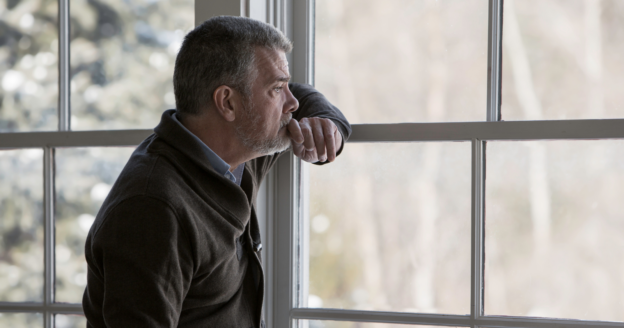
Last year, I attended a memorial service for a colleague’s mother. The family had asked everyone to share their favorite memories, to celebrate her life, to find closure. But watching my friend struggle through forced smiles while people kept telling her to “be strong” and “she’s in a better place now,” I couldn’t help but think back to something entirely different.
When my own mother passed in 2015, I spent months wondering why the grief felt so unfinished, so stuck. Everyone around me seemed to expect that after the funeral, after the thank you cards, after a reasonable amount of time, I’d somehow be “over it.”
But grief doesn’t work on a timeline, and I’ve since learned that how we approach death culturally might be the very thing that keeps us from healing.
The Nordic way of sitting with silence
A few years after Mom died, I stumbled across an article that stopped me cold.
How many times had well-meaning friends asked if I was okay? How many times had I lied and said yes because that seemed to be what they needed to hear?
In Nordic countries, grief isn’t something to fix or rush through. When someone loses a loved one, friends and family show up not with advice or platitudes, but with their presence. They bring food, they sit quietly, they let tears fall without scrambling for tissues or distractions. There’s an acceptance that grief is as natural as breathing, and just as necessary.
Compare that to what I experienced after Mom’s death. People were uncomfortable with my sadness after the first few weeks. They’d change the subject when I mentioned her. Some even avoided me altogether, as if grief might be contagious. The message was clear: move on, get back to normal, don’t make others uncomfortable with your pain.
Why we treat grief like a problem to solve
In my years teaching high school, I watched countless students lose grandparents, pets, sometimes even parents or siblings. The school’s approach was always the same: a few days off, maybe a counselor visit, then back to regular programming. We treat grief like the flu—something temporary that you recover from and then never mention again.
But grief isn’t an illness. It’s not something broken that needs fixing. In Nordic cultures, they understand this fundamental truth that we seem to miss: grief is love with nowhere to go. It’s the natural response to losing someone who mattered.
Think about how we talk about loss. We say someone needs to “get over it” or “move on” or “find closure.” We set arbitrary timelines—a year for a spouse, six months for a parent, a few weeks for a grandparent. We pathologize grief that lasts “too long” and label it as complicated or abnormal.
Meanwhile, in Denmark or Norway, they recognize that you don’t get over grief. You grow around it. The pain changes shape but never fully disappears, and that’s perfectly acceptable. They even have specific words for the ongoing relationship with those who’ve died, acknowledging that love doesn’t end with death.
The cost of rushing through loss
When my grandmother lived with us during her final years, I watched how differently she approached death compared to younger generations. She talked about it openly, made plans, shared stories about friends who had passed. There was no panic, no denial, just acceptance.
But when she died, the rest of the family went into efficiency mode. Quick funeral, swift estate settling, back to work by Monday. We never really talked about what we’d lost or how her absence changed the family dynamic. We just pretended the hole she left didn’t exist.
I see now how that unprocessed grief affected all of us. My aunt threw herself into work and burned out within a year. My cousin developed anxiety that seemed to come from nowhere. I found myself crying at random moments years later, ambushed by memories I’d never properly honored.
In Nordic countries, they take time. Employers expect people to need real time off after a loss—not just three days for the funeral. Communities understand that grief comes in waves, sometimes hitting months or years later, and that’s normal. They don’t shame people for still missing someone after the “appropriate” mourning period has passed.
Learning to grieve like the Nordics
After retiring from teaching, I’ve had more time to reflect on loss and what I wish I’d known earlier. I’ve started incorporating some Nordic approaches to grief, both for past losses and in preparing for future ones.
First, I’ve stopped apologizing for my sadness. When memories of Mom surface and bring tears, I let them come. I don’t rush to distract myself or feel embarrassed if others notice. Grief is just love, remember?
Second, I’ve learned to sit with others in their grief without trying to fix it. When friends lose someone now, I show up with soup and silence. I don’t offer platitudes about better places or everything happening for a reason. I just sit there, letting them feel whatever they need to feel.
Third, I talk about death and the people I’ve lost. Not in a morbid way, but naturally, as they come up in conversation. My mother loved spring flowers, so I mention her when the tulips bloom. My grandmother made incredible pie, so I share that when someone brings dessert. Keeping their memories active and present helps integrate the loss rather than compartmentalize it.
Moving forward means taking grief with us
The biggest lesson I’ve learned from studying Nordic approaches to grief is that recovery doesn’t mean forgetting or “getting over” loss. It means learning to carry it with grace, to let it transform us without destroying us.
In cultures that rush grief, people get stuck because they never fully process their loss. They pack it away, thinking that’s strength, but it just fossilizes the pain. Years later, they’re still carrying this heavy, unexamined weight that affects everything from their relationships to their health.
The Nordic way shows us that strength isn’t about hiding pain or bouncing back quickly. It’s about feeling deeply, grieving fully, and allowing loss to become part of our story without letting it become our entire story.
As I write this, eight years after losing Mom, I still miss her. Some days more than others. And that’s okay. The grief has softened, changed shape, become less sharp. But it’s still there, and I no longer see that as a failure or weakness.
Taking the lesson forward
If you’re grieving right now, or still carrying old grief that feels unfinished, what would change if you stopped trying to “get over it”? What if instead of seeking closure, you sought integration?
The Nordic approach taught me that we never fully recover from loss because we’re not supposed to. We’re supposed to be changed by it, deepened by it, made more compassionate by it. The goal isn’t to return to who we were before—it’s to become who we are after, carrying our love and our loss as part of our whole human experience.