
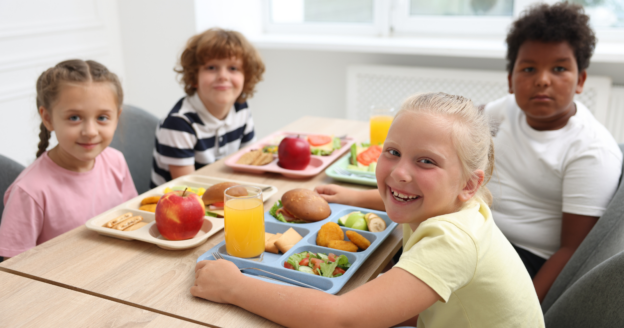
The Nordic model treats lunch as education, not fuel.
In Finland, Sweden, and Denmark, school lunch isn’t a break from learning — it’s part of it. Children sit at properly set tables. They use real forks and knives. Teachers often eat alongside them, modeling conversation and table manners.
As Martin, Head Chef at Fryshuset Hammarby Sjöstad, explains it: “We focus on greens a lot.” But it’s not just about vegetables. The entire experience teaches children that meals matter, that taking time to eat properly matters, and most importantly, that they matter enough to deserve this care.
Think about what that communicates. When you give a child twenty minutes to eat from a disposable tray while sitting on a bench, you’re saying one thing. When you give them forty-five minutes to eat a chef-prepared meal at a real table, you’re saying something entirely different.
During my teaching years, I watched kids inhale processed food in under ten minutes, then rush back to class still hungry. The message was clear: feeding you is an interruption to the real business of school. Get it done quickly and move on.
Investment in children reflects societal priorities
Nordic countries spend considerably more per student on school meals than most other nations. In Sweden, every child receives a free, nutritious lunch regardless of family income. No applications. No stigma. No separate lines for the “free lunch kids.”
When I taught high school, I knew which students qualified for free lunch — and so did everyone else. The shame was palpable. Some kids would skip eating entirely rather than stand in that line.
But in Nordic schools, equality at lunchtime sends a powerful message: all children deserve quality nutrition, regardless of their parents’ bank accounts. It’s not charity. It’s a right.
This approach costs money, certainly. But what does it cost a society when children learn early that their worth depends on their family’s income? When some kids get fresh food while others get whatever’s cheapest to mass-produce?
I remember one student who would save half her free lunch to take home for dinner. She was seventeen, brilliant, and constantly hungry. In a Nordic school, she would have eaten her fill without shame, knowing society valued her potential enough to invest in her basic needs.
Time and space communicate respect
Here’s something that shocked me about Nordic school lunches: children get actual time to eat. Not the frantic fifteen or twenty minutes common in American schools, but often forty-five minutes to an hour.
They eat in proper dining rooms, not multipurpose cafeterias that double as gyms and assembly halls. The spaces are designed to be calm and pleasant, with natural light and reasonable noise levels.
Compare that to my old school’s cafeteria — fluorescent lights, deafening noise, and kids practically standing while they ate because the next lunch shift needed their seats. We wondered why students had trouble focusing in afternoon classes. Maybe because they’d just experienced the dining equivalent of a NASCAR pit stop?
The Nordic approach recognizes that meals are about more than calories. They’re about community, conversation, and learning social skills. When you give children time and space to eat properly, you’re telling them their wellbeing matters more than cramming in one more instructional minute.
Food quality reveals what we think children deserve
In many Nordic schools, meals are cooked from scratch on-site. Seasonal vegetables. Fresh fish. Whole grains. The menus change with the seasons, introducing children to variety and teaching them about where food comes from.
During my teaching career, I watched our cafeteria serve the same rotation of pizza, nuggets, and burgers week after week. The vegetables, when they appeared, looked like they’d given up on life somewhere between the freezer and the warming tray.
We tell children to eat healthy, then serve them food we wouldn’t feed our own families. What does that teach them about honesty? About their worth?
Nordic schools demonstrate that children deserve real food, prepared with care. Not because their parents can afford it, but because they’re children, and children deserve proper nourishment. It’s that simple.
The contrast makes you wonder: do we genuinely believe American children deserve less? Or have we just accepted a system that treats their nutrition as an afterthought?
School lunch as a mirror of societal values
Every society makes choices about what to prioritize. Those choices reveal our true values more clearly than any mission statement or political speech.
When Nordic countries universally provide quality meals, generous time to eat, and dignified spaces for dining, they’re making a statement: children are worth this investment. Their health, their social development, and their daily experience of being valued — all of this matters enough to fund properly.
When we rush kids through lunch, segregate them by income level, and serve them the cheapest food that meets minimum requirements, we’re also making a statement. We might not like what it says, but our actions speak louder than our intentions.
I spent my career trying to convince teenagers they mattered, that their thoughts and dreams were valuable. But every lunchtime, the system contradicted me. How can you tell a child they’re important while treating their basic needs as an inconvenience?
The true cost of undervaluing children
Some argue that Nordic-style lunches are too expensive, that American schools can’t afford such luxuries. But maybe we’re calculating the cost wrong.
What’s the price of children learning they’re not worth decent food? Of teenagers believing society sees them as burdens rather than investments? Of kids growing up thinking inequality at the lunch table is just how things are?
During my years in education, I watched talented students struggle to concentrate because they were hungry. I saw others develop unhealthy relationships with food after years of rushed, stressful meals. These costs don’t show up in school budgets, but they appear everywhere else — in healthcare costs, in lost potential, in a generation that learned early that some kids matter more than others.
Nordic countries have decided these hidden costs are too high. They’ve chosen to pay upfront for quality meals because they understand it’s cheaper than paying later for the consequences of neglect.
What now?
The Nordic approach to school lunch isn’t just about food. It’s a window into how societies answer fundamental questions: What do children deserve? How much should we invest in their daily wellbeing? What messages do we want to send about their value?
After 34 years in education, I’ve learned that children absorb these messages whether we intend them or not. They know when they’re being prioritized and when they’re being processed. They understand what it means when adults take time to prepare proper meals versus when they’re handed something wrapped in plastic.
The question isn’t whether we can afford to treat children better. It’s whether we can afford not to.
What message did your school lunches send you about your worth? And more importantly, what message are we sending the children eating in our schools today?