
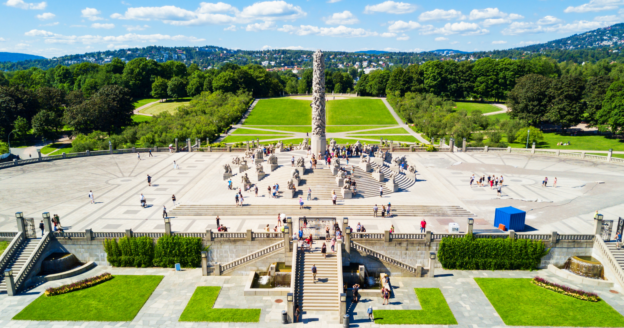
Last week, I watched two different scenes play out in two different cities. In Copenhagen, families sprawled across a park at 8 PM on a weekday, kids playing while parents chatted on benches. Meanwhile, in another city, I saw a mom get asked to leave a coffee shop because her toddler was “loitering” after she’d finished her latte.
One country treats public spaces as essential infrastructure. The other treats them as nice-to-haves that get cut when budgets tighten.
Here’s what most people miss: when Scandinavian countries pour money into libraries, parks, and community centers, they’re not being idealistic. They’re making a cold, calculated investment in social stability, mental health, and economic productivity. The rest of us? We’re bleeding money and social cohesion by pretending these spaces are luxuries.
The hidden economics of free spaces
Think about your average weekday. Where can you go that doesn’t require spending money? Not the mall. Not a restaurant. Maybe a park if the weather cooperates. Maybe a library if it’s still open and hasn’t been “reimagined” into something else.
In Stockholm or Helsinki, the answer changes dramatically. Community centers stay open late. Libraries function as living rooms for the entire neighborhood. Parks include covered areas, heating elements, and year-round programming.
This isn’t Nordic generosity. It’s math.
When people have nowhere to go without spending money, several things happen. Social isolation increases. Mental health services get overwhelmed. Productivity drops. Crime rises in areas with fewer public spaces. Emergency room visits spike for loneliness-related conditions.
Kathleen Rogers puts it simply: “People enjoy meeting in parks and getting to know each other.”
That sounds quaint until you realize that social connection is one of the strongest predictors of mental health, physical health, and even earning potential. When you remove the spaces where connection happens naturally, you create a public health crisis that costs far more than maintaining a few parks.
Libraries aren’t about books anymore
Walk into a Danish library and you’ll see something that breaks American assumptions. Yes, there are books. But there are also 3D printers, recording studios, workshop spaces, gaming areas, and quiet zones for remote work.
These aren’t add-ons. They’re the point.
Modern Scandinavian libraries operate on a simple principle: give people the tools and space to build skills, start businesses, and solve problems. The return on investment is measurable. One entrepreneur uses the 3D printer to prototype a product. A teenager learns audio engineering in the recording booth and starts producing for local artists. A retiree teaches woodworking to unemployed adults who then find trade work.
Compare this to the American approach, where libraries fight for survival by promising they won’t cost much and won’t change anything. We’ve turned them into book museums instead of community workshops.
The irony is that we spend fortunes on job training programs, entrepreneurship initiatives, and mental health interventions that could be handled more effectively by a well-funded library. We just can’t see it because we’re stuck thinking libraries are about books.
Why treating public space as luxury costs more
Here’s a pattern I’ve noticed in my own behavior. When I don’t have easy access to a gym or park, I move less. When I move less, my sleep suffers. When my sleep suffers, I make worse decisions and avoid important tasks. The cascade is predictable.
Scale that up to an entire population.
Cities that underinvest in public spaces end up spending more on healthcare, policing, and social services. It’s like skipping oil changes to save money, then wondering why you’re paying for engine rebuilds.
Scandinavian countries figured this out decades ago. Parks aren’t amenities—they’re preventive healthcare. Libraries aren’t book storage—they’re economic incubators. Community centers aren’t nice-to-haves—they’re social insurance policies.
The math is brutal when you actually run it. Every dollar cut from public spaces typically generates three to five dollars in downstream costs. Mental health services. Juvenile justice programs. Emergency medical care for preventable conditions. Lost productivity from workers who are stressed, isolated, and unhealthy.
But those costs hit different budgets at different times, so nobody connects the dots.
The trust dividend nobody talks about
Scandinavian countries consistently rank highest in social trust—the belief that most people can be relied upon. This isn’t cultural magic. It’s what happens when strangers regularly interact in non-transactional settings.
When your only interactions outside work are commercial (buying coffee, shopping, paying for services), you start seeing everyone as either a customer or a vendor. Trust erodes. Suspicion increases. Social cohesion fractures.
Public spaces break this cycle. The dad at the playground isn’t selling anything. The person next to you at the library isn’t competing for resources. These neutral zones let people practice being citizens instead of consumers.
Isobel Hunter captured this perfectly: “The evidence is clear: investing in libraries brings huge returns for local communities and the public purse.”
Those returns aren’t just financial. They’re social. When people trust their neighbors, everything gets easier. Crime drops. Businesses thrive. Mental health improves. Political extremism decreases.
You can’t buy this with police budgets or surveillance cameras. You build it one park bench, one library table, one community garden at a time.
What we lose when public becomes private
The privatization of public space is so gradual that most people don’t notice until it’s complete. The park gets a corporate sponsor and suddenly has rules about “appropriate use.” The library partners with a tech company and becomes a showroom. The community center gets converted to luxury condos.
Each step seems reasonable in isolation. Each step destroys a little more social infrastructure.
I’ve watched this happen in different cities. First, hours get cut to save money. Then maintenance gets deferred. The space becomes less pleasant, so fewer people use it. Lower usage justifies more cuts. Eventually, selling or privatizing seems like the only option.
The Scandinavian model prevents this death spiral by treating public spaces as essential services like water or electricity. You wouldn’t let a private company buy your water system and then charge admission. Why do it with the spaces that keep society functional?
Bottom line
The Scandinavian investment in public spaces isn’t about being nice. It’s about recognizing that certain social goods can’t be efficiently delivered by markets. Connection, trust, learning, creativity—these things need neutral ground to flourish.
Every society pays for public space one way or another. We either invest upfront in libraries, parks, and community centers, or we pay later through healthcare costs, crime, social breakdown, and lost productivity.
The difference isn’t cultural. It’s whether you’re honest about the math.
Next time someone calls public spaces a luxury we can’t afford, ask them to price out the alternative. Calculate the cost of social isolation. Add the mental health bills. Factor in the lost innovation from people who never had access to tools or training. Include the police budgets for communities with nowhere for kids to go.
The bill always comes due. Scandinavian countries just decided to pay it upfront, where it’s cheaper.
The rest of us are still pretending we found a way to skip the check. We haven’t. We’re just paying interest instead of principal, and wondering why we never get ahead.