
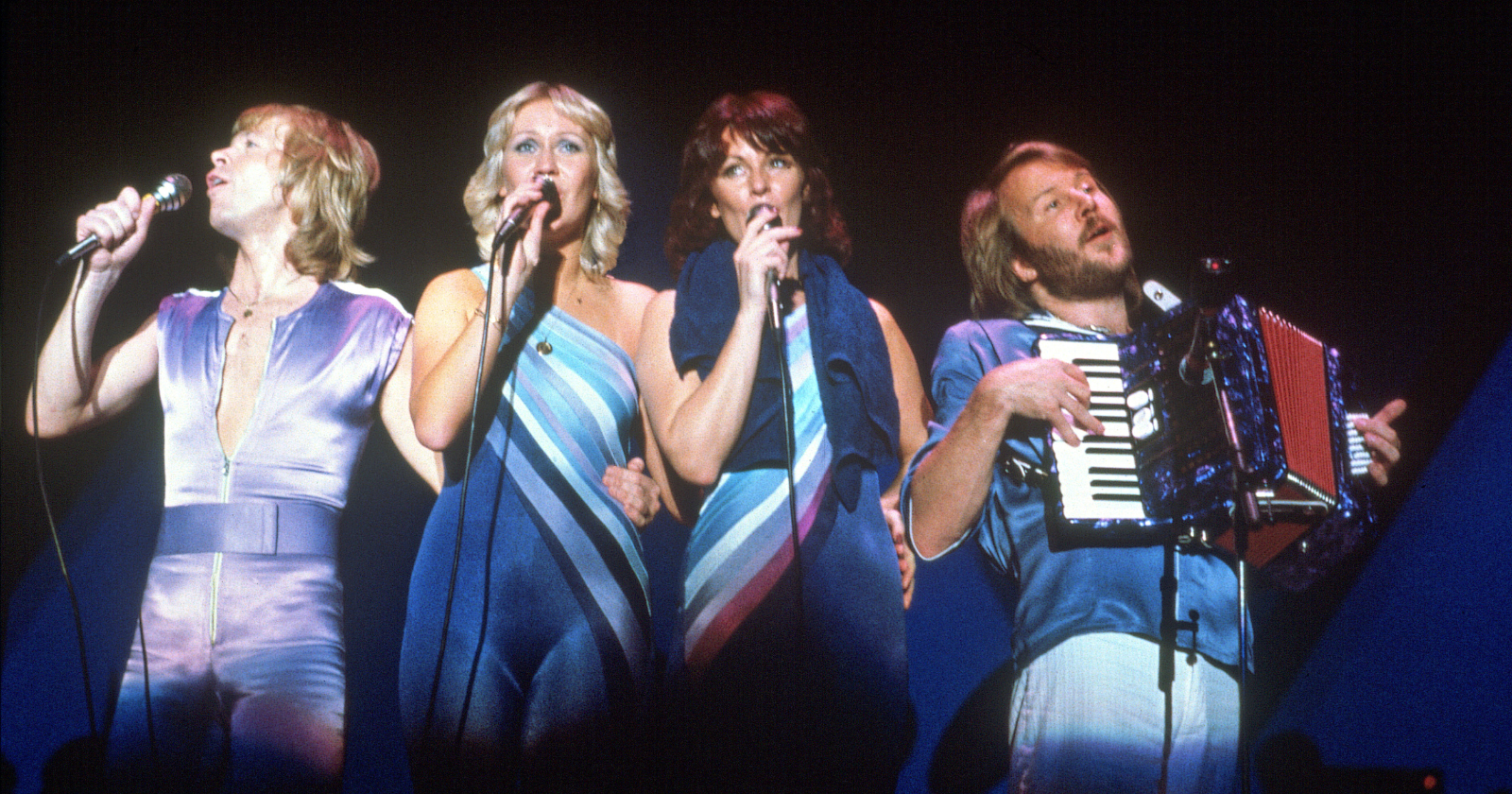

Every wedding has a song. Most couples pick something already on the radio. Silvia Sommerlath got something better: on the night before she married the King of Sweden, the biggest band in the world stood up at the Royal Opera in Stockholm and played a song the public had never heard.
The song was “Dancing Queen.” The date was June 18, 1976. And nobody in that gilded opera house — not the King, not his bride, probably not even ABBA — knew they were hearing what would become one of the most beloved pop songs ever recorded, played live for the very first time.
A royal wedding Sweden hadn’t seen in 180 years
Some context for just how big a night this was. King Carl XVI Gustaf’s wedding to Silvia was the first marriage of a reigning Swedish monarch since 1797 — Sweden had gone nearly two centuries without one. And Silvia wasn’t royalty at all. She was a German-born translator who had met the young crown prince at the 1972 Munich Olympics, where her job was escorting him around as his interpreter. Four years later, the interpreter was about to become a queen.
So when Sweden threw a televised all-star gala at the Royal Swedish Opera on the eve of the wedding, the guest list wrote itself. ABBA — two years past their Eurovision win with “Waterloo” and by then Sweden’s most famous export — were invited as the night’s only pop act, surrounded by opera singers and orchestras.
They leaned into the absurdity of it. Rather than pretend to be classical, the four of them came out in deliberately over-the-top baroque costumes, powdered-wig-era finery worn with a wink, and performed their upcoming single for the royal couple: a disco song about a seventeen-year-old having the night of her life.
The song that wasn’t actually written for her
Here’s the detail that makes the story even better: “Dancing Queen” had nothing to do with Queen Silvia. ABBA had recorded it back in August 1975, almost a year before anyone knew there’d be a royal wedding to play it at. Björn and Benny had simply wanted to write a great dance track, inspired by the disco sound coming out of America.
The title was a coincidence. The timing was a gift. A song called “Dancing Queen,” ready to launch, and suddenly Sweden was crowning an actual queen who loved to dance. The band was careful to point out the song wasn’t written for her — and then played it for her anyway, because when the universe hands you a moment like that, you take it.
The single wouldn’t reach stores until that August, two months later. For one night, the only people on Earth who’d heard “Dancing Queen” performed live were a room full of royals and dignitaries — surely the most formally dressed audience a disco song has ever had.
The only mountain ABBA climbed in America
What happened next is one of pop’s strange asymmetries. In Britain, ABBA were unstoppable — “Dancing Queen” spent six weeks at No. 1 there, one of many chart-toppers. But America never fully surrendered to ABBA the way the rest of the world did.
Except once. In April 1977, ten months after that night at the opera, “Dancing Queen” hit No. 1 on the Billboard Hot 100. It was the first time ABBA had topped the American charts — and, remarkably, the last. For all the hits, all the hundreds of millions of records, the band that conquered every other market got exactly one week’s worth of songs to No. 1 in the US, and it was the one they’d premiered for a royal bride.
The marriage outlasted the band
ABBA’s two couples divorced within a few years, and by 1982 the band had quietly stopped. The royal couple went the other way: Carl Gustaf and Silvia are still married nearly fifty years later, and he’s now the longest-reigning monarch in Swedish history.
The song never left them. In 2024, at a televised tribute marking fifty years since ABBA’s Eurovision win, the King and Queen were in the audience — clapping along as “Dancing Queen” rang out once again. Somewhere in that applause is a lovely bit of symmetry: the bride who heard it first, still dancing to it half a century on.
Not bad for a song that wasn’t even written for her.