
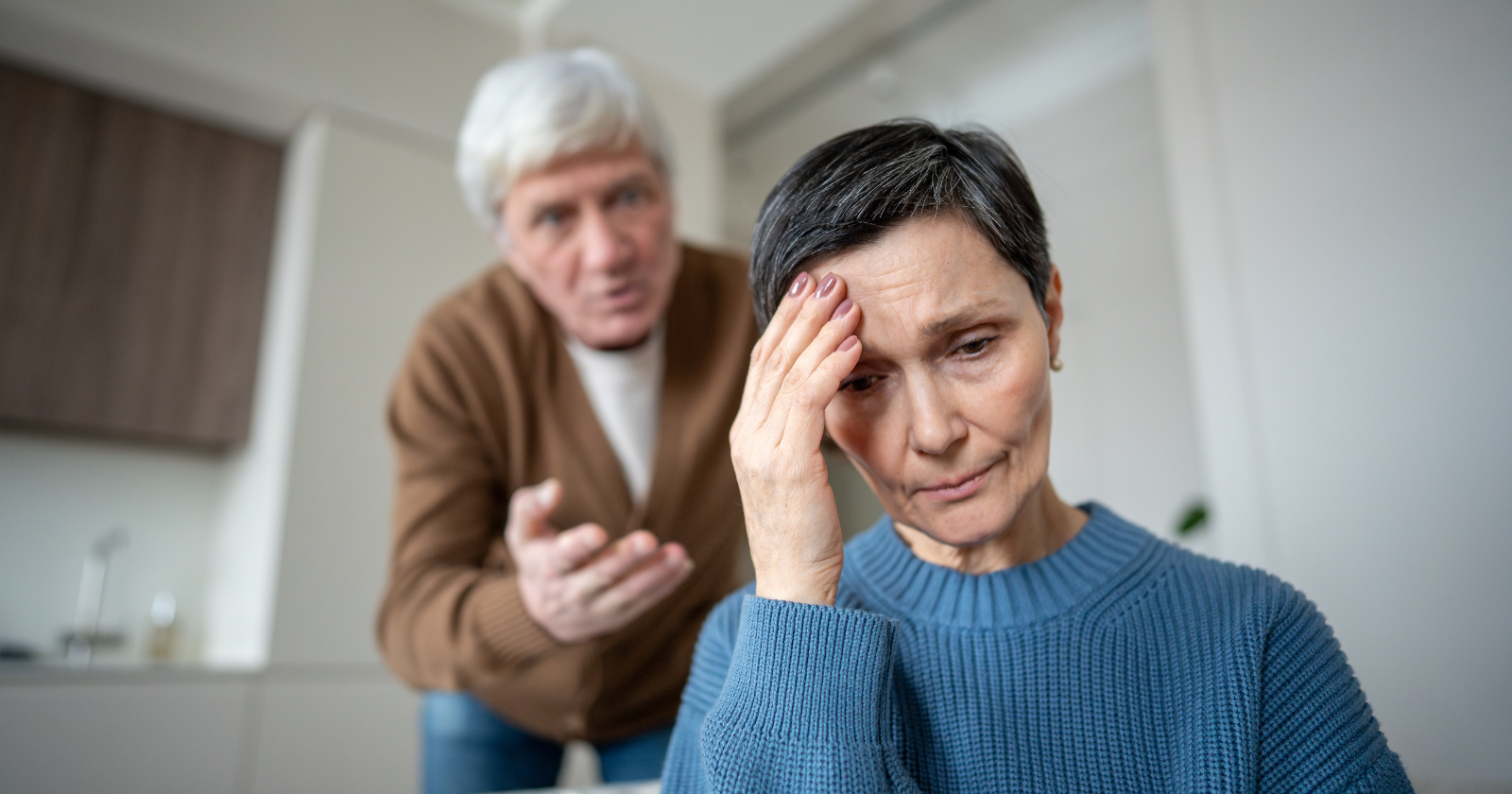

For the last two years of my grandparents’ marriage, the car keys lived in a biscuit tin on top of the fridge.
My grandmother put them there. My grandfather knew they were there. Neither of them ever said a word about it. That tin was the treaty line of a war nobody would name.
She used to phone me and describe him in a voice I can still hear. Tight, tired, a little ashamed of itself. He argued about the thermostat. He refused the handrail in the shower. He would not use the pill organiser she bought him, because he had managed his own tablets for fifty years, thank you very much.
She loved him and she was exhausted by him, and for a long time she believed he had simply turned into a different man.
He hadn’t. I only worked that out after she was gone, which is the usual timing for this sort of thing.
Getting older doesn’t generally make people harder
This is the part that surprised me. If people reliably calcified with age, the research would show it. It doesn’t.
The largest review we have of how personality shifts over a lifetime pulled together ninety-two long-term studies. It found that agreeableness, the trait covering warmth, trust and cooperation, actually rises in later life. On average, people get softer, not spikier.
So when someone in their sixties or seventies becomes genuinely hard to live with, that isn’t the calendar doing it. Something specific is going on.
What ageing quietly takes away
Psychologists use the phrase “sense of control,” which is just the everyday feeling that you can influence what happens to you. It tends to fade with age, and for unglamorous reasons: bodies, money, driving, hearing, the slow handover of decisions to other people.
That fading isn’t cosmetic. One analysis found that nearly 44% of older adults lost ground on their sense of control over a four-year stretch. Those who did were at noticeably higher risk of quietly wishing they weren’t here any more, which is something families almost never get told about. Related work ties a stronger sense of control to less depression, less loneliness, better sleep and more contact with friends.
Read that list, then read my grandfather’s behaviour again. The thermostat. The handrail. The tablets.
He wasn’t defending the thermostat. He was defending the last few square metres of ground where his vote still counted.
Losing the car is not about the car
The keys in the biscuit tin were, to my grandmother’s mind, a safety measure. She was right. He shouldn’t have been driving.
But the cost of that is bigger than anyone likes to admit. Pooling data across several studies, researchers found that giving up driving almost doubled the risk of depressive symptoms in older adults.
Not “left them a bit flat.” Doubled.
A car is never just transport. It’s the ability to leave a room without asking permission first. Take it away and you’ve removed the exit door from the house. Most of us treat this as a logistics problem, then look baffled when it goes off like a grenade.
Help, delivered badly, feels like a demotion
Here’s the trap I keep seeing.
The more someone struggles, the more we help. The more we help, the less they do. The less they do, the more they push back at us. We read that pushing back as stubbornness, so we take over a bit more, and round it goes.
There’s a well-known experiment from the seventies in a nursing home. Residents on one floor were handed some responsibility: choose your own plant, keep it alive, pick the film night. Residents on another floor got the same plant and the same film, chosen for them, watered by staff. Same building, same care, one difference.
The ones who got to decide were rated as more alert, more active and happier within weeks. Their bodies hadn’t improved. Their authority had.
I think about that every time I catch myself finishing someone’s sentence because I can do it faster.
What I’d say to my grandmother now
She wasn’t the villain here, not by a long way. She was doing an impossible job with no manual, frightened out of her mind, and fear makes all of us reach for the controls.
But if I could sit in that kitchen again, I’d tell her three things.
Say the hard thing out loud. The biscuit tin was a decision made about him, in silence, in his own home. Whatever the answer had to be, he deserved to be in the room while it was decided.
Then give away the small stuff freely. Not the medication. Not the driving, if it’s genuinely dangerous. But the temperature, the mealtimes, the shopping list, the radio station, when the curtains open. Let him lose the arguments that matter and win every single one that doesn’t.
And separate the difficulty from the man. Pain, broken sleep, hearing loss and low mood all do a very convincing impression of a bad personality. My grandfather spent years mishearing conversations and being called antisocial for withdrawing from them. It never once occurred to any of us to book him an audiologist.
If you’re the one being called difficult
You might well be. Most of us are, in patches.
But if you find yourself dug in over something that objectively doesn’t matter, it’s worth asking what the real thing is. Nine times out of ten it’s a decision that got made about you rather than with you, and the row you’re having isn’t the row you actually mean.
So have the other one. “I don’t mind you driving me. I mind not being asked.” That’s a much harder sentence than complaining about the thermostat. It’s also the only one that goes anywhere.
My grandfather never managed to say it. My grandmother never got to hear it.
She spent her last years believing she’d lost him to his own worst nature. She hadn’t. She lost him to a long, unspoken argument about who was still in charge of his life. Which is a fight I fully expect to pick myself one day, badly, over something ridiculous like a thermostat.
I hope whoever’s in the kitchen asks me what’s really wrong.