
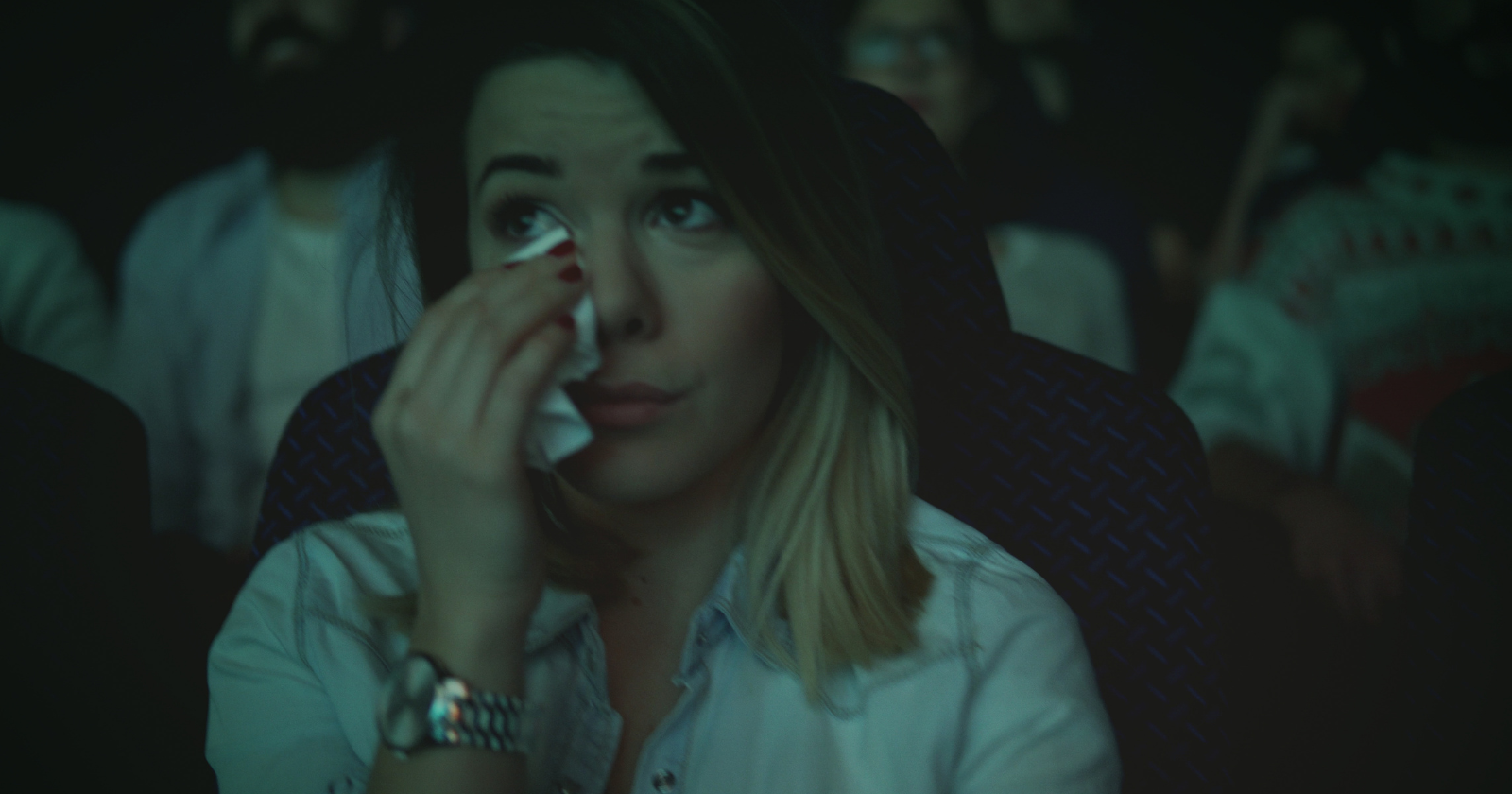

Somewhere over the Atlantic, two gin and tonics into a night flight, I cried at an animated film about a dog. Properly, too. A visible leak, which the man in 24C clocked and then very politely pretended he had not seen. I spent the next hour feeling like I had been caught doing something faintly embarrassing in public.
Turns out I had it backwards. Crying is one of those small corners of psychology where the findings are consistently more flattering than the folk wisdom. People who tear up at films, reels and songs are running a piece of social equipment the rest of us leave switched off.
Crying a lot and crying easily are different things
Psychologists separate the two. Crying frequency is how often you actually cry, and it swings with whatever your life is currently doing to you. Crying proneness is the standing tendency, closer to a trait. When Denckla, Fiori and Vingerhoets built a scale to measure it across nearly 5,000 Dutch adults, they found four distinct flavours: attachment tears, societal tears, sentimental or moral tears, and compassionate tears.
Only one of those is really about your own distress. The rest are about other people, about unfairness, about something being beautiful. The film that gets you is almost never about you, which is worth sitting with for a second.
The empathy bit, in plain English
Researchers usually break empathy into parts. Empathic concern is warmth towards someone who is struggling. Fantasy is how easily you get absorbed into a story and lose track of the room you are sitting in. Personal distress is your own discomfort when you are near someone else’s pain.
Here is the finding that changed my mind. Huron and Vuoskoski reviewed the research on who enjoys sad music and found a consistent profile: high empathic concern, high fantasy, and only slight personal distress. Plenty of feeling, very little flooding. The same shape turns up in earlier work on why sad music appeals at all, where empathy and openness to experience both predicted stronger emotional responses and more liking for it.
So the person weeping through the third act is not being overwhelmed. They are engaged with a stranger who does not exist, and at some level they have chosen to be.
Tears change the room, measurably
The biggest study on this ran across 41 countries and roughly 7,000 participants. Same faces, tears digitally added to half of them. People consistently said they would be more likely to support the tearful version, rated them as warmer, and reported feeling more connected to them. The effect held whether the situation was awful, joyful, or entirely neutral. It even held for a person described as chopping onions.
Ad Vingerhoets, who has spent decades on this, describes crying as a social trigger for empathy. A signal that says I need help here, and one that is very hard to fake convincingly.
I watched this happen once in a kitchen. Our longest-serving dishwasher retired after eleven years. The head chef, a man built like a bollard who had never once shown a flicker of anything except irritation, made it three words into his farewell speech and stopped dead. The room reorganised itself around him instantly. People who had spent years quietly afraid of him were the first ones patting his back.
The people who cannot cry
There is a mirror finding worth knowing about. A study comparing 475 people who had lost the capacity to cry with a control group of criers found the non-criers reported poorer wellbeing and weaker social connection.
That is a correlation, and losing your tears is often a symptom of something else rather than the cause of it. Still, it points the same way. The tears appear to be doing a job.
Where I would pump the brakes
You will see this claim dressed up as a superpower: criers read other people more accurately. Be careful there. When researchers compare how empathic people say they are against how well they actually identify what someone is feeling, the two barely line up: roughly r = .12 in one large meta-analysis, which counts as weak. Feeling strongly and reading accurately are separate skills, and the second one takes practice.
What the evidence supports is narrower and still good: you are more moved, more likely to offer help, and more likely to receive it. The mind reading upgrade has not shown up in the data.
What to actually do with this
Stop apologising for it. The apology is the awkward bit, not the tears. Nobody in that cabin was troubled by my face; they were troubled by me explaining my face.
Pay attention to which scenes get you. Mine are reliably about someone being properly seen after years of going unnoticed. That has told me more about what I value than any amount of journalling.
Let people watch it happen occasionally, without turning it into a performance.
And check that the feeling actually goes somewhere. The 41-country study measured the intention to support, and intentions don’t always turn into action. Send the message. Make the call. Book the flight. Otherwise you have simply had a lovely cry about a dog at 38,000 feet, which is pleasant enough on its own, but it won’t do anyone any good until you act on it.