
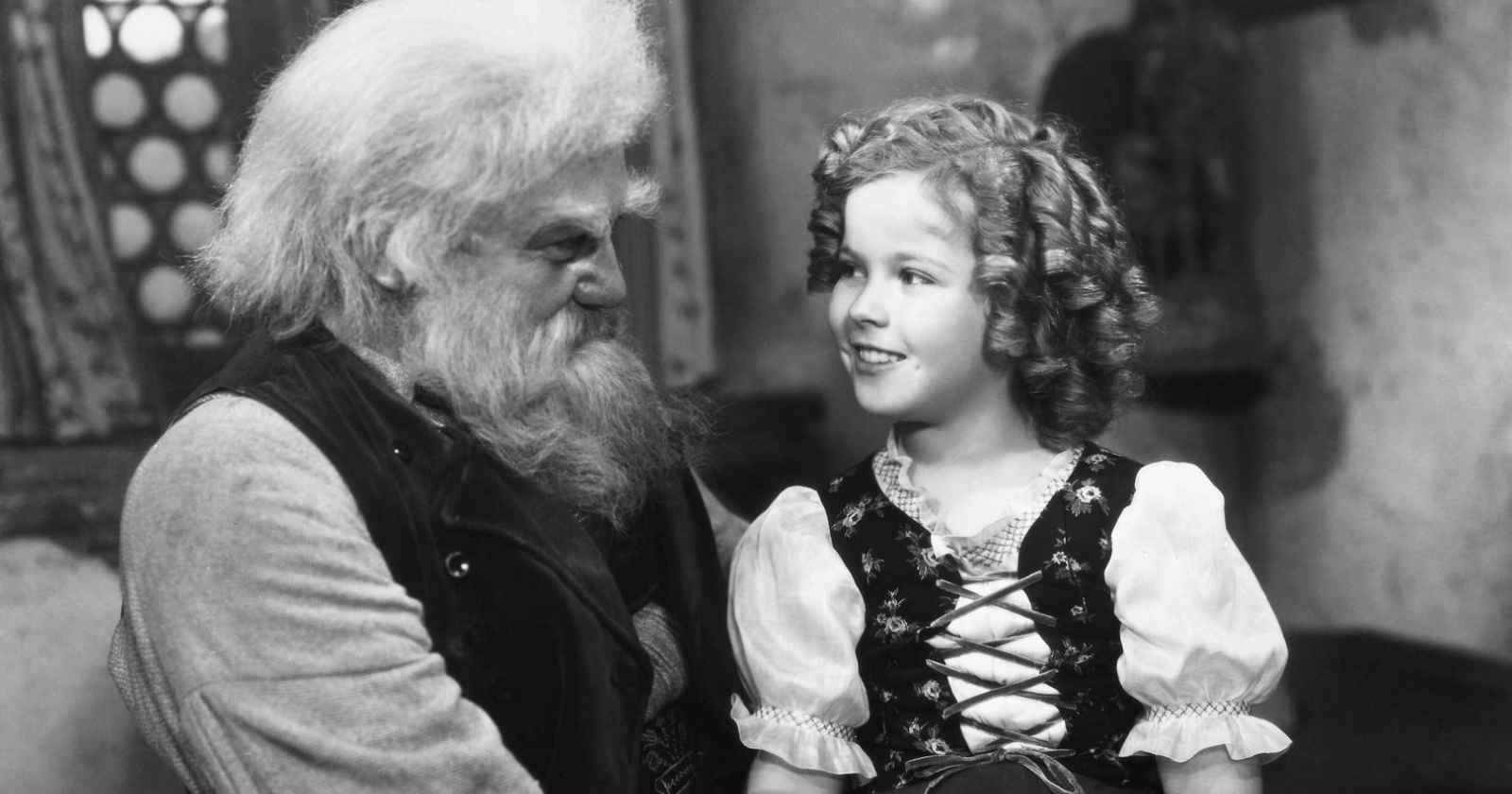
Fifty thousand Shirley Temple dolls sold in a single Christmas season, three dollars for the cheapest model, in a country where plenty of those same parents were queuing for relief the rest of the year.
The curls were a product line. So were the dresses, the dishes, the breakfast cereal, and the girl herself, who happened to be her family’s entire income stream.
What a six-year-old was worth
By 1935 she was the top box-office draw in America, a spot she held for four straight years, ahead of Clark Gable and Bing Crosby, as documented by the Strong National Museum of Play. She had already collected a miniature Academy Award, handed to her at an age when most children are learning to tie their shoes, a detail the National Women’s History Museum lists among her early honours.
Writing in Boston Review, Judith Levine sets out the arithmetic from historian John Kasson’s study of the period: a thousand dollars a week, bonuses of up to thirty-five thousand per picture, and roughly twenty million dollars hauled in for Twentieth Century-Fox by a performer who had not finished losing her baby teeth.
Merchandising did the rest: the same museum’s history of her career puts her fan clubs at upward of three million members at their height.
Somebody was doing very well out of the good ship Lollipop.
The tax return that ended it
In 1950 she married Charles Black, and the couple needed to file jointly. That is the boring piece of admin that blew the whole thing open.
Kasson’s figures, as relayed by Levine, are brutal in their tidiness. Of more than three million dollars earned, everything but forty-four thousand was gone, spent on cars and clothes, on gambling, and on generous loans to relatives who apparently never got round to repaying them.
Her own version came out lower. In her 1988 memoir, drawn on by the Washington Post and summarised by HuffPost, she put the surviving balance nearer thirty thousand: half to her parents, the rest covering living expenses for other relatives. The exact residue depends on who is counting and what they count.
She also wrote that she felt “neither disappointment nor anger” towards the father who had failed to put the money in the trust a court had ordered.
A law existed and nobody enforced it
California passed the Child Actor’s Bill in 1939, right as her peak earning years were tapering off. It carries the name of Jackie Coogan, the boy Charlie Chaplin cast in The Kid, who grew up and discovered his mother and stepfather had burned through nearly all of it. SAG-AFTRA still keeps a plain-language guide to the statute his court fight produced, and notes that when he later sued his mother, the court fight returned him only a fraction of what had gone missing.
Levine also notes a smaller, stranger episode from the year before. As the Fair Labor Standards Act moved towards Roosevelt’s desk in 1938, Fox sent Temple to the Oval Office to argue the studios’ side, and the finished law arrived with a carve-out for child performers.
A ten-year-old lobbied against her own labour protections and won.
Fifteen per cent, eighty-five per cent
Coogan accounts today require an employer to bank fifteen per cent of a minor performer’s gross wages in a blocked trust until the child turns eighteen. That is real, and it is also a minority share. Eighty-five per cent of the money still passes through the hands of whoever drives the kid to set, a gap HuffPost flagged in the days after Temple’s death in 2014.
Kasson’s larger argument, as the review lays it out, is that these children were paid to perform a carefree childhood for audiences who badly needed to see one, while a fair number of them were quietly holding the household together. Temple knew which of those two jobs was the real one.
Which is roughly the same arrangement that emptied her accounts, just with better bookkeeping.
The version with ring lights
The problem did not retire when the studio system did. In September 2024 the California governor’s office announced two signed bills aimed at children who earn money online. AB 1880 stretches Coogan to cover minors employed as content creators on platforms such as YouTube. SB 764, the Child Content Creator Rights Act, reaches further, to children who are simply filmed by their parents rather than employed by anyone.
Per the office of its author, Senator Steve Padilla, SB 764 applies once a minor features in at least thirty per cent of monetised content, and requires sixty-five per cent of the proportionate earnings to go into a trust the child can reach at eighteen. Illinois got there first, with a law that took effect in July 2024, though NBC Bay Area pointed out that the Illinois version stops at sixteen while the Californian rules cover anyone under eighteen.
Records must be kept and statements produced, and a minor who thinks the numbers are wrong can now take the matter to court.
All of which rests on a twenty-something one day sitting down with the family ledger and being willing to sue the people who raised her. Temple sat down with hers at twenty-two, read the number, and let it go.