
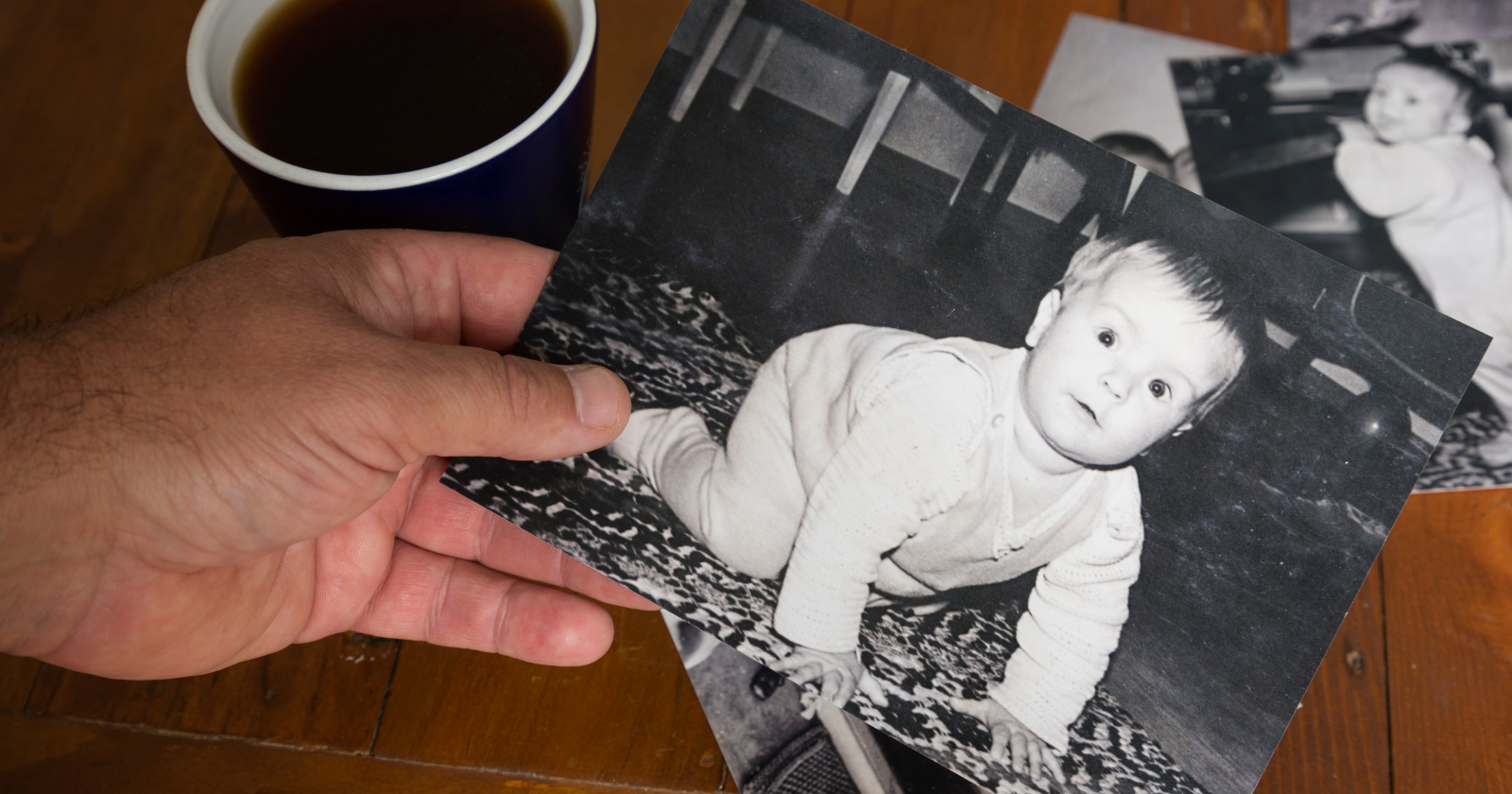

For roughly two centuries a European doctor could have told you, with a straight face, that nostalgia might kill you. Some of his colleagues blamed cowbells.
I have not embellished that. It is one of the odder detours in medical history, and it left a stain on the word that has never quite washed out. We still treat nostalgia as a soft form of sadness, a bit self-indulgent, faintly unwell. Then psychologists started measuring it, and the numbers went the other way.
How nostalgia became a disease
The word was invented in 1688 by a Basel medical student called Johannes Hofer, who welded together the Greek nostos, homecoming, and algos, pain. He was describing something specific: students, mercenaries and domestic servants sent abroad who wasted away with palpitations, fever, insomnia and a refusal to eat. Both of the cases Hofer wrote up recovered, but the disease was considered close to incurable and it killed people, usually by slow starvation. Military physicians argued over the cause for decades. One faction settled on the relentless clanging of Alpine cowbells, thought to damage the eardrum and the brain, a theory catalogued by Tim Wildschut and Constantine Sedikides in their history of the concept.
This was not a brief fad. A doctor at a barracks in the north of England was still diagnosing nostalgia in a young soldier in 1781. By the twentieth century psychoanalysts had simply swapped the vocabulary, filing the condition under labels such as an “immigrant psychosis” and treating a fondness for one’s own past as a symptom.
What happened when someone measured it
The method is almost comically plain. Ask a person to bring to mind a nostalgic event from their own life, write down four keywords, then sit with it for a minute. Ask a control group to do exactly the same with an ordinary event. Then hand both groups the questionnaires.
That is roughly how three of the seven studies Wildschut and Sedikides ran with fellow researchers at Southampton and the University of Missouri were set up. Two others simply analysed what people wrote when asked to describe a nostalgic experience. The recalled scenes were overwhelmingly social, with the person as the main character alongside friends and family, and they contained more positive than negative feeling. In the experimental studies, nostalgia strengthened social bonds, lifted self-regard and generated positive mood.
The loneliness loop
What sets it off in the first place? Low mood, mainly, and within that, loneliness above every other state.
In four studies published in Psychological Science, Xinyue Zhou and her team found that loneliness cut how much social support people felt they had, while simultaneously making them more nostalgic. The nostalgia then pushed their sense of support back up. Loneliness, in other words, triggers its own partial antidote.
The effect was strongest in the more resilient participants.
Clay Routledge took the next step. Six studies on nostalgia as an existential resource found that a nostalgic memory raised people’s sense that life had meaning. The pathway ran through feeling connected to others, which turns out to be the load-bearing part of the finding.
Whether it holds up outside one lab
Two thousand six hundred young adults, twenty-nine cultural regions, five continents. That was the scale of a 2024 study led by Erica Hepper, and it is the closest thing this field has to a stress test. Recalling a nostalgic memory rather than an ordinary one raised social connectedness, meaning in life, and a sense of continuity with one’s earlier self, and it did so across cultures.
It also trimmed the claims. Overall positive and negative mood did not shift reliably between conditions, and neither did self-esteem. So of the three headline effects, the mood one is the least secure once you leave the original laboratories. Connectedness and meaning are the sturdy pair.
The pandemic offered an accidental field trial. Surveys of more than 3,700 people in China, Britain and the United States during lockdowns, reported by Zhou, Sedikides and their team, followed the same path. Lonely people became nostalgic, and the nostalgia predicted greater happiness. In follow-up experiments a nostalgia prompt lifted happiness immediately, and, when the prompt was repeated as a booster, the lift was still detectable two days on.
Remembering on purpose versus being ambushed
There is a wrinkle here, though. David Newman and three collaborators at the University of Southern California noticed that nearly every piece of good news came from experiments where someone was invited to summon a fond memory on request. So they built a scale to catch nostalgia in the wild and tracked it through daily diaries instead. Measured that way, it travelled with lower wellbeing.
Their own comparison found that memories recalled to order were rated more warmly than the ones that arrived uninvited. This tracks with ordinary experience: a song in a supermarket aisle catches you sideways, and you leave without the thing you came for.
What the memories have in common
Reading through all of it, one pattern kept recurring. Almost every measured benefit routes through other people. The trigger is loneliness, the mechanism is connection, and the meaning arrives second-hand, on the coat-tails of remembered company.
The upshot is that the useful version is not a mood so much as a manoeuvre, and one you can perform on purpose. Choose the memory rather than letting it choose you, and choose a crowded one. The research does not say much about how long the effect lasts, beyond a couple of days in the lockdown experiments, so treat it as a small move with a short shelf life, and repeat as required.
I suspect that is why the mercenaries fared so badly.
They had the longing and none of the company.