
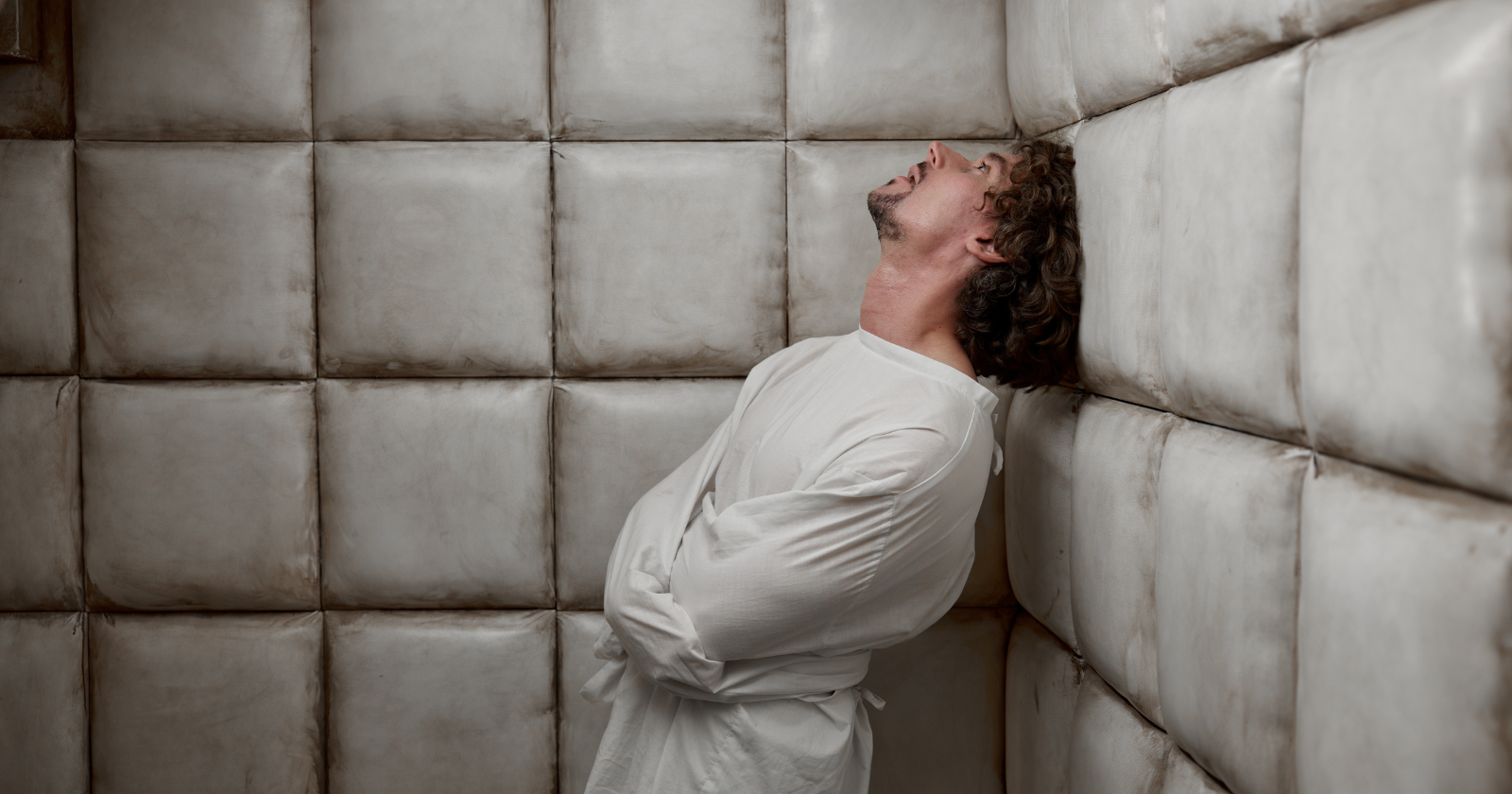

The premise sounds like the setup to a thriller. Eight ordinary people with nothing wrong with them walk into psychiatric hospitals, tell a single small lie to get through the door, and then behave exactly as they normally would. The question the Stanford psychologist David Rosenhan wanted to answer was simple and unsettling: once you are inside, can anyone tell that you are well?
The answer, published in the journal Science under the title On Being Sane in Insane Places, was no. And the fallout reshaped how an entire profession thinks about what it means to diagnose someone.
The single lie
Rosenhan recruited a small, respectable group. Alongside himself there was a graduate student, several psychologists, a paediatrician, a psychiatrist, a painter and a homemaker. Five men, three women. Each one contacted a hospital and reported the same thing: they had been hearing a voice that said words like “empty,” “hollow” and “thud.”
That was the whole deception. Beyond a false name and, for some, a false occupation, they invented nothing. They described their real relationships, their real histories, their genuine moods. The instruction was that the moment they were admitted, they would stop faking anything at all and simply act like themselves.
Every single one was admitted. As the case is usually summarised by historians of the episode, such as the Science History Institute, all but one were diagnosed with schizophrenia. The remaining pseudopatient was labelled manic-depressive. Nobody hesitated.
This video actually dives into the psychology of the experiment and what it revealed:
The label that wouldn’t come off
What happened next is the part that lodges in your memory. Once the diagnosis was attached, it quietly rewrote everything the staff saw. The pseudopatients were behaving normally, yet normal behaviour was now read as symptom.
They had been asked to keep notes on their experience, so they wrote. Nursing records duly described one patient as engaging in obsessive “writing behaviour,” as though taking notes were part of the illness rather than a person quietly documenting a strange situation. Pacing a boring corridor became anxiety. Arriving early for lunch became evidence of an oral-acquisitive personality. A perfectly ordinary account of a childhood was reinterpreted to fit the diagnostic picture the staff already believed in.
The strangest detail of all is who did see through it. The doctors and nurses did not, but the other patients frequently did. According to the widely cited account of the study, real patients would approach the pseudopatients and say things like, “You’re not crazy. You’re a journalist, or a professor. You’re checking up on the hospital.” The people the system had labelled unwell could read the room. The professionals could not.
Getting out was harder than getting in
Leaving required a particular kind of surrender. To be discharged, the pseudopatients generally had to stop protesting their sanity and instead agree that they were mentally ill, accept treatment and demonstrate that they were improving. Their stays ranged from a week to nearly two months, averaging around nineteen days.
And when they were finally released, they did not leave as sane people who had been wrongly admitted. They left with schizophrenia “in remission.” The label followed them out of the door. There was, within that framework, no category for having simply been fine all along.
The challenge that made it worse for psychiatry
The most quoted twist came afterwards. A teaching hospital, stung by the findings, insisted its own staff would never be so easily fooled. Rosenhan reportedly agreed to a test: over the following months, he would try to slip pseudopatients past them, and they should flag anyone they suspected.
The staff confidently identified dozens of suspected impostors out of their genuine admissions. Rosenhan then revealed that he had sent no one at all. Every person they had flagged had been a real patient seeking help. The experiment seemed to show the diagnostic net failing in both directions, catching the well and doubting the unwell.
Why it changed everything
The paper landed at a moment when psychiatry was already anxious about itself. It became one of the most cited critiques of the field ever written, and it lent enormous weight to a growing worry that diagnosis rested on the authority of the person doing the labelling rather than on anything reliably measurable.
That pressure helped push psychiatry toward the far more rigorous, checklist-based approach of the DSM-III in 1980, which tried to pin diagnoses to explicit, agreed criteria rather than clinical impression. For a generation of students, Rosenhan became the definitive proof that psychiatric labels were dangerously slippery.
Digging through Rosenhan’s private papers, she could confirm the existence of only two of the eight pseudopatients, one of whom was Rosenhan himself. She could find no solid trace of the other six. Worse, Rosenhan’s own medical record suggested he had described far more alarming symptoms on admission than the paper let on, which would undercut the tidy claim that he presented as essentially well. And she located a genuine participant, a psychologist named Harry Lando, whose data had been quietly dropped. His offence, it seems, was that he had found his hospital stay helpful, a positive experience that did not fit the argument Rosenhan wanted to make.
Cahalan stopped short of declaring the whole thing invented, but she documented enough errors, omissions and possible fabrications to leave the study’s factual foundation looking alarmingly thin. The search for those missing pseudopatients has yet to turn up the people who supposedly made history.
That is the real puzzle it leaves behind. One of the most consequential experiments in the history of mental health, a study that genuinely improved how diagnoses are made, may itself rest on shaky and partly unverifiable ground. Both things can be true at once: the questions it raised about labels and authority were real and worth asking, and the evidence offered to raise them may not have been what it claimed. Half a century on, that uneasy combination is exactly why the case still refuses to sit quietly in the textbooks.
By Kiran Athar. I write about psychology and human development for a general audience. I am not a psychologist, therapist, or clinician. What follows is my reading of the history of the Rosenhan experiment, offered as an interpretation.