
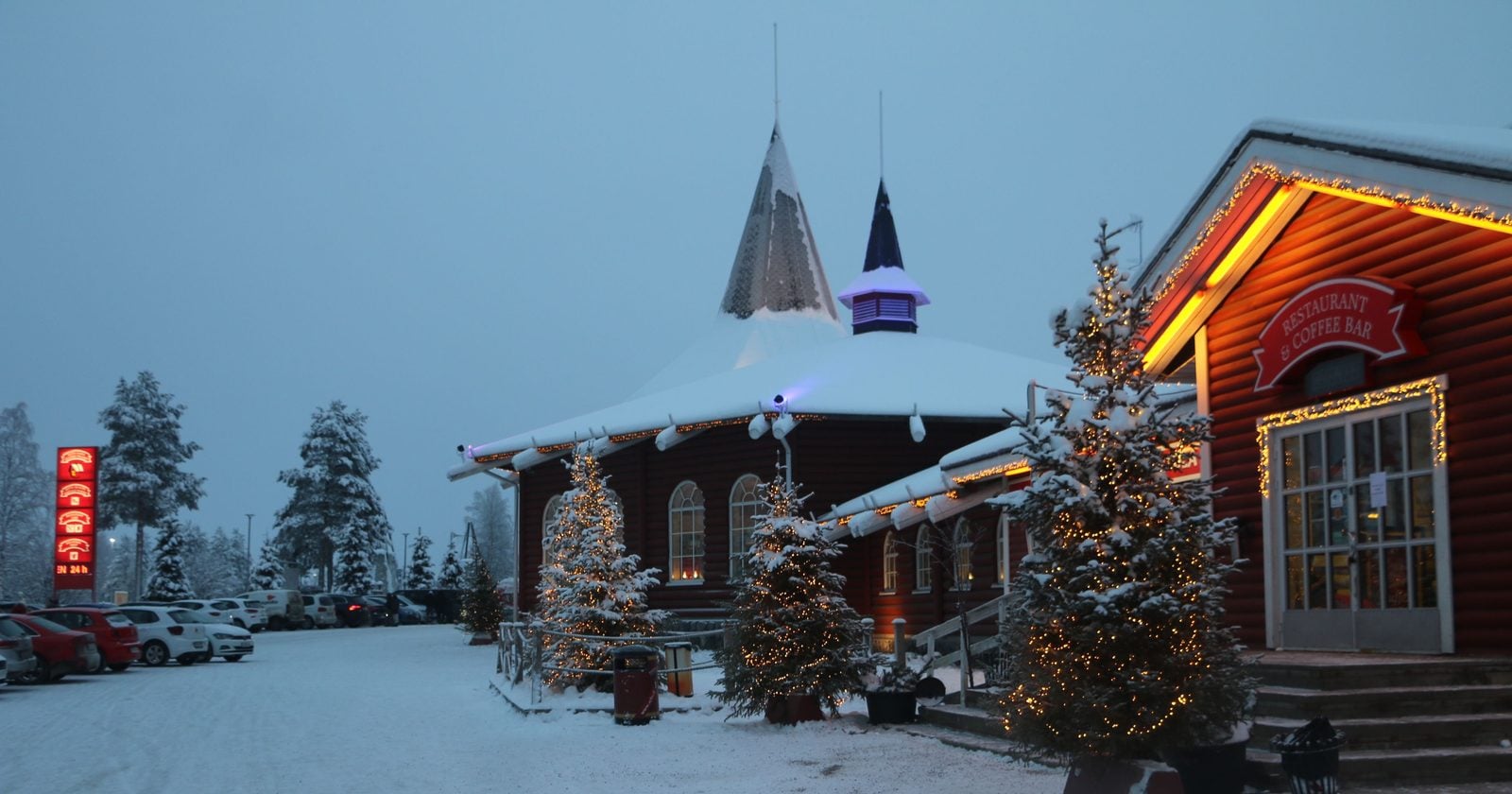

Every year, a theme park just outside a mid-sized Finnish city pulls in more than 600,000 visitors. The city that hosts it, Rovaniemi, has only around 63,000 residents. Driving all of it is a slogan: Rovaniemi calls itself the Official Hometown of Santa Claus.
The claim is a trademark, not a folk fact
Let’s start with what “official” actually means here. It doesn’t point to a historical record or an old local legend that Santa was born in Rovaniemi. It points to a registered trademark.
The city owns the EU rights to the phrase “The Official Hometown of Santa Claus”, registered not just in Finland but across the whole European Union. The word that props up the entire tourism pitch is a legal-marketing term, not a claim any historian would sign off on.
That’s not a knock on Rovaniemi. Plenty of places attach themselves to a story and build something around it. But the foundation here is intellectual property, not folklore. The town owns the phrase the way a company owns a logo.
Where the Santa story actually comes from
The Finnish connection to Santa is older than the branding, and it doesn’t start in Rovaniemi at all. In 1927, a radio presenter named Markus Rautio, known to listeners as Uncle Markus, told a children’s radio show that Santa lived on Korvatunturi, a remote hill near what is now the Finnish-Russian border. In the Finnish legend, the ear-like shape of the hill lets Santa hear the wishes of every child in the world.
Sanna Kärkkäinen, managing director of the tourist board Visit Rovaniemi, traces the whole modern industry back to that moment. “It’s a long process, and it all dates back to Uncle Markus telling the story of Korvatunturi,” she told Yle.
Why Rovaniemi won and Korvatunturi didn’t
If the radio story placed Santa on Korvatunturi, why does the tourism sit in Rovaniemi, a couple of hundred kilometers away? The answer is logistics.
As one trademark write-up notes, Korvatunturi was very difficult to reach. Fine for a mythical resident, useless for busloads of tourists. Rovaniemi had an airport and a head start on attention.
Part of that attention came from an unlikely visitor. In 1950, Eleanor Roosevelt visited Rovaniemi, and a small wooden cabin was built for her visit. That cabin later became the first home of Santa’s post office.
Kärkkäinen credits the trip with putting the region on the map. “The story of Eleanor’s visit was spread around the world,” she told Yle, and by her account, “She visited the Arctic Circle, everyone knew, and it started to generate visitors to the places she had been.” That’s one official’s memory of a 1950 event, not hard visitor data, but the through-line is clear. The cabin led to the post office, the post office led to the village.
Santa Claus Village opened just outside the city around 1984. In 2019, the official post office there handled around half a million letters a year.
What a slogan can build
Whatever you make of the “official” framing, the results are concrete. Rovaniemi recorded 1.2 million overnight visitors in 2023. Airlines added 13 new routes to Rovaniemi Airport, from cities including Geneva, Berlin, and Bordeaux. At the Christmas peak, the number of tourists can hit roughly ten times the town’s population.
Kärkkäinen puts the demand simply. “People want to travel to cool countries to see the snow, to see the Northern Lights, and, of course, to see Santa Claus,” she said. That’s a tourism executive describing her own market, so take it as promotion rather than survey data, but the flights and the hotel numbers back the general shape of it.
What we keep coming back to is how completely a made-up line can turn into infrastructure. The “official” in Official Hometown of Santa Claus was never a statement of fact about where a mythical figure lives. It’s trademark language, chosen and registered by a city that happened to have an airport, a cabin, and a good story to attach to it. The flights land, the letters arrive by the half-million, and the housing pressure shows up in real rents.
A claim that started as a slogan has become something people plan their lives around.