
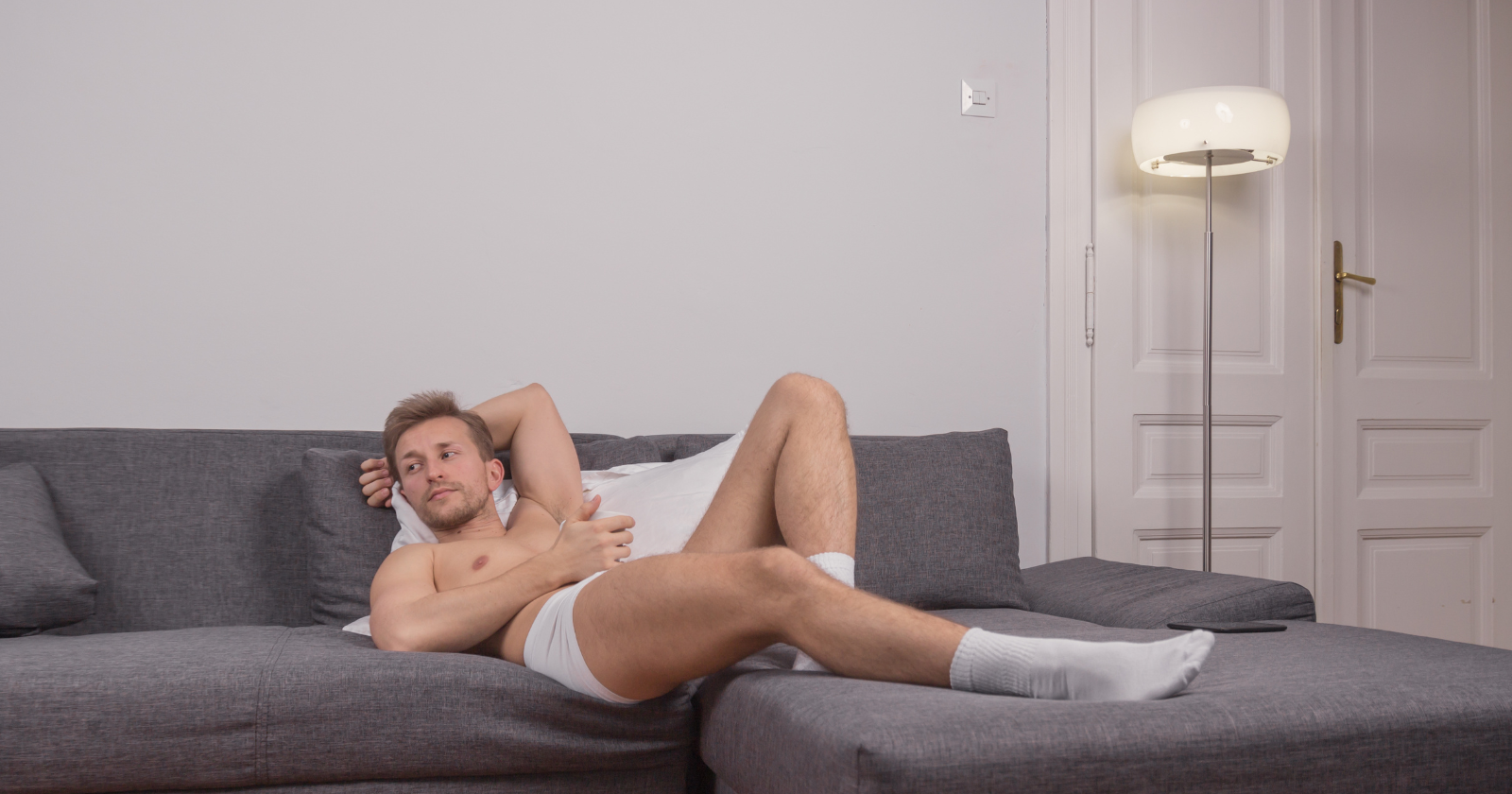
Here is a word most languages never bothered to invent: kalsarikännit. Split it in two and it explains itself. Kalsari means underwear. Kännit means drunkenness. Put them together and you get the specific, cosy, slightly ridiculous act of getting drunk at home, alone, in your underwear, with no plan to go anywhere or see anyone.
English speakers have adopted the translation “päntsdrunk,” which keeps all the dignity of the original.
What makes it worth writing about is not the word. It’s who stands behind it. The definition and the illustrations that carried it around the world came from a government body. And the Finns don’t frame it as shameful. They frame it as stress relief.
We are not clinicians or public-health researchers, and nothing here is advice about your own drinking. This is a look at a cultural idea and the research that sits near it, not a recommendation to try it. The studies below are observational, which means they track patterns across groups of people and can’t tell any one reader what will happen to them.
Where the word actually comes from
The obvious guess is that a tourism office cooked this up to make Finland sound charming. That’s not quite right. The official definition lives on ThisisFINLAND, a country-brand website, and the site is upfront about who runs it: “ThisisFINLAND.fi is produced within the communications department of Finland’s Ministry for Foreign Affairs.”
The definition they publish is deadpan. The feeling of kalsarikännit, per the official caption, is “The feeling when you are going to get drunk home alone in your underwear – with no intention of going out.” It reads like a dictionary entry written by someone who has clearly done the thing and feels no need to apologise for it.
The emoji that spread the word
If a government caption feels like thin evidence, there’s a stronger artifact.
In December 2015 Finland released a set of national emojis: tongue-in-cheek drawings meant to explain Finnish moods and customs that don’t translate. Finland says it was the first country in the world to publish its own set. The collection has since grown to around 60 illustrations.
Two of them are kalsarikännit. The ministry’s own image library describes them plainly: “These emojis show a smiling man and woman sitting in armchairs in their underwear. The man is holding a pint of beer and the woman a glass of red wine.”
Why a foreign ministry would promote this
Kalsarikännit isn’t sold as sad drinking. It’s sold as the opposite of effort. No dress code, no plans, no one to impress, no reason to leave the couch.
The Finnish journalist Miska Rantanen wrote a whole book on it, published in the US by HarperCollins as Päntsdrunk: The Finnish Path to Relaxation, and one line captures the idea. Rantanen argues that “Pantsdrunk is the antithesis of posing, performing, or pretense: one does not post atmospheric images on Instagram while pantsdrunk.”
That’s a real appeal. Next to hygge, wellness rituals, and the general performance of leisure, a concept whose whole premise is that you look terrible and tell no one is refreshingly honest. The Finns are essentially licensing rest with no aesthetic homework attached. You don’t need candles or a matching robe. You need a sofa and no audience.
The caveat the charm skips over
The word is funny, the emoji is good marketing, and the low-bar, no-performance idea holds up. But two threads run through the concept that public-health researchers treat with more caution than the emoji does: drinking alone, and drinking to cope with stress.
On the first, a study led by Kasey Creswell of Carnegie Mellon University put it plainly: “Solitary drinking is a unique and robust risk factor for future alcohol use disorder.” That was one study following people over 17 years. It’s a signal rather than a verdict, and it shows a link, not proof that drinking alone causes later problems.
The second thread is the “stress relief” framing itself. That’s exactly the pattern many researchers would call drinking to cope, and an analysis set out to test whether it helps explain why people drink more when they’re under stress.
None of this says that a Finn unwinding in their underwear now and then is heading for trouble.
So why has kalsarikännit travelled so well? Our guess is the low bar. Nearly every relaxation trend asks something of you: buy the thing, learn the practice, set the scene. This one asks for nothing. Take off your pants, stay in, tell no one.
If drinking to take the edge off has started to feel less like a joke and more like the plan, a qualified counsellor or doctor is a good person to talk to.