

To move to the Norwegian mainland, you clear a strict immigration system that has grown tougher over the years.
But Norway also governs an Arctic archipelago roughly halfway between the mainland and the North Pole, and there, none of that applies. No visa. No residence permit. No work permit. You can move in, take a job, or start a business, and your nationality barely matters.
The place is Svalbard, and the reason is a document more than a century old.
What the 1920 treaty actually did
Norway’s control of Svalbard rests on the Svalbard Treaty, signed in 1920. The deal at its heart was simple. Other countries recognized Norway’s rule over the islands, and in return Norway agreed to give their citizens equal footing there, covering the right to live, work, and run a business. Nine nations signed at the start. The group has since grown to more than 40 countries whose citizens hold those same rights.
Norway’s ordinary immigration law does not apply to Svalbard. So all the applications and permits you need for the mainland simply aren’t in force on the islands. The Governor of Svalbard puts it plainly: “Foreigners do not need a visa or work and residence permits from the Norwegian authorities to travel to Svalbard.”
It comes with one important catch. The freedom applies to travelling directly to Svalbard. But getting there almost always means passing through mainland Norway, which sits inside the Schengen Area, and Svalbard does not. So as the Governor’s office also warns, “foreign citizens with a visa requirement for the Schengen Area must have a Schengen visa when travelling to and from Svalbard via mainland Norway.” Living on the islands needs no visa. The trip to reach them often does.
Who actually turns up
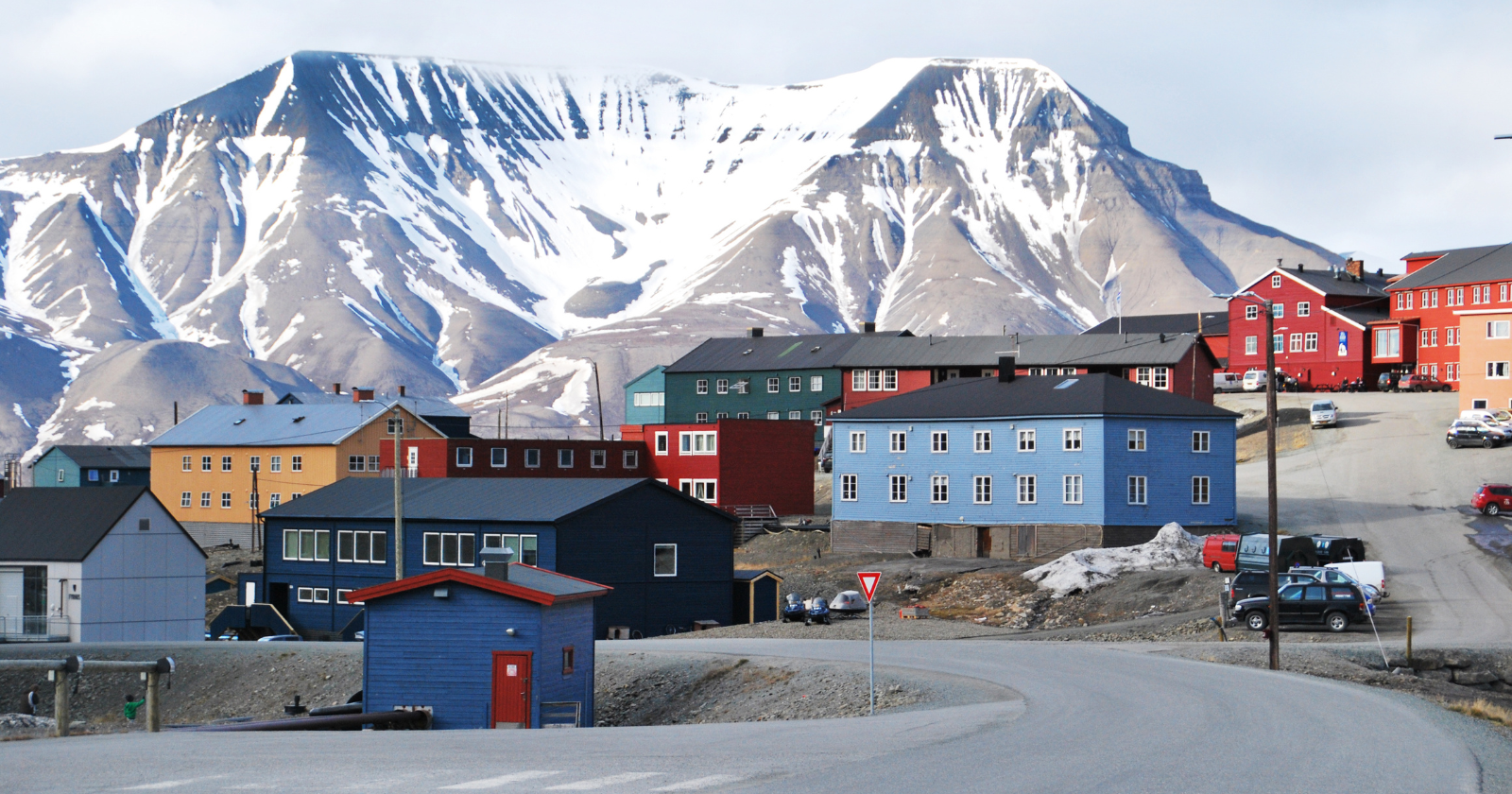
The open door is not just theory. Longyearbyen, the main town, is genuinely mixed. The official Svalbard tourism board describes a population of “2,400 residents from almost 53 different countries.” Norwegians make up around 66 percent of that, leaving a good third of the town holding passports from somewhere else. One of the larger non-Norwegian groups is Thai, with more than 100 people from Thailand among the residents.
In 2006, then-Governor Per Sefland summed up the arrangement in about as few words as it can be summed up. “If you’re able to find a job,” he said, “you have the right according to the treaty to come here.”
The catches are real
What Svalbard does not offer is a safety net. Norway’s welfare and social-assistance system, so central to how the mainland thinks about immigration, does not apply on the archipelago. Residents are expected to support themselves.
Then there’s the practical side. Housing is scarce and costly, and it can be genuinely hard to find work in a small, remote town in the high Arctic. Sefland was blunt about this in 2006. “It’s not a good idea to spread the impression that the people coming here have found their lucky life,” he said. “It’s too cold and too difficult to find a job.” That’s one official’s discouraging read from nearly two decades ago, not a verdict on the town today. But the facts he pointed at are valid.
The turnover tells its own story. The average stay in Longyearbyen runs to about 6.3 years. People come, and a lot of them leave. An open door is not the same as a place that’s easy to stay in.
The contrast with the mainland
All of this stands out more against the direction the mainland has taken. Norway has been tightening its immigration rules for years, and has sharply cut the number of UN refugees it agrees to resettle, down from the few thousand places a year it ran through the second half of the last decade. That resettlement quota has come down hard.
The political language has matched the policy. Back in 2015, then-Immigration Minister Sylvi Listhaug said proposed measures would “make it less attractive” for asylum-seekers to come. A decade on, the framing hadn’t softened.
So the same government holds two positions at once. On the mainland, a system built to be selective and to protect a generous welfare state, growing more selective by the year. On Svalbard, a 1920 treaty that keeps the door open to citizens of dozens of countries, no visa required, precisely because that welfare state was never extended there. The two policies aren’t really in tension. They’re solving different problems. The mainland is managing access to a safety net. Svalbard, having no net to manage, can afford to leave the door unlatched.