
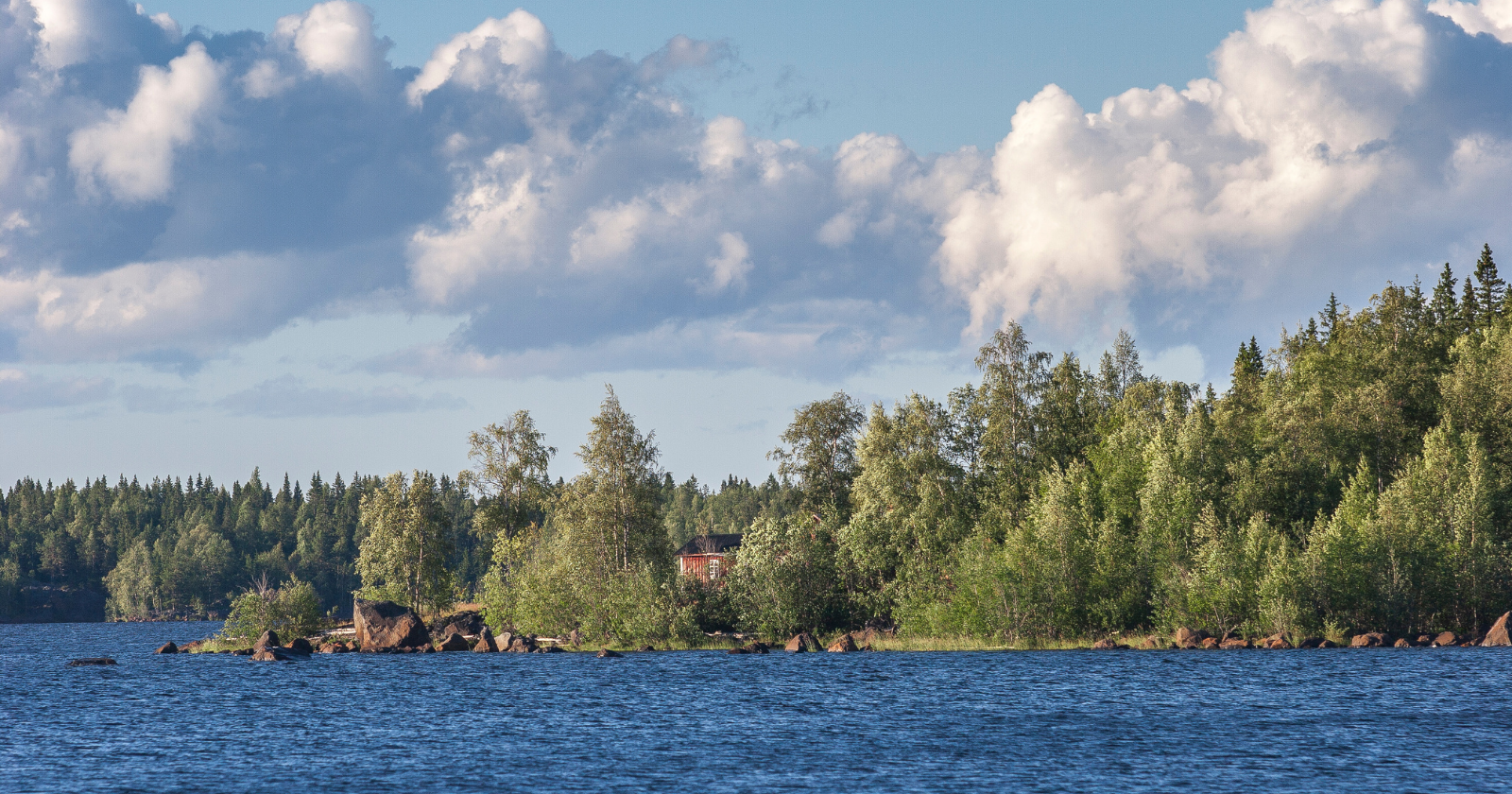
Stand on top of Skuleberget on Sweden’s High Coast and you are standing on an old beach. The highest ancient shoreline here sits 286 metres above where the sea reaches today. It got there because the land rose. Not the water falling, the rock itself lifting, slowly, out of the sea over thousands of years. And it hasn’t stopped.
Since the last of the ice pulled back from this coast, the ground here has risen higher than anywhere else on the planet that we know of. The climb is still going.
What 285 metres actually looks like
The headline number comes from UNESCO, which lists the High Coast (Höga Kusten) as a World Heritage Site because of exactly this. Its listing puts it plainly: since the ice retreated about 9,600 years ago, the land has risen by roughly 285 metres, which UNESCO calls the highest known rebound.
On the ground, that range shows up as a stack of old coastlines. Beaches that were once at sea level are now hillsides and ridge tops. Fishing spots ended up inland. The whole coast reads like a slow-motion record of the sea moving away, not because the ocean shrank but because the ground kept coming up underneath it.
Why land rises when ice leaves
The reason is simpler than it sounds. During the last ice age, a sheet of ice sat over Scandinavia that was, in places over this region, about 2,500 to 3,000 metres thick. Ice that thick is heavy enough to press the Earth’s crust down into the softer, slowly flowing rock beneath it, like a hand pushing into memory foam.
When the ice melts and that weight lifts, the rock underneath flows back and the crust rises to fill the space. It doesn’t spring up all at once, because the deep rock moves slowly. It comes back over thousands of years. Geologists call this glacial isostatic adjustment, and this part of the world is where the idea was first worked out. The slow rise of this land was the first real evidence that the solid Earth can flow, something later measurements confirmed by tracking the crust as it moved.
How we know the ice left about 9,600 years ago
The 9,600-year figure comes from dating the rocks the ice left behind. One study by Fabel and colleagues found “10Be and 26Al data derived from 15 moraine boulders indicating regional deglaciation 9600 ± 200 yr ago.” In plain terms, they measured how long the rock surfaces had been exposed to the sky. Certain forms of atoms start building up in a stone the moment the ice uncovers it, so counting them tells you when the ice left.
One caveat the authors would want kept: that study looked at rocks in the northern Swedish mountains, not the High Coast itself, and it treats the number as a good regional age rather than an exact date for one beach. It’s the best clock we have for when the ice left this part of the world, not a stopwatch reading for Skuleberget.
Once you have the timing, the uplift comes from those stranded shorelines. The highest one, the old beach at the top of Skuleberget, gives you the total: however high that ancient coastline now sits above the sea is how far the land has climbed since it was underwater. Interest in this is old. Anders Celsius, better known for the temperature scale, measured the water apparently retreating near Gävle in the 1740s and got a rate close to the modern one, though he thought the sea was draining away rather than the land rising.
This coast holds the record for a few reasons at once: a very thick ice sheet, sitting over this exact spot for a long time, on crust that responded strongly, and ice that melted recently enough that the rebound is still going. Change any of those and the total comes out smaller.
The 100 metres still to come
The land isn’t done. In the fastest area near the coast it is still rising at nearly a centimetre a year, fast enough that about 700 hectares of new land rise out of the sea each year along this coast. That is a coastline that visibly changes within a single lifetime.
How much further has it got to go? Roughly another 100 metres, over the next few thousand years, before the crust settles back into balance. Poutanen and Steffen put it this way: “The area is expected to almost linearly rise from the sea in the next few thousand years until the remaining about 100 m of depression due to the former ice load are isostatically balanced.”