
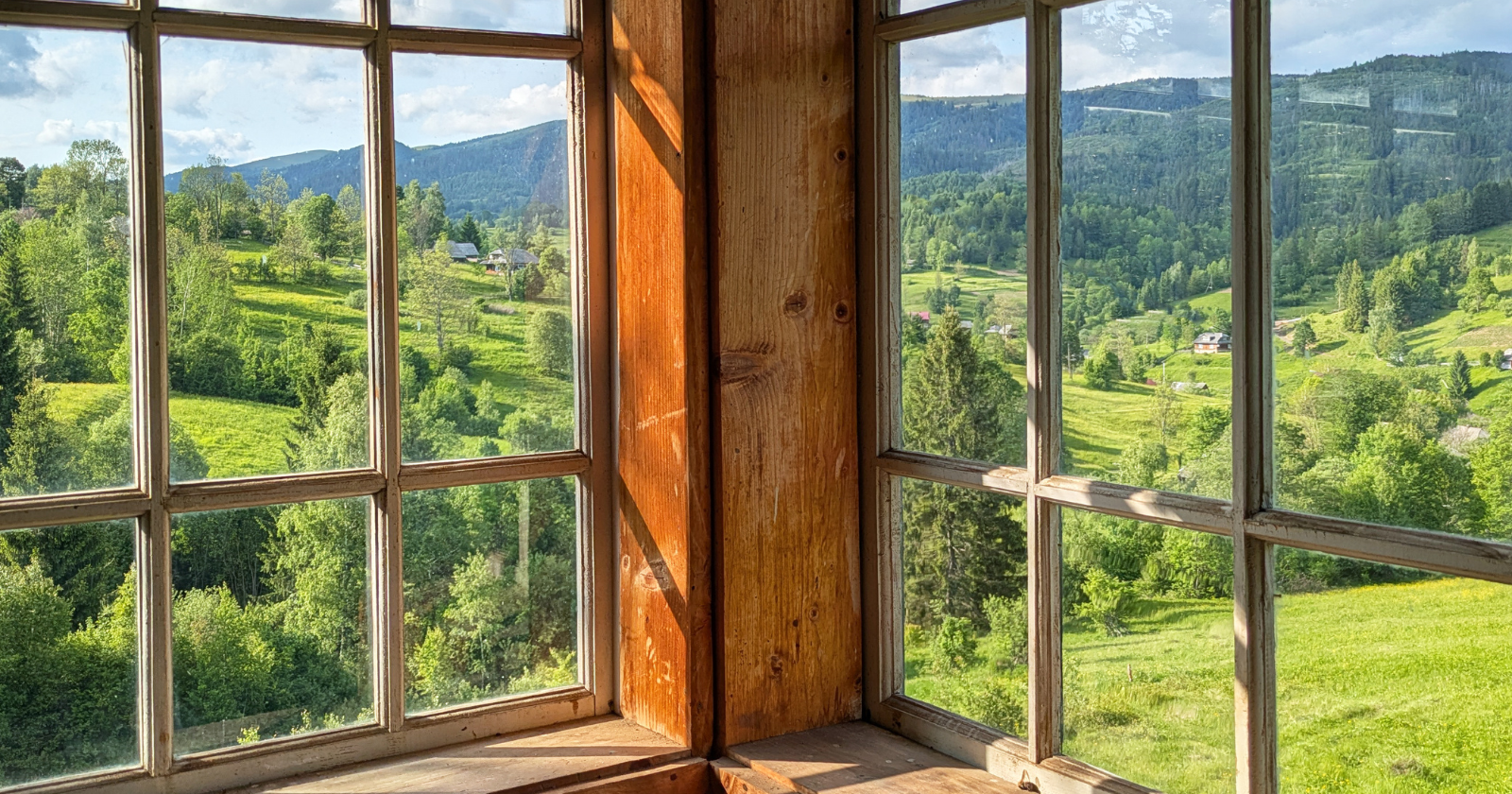

Living near a park did not predict who took fewer antidepressants. Having trees outside the window did not either. The one thing that tracked with lower use of antidepressants, anti-anxiety medication and sleeping pills, in a study of more than seven thousand Finnish adults, was whether people actually went outside into green space and how often they did it. We are writers, not clinicians, and what follows is a reading of the research, not medical or psychological advice.
The study, published in BMJ Occupational and Environmental Medicine in January 2023, drew on 7,321 adults living in the Helsinki, Espoo and Vantaa regions of Finland. It’s a large sample for this kind of research, but it’s still one dataset, one country, one measurement window. That’s worth stating plainly rather than treating the finding as a settled rule about how green space works for everyone, everywhere.
Three ways of measuring “green,” and only one that mattered
The research team, led by Anu W. Turunen at the Finnish Institute for Health and Welfare, measured exposure to nature in three separate ways rather than treating “living near green space” as a single idea. They used geographic mapping to calculate how much green and blue space, parks, forests, lakes, sat within a short distance of each person’s home. They asked participants how green their view was when they looked out their own window. And they asked how often people actually visited green or blue spaces, and how much time they spent there when they did.
Two of the three showed no meaningful link to psychotropic medication use: neither residential green space quantity nor the greenness of the view from home predicted who was taking antidepressants, anti-anxiety medication or sleep aids. The third measure, actual visit frequency, did. People who spent more time in green or blue spaces had lower odds of using psychotropic medication, an association the researchers report as 33% lower odds for those visiting green space three to four times a week, and 22% lower odds for those visiting five or more times a week, both compared with the least frequent visitors and adjusted for income, education, and other health and lifestyle factors.
The study also looked at two other medication categories as points of comparison. Green space exposure showed an association with lower use of blood pressure medication that was, numerically, the strongest of the three categories, and a somewhat weaker one with asthma medication, findings the authors treat as secondary to the psychotropic result.
Why proximity and a green view came up empty
It would be easy to read this as proof that parks and window views don’t matter, but that’s a bigger claim than the study supports. What the researchers can say is that, in this cohort, simply having access to nature nearby wasn’t enough on its own; what mattered was whether people used it. Having a forest two streets away doesn’t change anyone’s day if they never walk into it, and a view of trees from a desk is not the same experience as sitting under one.
This is a single cross-sectional study, not a randomised trial, and the authors are careful about what it can and can’t establish. It cannot rule out reverse causation: it’s plausible that people who are already coping well, with fewer symptoms requiring medication, have more energy and inclination to get outside in the first place, rather than the outdoor time itself driving the lower medication use. The researchers acknowledge this limitation directly rather than glossing over it, and describe their design as unable to establish a causal direction.
A pattern that echoes other nature research, without repeating it exactly
The finding fits a broader pattern that has shown up in other environmental health research: that the psychological or physiological benefits often attributed loosely to “green space” tend to be strongest for actual time spent in it, rather than mere visibility or proximity. But this study adds something more specific by directly comparing all three exposure types side by side in the same population, rather than assuming any one of them stands in for the others. That distinction matters for how the finding should be used. A commonly cited assumption in urban planning, that simply building more parks and green corridors near where people live will improve population mental health, is only weakly supported by this particular dataset. What the Finnish results point toward instead is that access has to translate into actual use before any benefit shows up in medication records.
This isn’t a claim that green infrastructure is pointless. Nearby nature is a precondition for visiting it: someone can’t spend time in a park that doesn’t exist within reasonable reach. What this study adds is a caution against assuming that building it is the same as people using it.
What this means for anyone reading their own habits into it
If a walk in the park has ever seemed to clear your head, this study doesn’t contradict that experience, it offers one dataset suggesting that experience is closer to a documented pattern than a coincidence, at least at a population level. It also isn’t a substitute for medical care. The study measured psychotropic medication use as a marker, not clinical outcomes in detail, and it says nothing about whether outdoor time would work as a treatment for someone experiencing more serious psychological distress, or how it might interact with medication a person is already taking. Anyone with questions about medication use, sleep problems, or persistent low mood is better served by talking to a doctor than by reading population statistics.
What the numbers do suggest, cautiously, is that the advice buried in this research isn’t complicated. It isn’t about which suburb has more tree cover or which apartment has the better outlook. It’s about actually walking outside into it, which is a smaller and more achievable thing to ask of a Tuesday than moving house.