
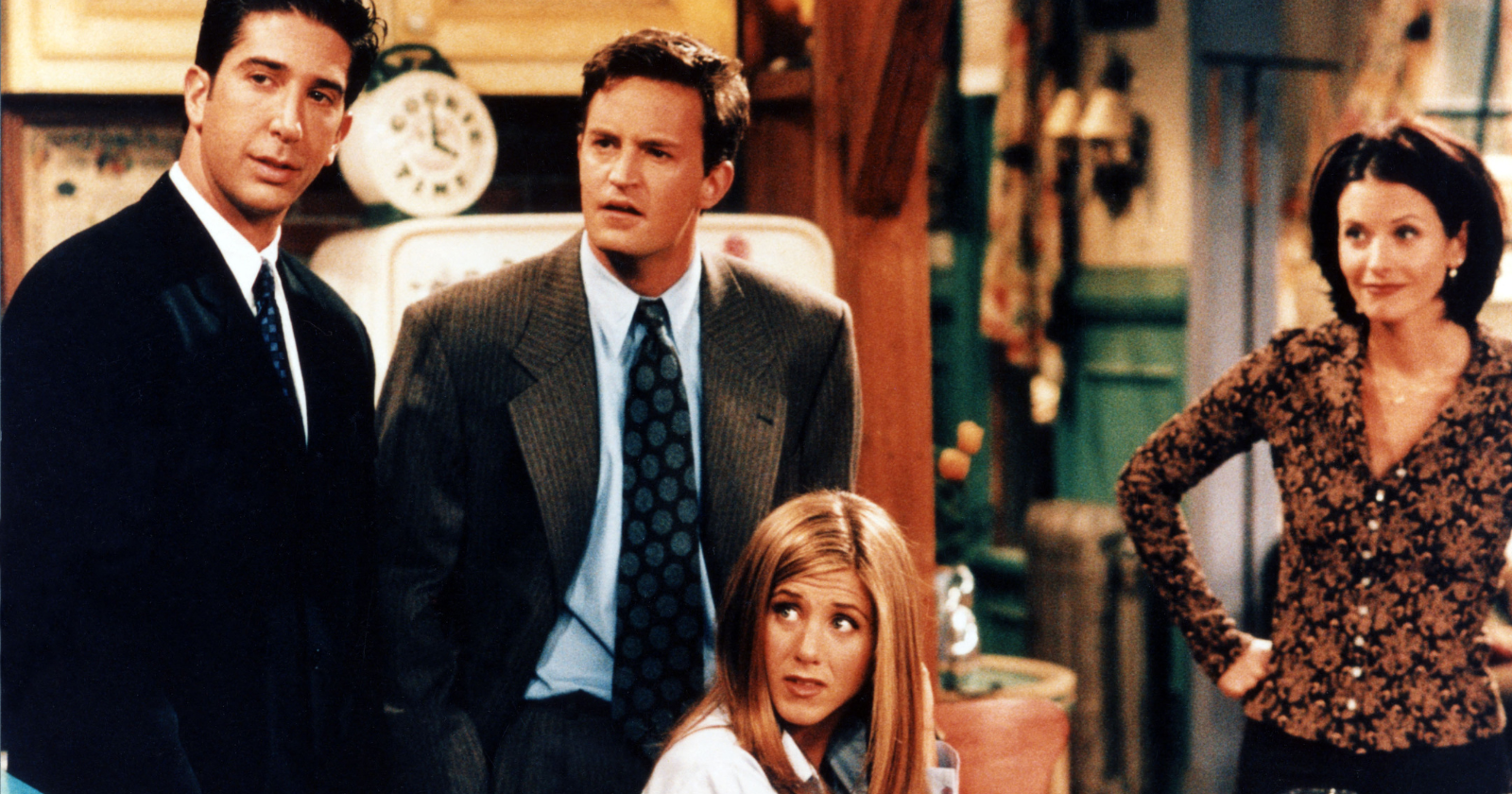
Before it was Friends, it went through two other working titles: Insomnia Cafe and Six of One, the latter a phrase nobody outside the writers’ room ever really understood or particularly liked. Neither name survived very long, and neither one hints at what the show would eventually become: one of the most widely rerun, endlessly quoted sitcoms in television history, still generating streaming revenue and cultural references three decades after it first aired under a title nobody involved was fully confident about yet.
The show’s creators, David Crane and Marta Kauffman, weren’t coming off a hit when they built it either. They were coming off the exact opposite.
A cancellation, then a cafe that didn’t exist yet
The year before Friends premiered, Crane and Kauffman had created a different show for CBS called Family Album, about a family relocating from California to Philadelphia to be closer to relatives. It ran for about seven weeks, from late September to mid-November of 1993, before it was cancelled. That’s the backdrop against which Friends got built — a team trying again immediately after their last attempt had visibly failed on network television, with all the second-guessing that tends to come with it, rather than any kind of victory lap.
Co-creator David Crane later put it plainly, describing the mood heading into the new pilot: “We’d just had a series canceled.” There was no sense, in other words, that this next project was a guaranteed anything. It was just the next thing they were trying, built around a premise — six friends in their twenties, orbiting a coffee shop and each other’s apartments — that had already gone through two working titles before anyone at NBC had seen a finished episode.
What “high weak” actually means
When NBC finally did test the pilot with a preview audience, the results were not the kind of numbers that predict a decade-plus of syndication money. Former NBC president Warren Littlefield, who ran the network from 1990 to 1998, later described the pilot’s performance directly: it tested, in his words, “high weak,” and he was careful to add that the show was “not an instant hit. Not an automatic.” That’s about as far from a slam-dunk verdict as a network executive’s language gets while still leaving the show a path to air at all. Nobody at NBC was walking around the building convinced they were sitting on a phenomenon.
Insomnia Cafe never once, in any test screening or internal memo, looked like the future of American television.
The scene the network wanted cut
Test scores weren’t the only friction. NBC also pushed back on content in the pilot itself, specifically questioning whether Monica should sleep with a man named Paul on their first date within the very first episode. According to Crane’s own account, the network’s concern was blunt: an NBC executive told him, “We’re not going to like her!” if that stayed in. Crane and Kauffman held their ground and kept the scene, a small creative fight that, in retrospect, set the tone for a show that was never going to sand down its characters into something blander just because a network executive got nervous about first impressions.
It’s a strange thing to imagine now, given how thoroughly Friends became appointment viewing for an entire generation and then a permanent fixture of basic cable and streaming libraries afterward. At the time, it was a title-less show made by a team fresh off a cancellation, testing weakly, getting notes about whether its own female lead was likable enough to keep as written.
What the weak numbers didn’t predict
Friends premiered in September 1994 and, contrary to every early signal, grew into a genuine cultural institution — ten seasons, a cast that became some of the highest-paid actors in television history, and a syndication afterlife so durable that streaming platforms have paid hundreds of millions of dollars just to keep it available for viewers who could, in theory, watch it for free on cable reruns instead.
The show’s now-iconic fixtures — the coffee shop, the orange couch, the doorframe with the peephole — didn’t exist yet in any recognizable form back when the whole project was still called Insomnia Cafe and testing weak with strangers in a preview room. A “high weak” test score didn’t show any of that coming. Neither did two discarded titles that hadn’t survived contact with an actual pitch meeting.
The show that eventually became one of the most bankable pieces of intellectual property in the history of American television started out looking, by every available internal metric, like a perfectly ordinary bet that could just as easily have gone nowhere.
Why the weak start is the part worth remembering
It’s tempting, looking back at a show this successful, to assume the signs must have been there early — that somebody at NBC must have quietly known, that a “high weak” score was secretly a good one in disguise, that the network was playing a longer game than its own executives let on. The actual record says otherwise. The people who greenlit Friends did so with a mediocre test score in hand, a title they hadn’t settled on, and a creative team one cancellation removed from their last show — no early flash of certainty involved anywhere in the record.
Sometimes the version of the story that gets told afterward is a lot cleaner than the one that was actually lived through in real time — six months out from a canceled show, still arguing with a network about a first-date scene, still calling the whole thing Insomnia Cafe on the internal paperwork while everyone involved waited to find out if any of it would survive contact with an actual audience.