
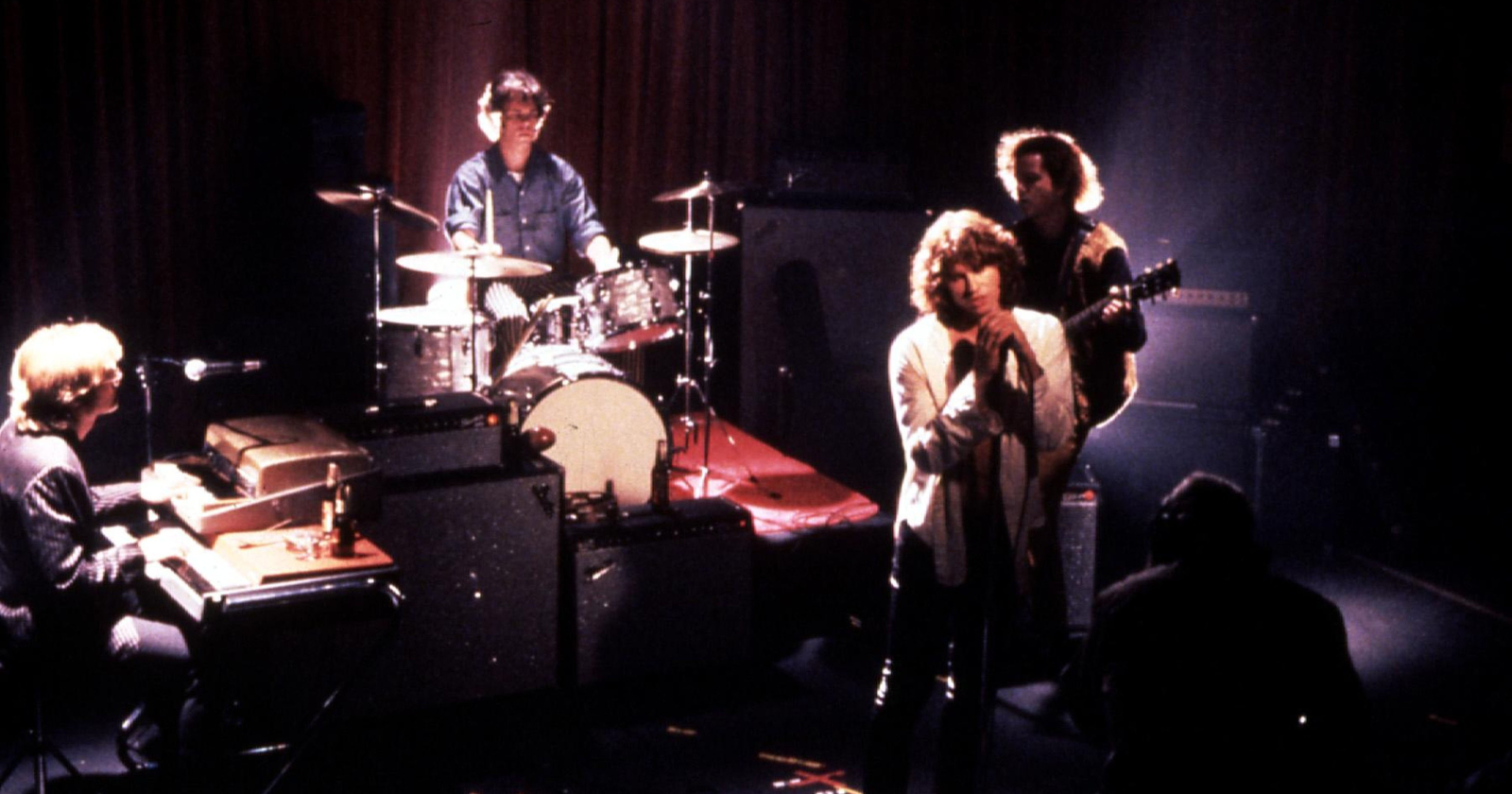

In the spring of 1966, The Doors had enough songs for roughly half a debut album and a deadline that didn’t particularly care about that shortfall. Most of the band’s early material had come from Jim Morrison, who’d arrived with a notebook of poetry he’d been quietly workshopping into lyrics for years before the band existed in any formal sense.
Facing a gap they needed to fill fast, Morrison did something that sounds almost casual in hindsight and turned out to be one of the more consequential creative decisions in 1960s rock: he told the rest of the band that everyone should try writing a complete song of their own, rather than leaving the job entirely to him.
An assignment nobody had trained for
Guitarist Robby Krieger had been in the band for less than a year and, by his own later account, had never actually finished writing a full song before that point. When he asked Morrison what he was supposed to write about, the direction he got back was about as unhelpful and about as useful as a brief can be at the same time: something universal, Morrison told him, something that wouldn’t feel dated or disposable a couple of years down the line. It’s the kind of instruction that could paralyze a first-time songwriter for months. Krieger, according to accounts of the writing process, took the assignment and wrote the song over a weekend.
His approach to “universal” was almost literal: rather than reaching for a specific personal experience or a piece of imagery unique to him, he ran through the classical elements — earth, air, water, fire — on the theory that a concept ancient and elemental enough would never really go out of style, because it predates style in the first place. He landed on fire. The chord progression and the guitar figure came together quickly — built with more chords than the simple three-chord songs of the era, a deliberate choice on Krieger’s part to make the band stand out — before the rest of the band reworked the arrangement into something with a heavier, Latin-inflected rhythm that didn’t resemble its influences by the time they were finished with it.
“He said, ‘Something universal, which won’t disappear two years from now.'” — Robby Krieger, recalling the brief Jim Morrison gave him before he wrote “Light My Fire”
How a first attempt became a whole band’s signature song
Krieger brought a rough version to the rest of The Doors, and the song went through a real group transformation from there rather than staying a solo composition with backing. Keyboardist Ray Manzarek is widely credited with the song’s instantly recognizable organ introduction, reportedly drawing on Bach’s Inventions and Sinfonias for its structure, giving the track a baroque, almost formal opening before it drops into the loose, extended jam that made the album version run past six minutes. Drummer John Densmore shaped the rhythm section around the Latin feel the band had been reaching for, and Morrison, according to accounts of the song’s construction, contributed the second verse, including its darker “funeral pyre” imagery, which nudged the song away from being a straightforward love song and into something stranger and more ambiguous. The band collectively agreed to share songwriting credit across the group rather than crediting Krieger alone, an unusually generous move for a band whose singer had, up to that point, been the primary credited writer on nearly everything.
The album cut ran roughly seven minutes, which created a genuine commercial problem once Elektra wanted to release it as a single: radio in 1967 wasn’t built for songs that long, and nobody at the label had an obvious solution for how to cut it down without gutting what made it work. Producer Paul Rothchild eventually edited a version down to under three minutes for radio release, trimming most of the instrumental jam while keeping the structure intact enough that it didn’t feel amputated, and it was that edited single that went to radio in April 1967.
Three weeks that changed Elektra’s fortunes
“Light My Fire” reached No. 1 on the Billboard Hot 100 that July and held the position for three consecutive weeks, eventually spending seventeen weeks on the chart in total. It was, notably, Elektra Records’ first-ever No. 1 single — a genuine milestone for a label that had built its reputation up to that point on folk and blues acts rather than anything resembling a commercial rock powerhouse. A song written in an afternoon, by a guitarist attempting his first complete composition, on the vague instruction to make it feel timeless, ended up being the record that proved the label could compete at the very top of the pop charts.
What I find the most interesting about this story isn’t really the chart statistics, impressive as they are. It’s the size of the gap between the size of the assignment and the size of what came out of it. Morrison wasn’t handing Krieger a detailed brief with references and a deadline built around commercial strategy. He gave him four words and an elemental theme to pick from, the kind of open-ended prompt that could just as easily have produced nothing usable at all. Most first attempts at anything, songwriting included, are rough enough to get quietly shelved. This one became the song that defined the band’s commercial breakthrough and one of the most recognizable rock singles of its decade.
Why the “first try” part never stops being the interesting bit
Krieger has continued performing and discussing the song for decades since, and the detail that keeps resurfacing in his own retellings isn’t the fame or the royalties, it’s the specific disbelief that his first real attempt at songwriting produced something that outlasted almost everything else the band ever recorded, including material Morrison had been carefully honing for years before the band existed. There’s something almost unfair about that, in the way creative luck often is: years of a poet’s careful craft sitting alongside a first-timer’s afternoon experiment, and it’s the experiment that becomes the signature song most casual fans could hum without hesitation.
I think that’s part of why the story has held up the way it has. It isn’t really a story about talent being rewarded in a predictable, deserved way. It’s a story about how loosely creative output tracks with preparation, and how a vague, almost throwaway instruction — write about something that lasts — can occasionally produce exactly what it asked for, on the very first try, from someone who had no track record yet to suggest he could.