
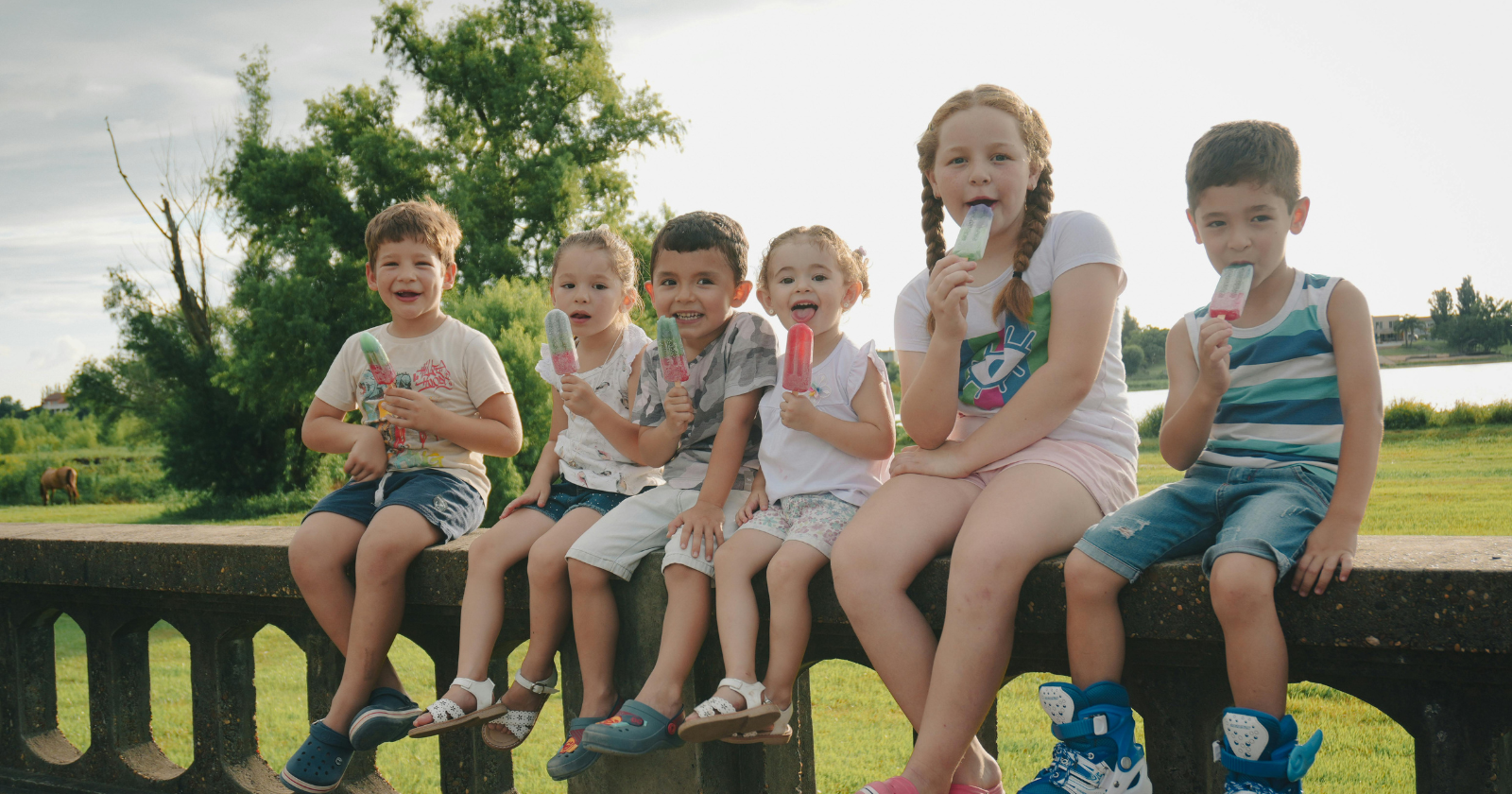

The easy explanation for summer nostalgia is the one everyone reaches for first: it is the warmth, the long light, the particular smell of cut grass or sunscreen or a lake that hasn’t changed in twenty years.
Something sensory hits you, a season turns, and suddenly you are homesick for a version of your own life that no longer exists.
It is a tidy story, and it is not really the one the research supports once you look past the first, most obvious layer of it.
What the surveys actually say people are chasing
A survey conducted for Talker Research, reported in mid-2026, found that nearly half of Americans consider this a year defined by nostalgia, with the effect strongest among younger respondents, and summer as by far its busiest season, peaking in June. What is more revealing than the seasonal timing is the reason people gave for it. The largest share, 43 percent, said they were chasing a happier time. More than a quarter, 28 percent, cited feeling overwhelmed by how much was happening in the world. Another 41 percent wanted emotional comfort specifically. Almost none of the top reasons were about sensory nostalgia for summer itself, the heat, the light, the smell of anything. They were about wanting relief from a present that felt too full, and reaching backward toward a period that, at least in memory, did not.
That is a different claim than “summer makes people sentimental.” It is closer to: people are nostalgic for a specific quality of time that summer, for most of them, used to reliably contain, and the season is just the label memory has attached to it, not the actual mechanism doing the work.
Why the season gets blamed for something else entirely
The psychologist Krystine Batcho has spent much of her career studying nostalgia, and her research frames it around comparison rather than simple sentimentality: nostalgia tracks specifically with how a person judges their present circumstances against their past, not with how pleasant the remembered season was in isolation. That framing matters here, because it relocates the trigger. It is not the calendar date that produces the ache. It is the felt gap between how your time is currently organized and how it used to be organized, or in the case of childhood summers, how it barely was organized at all.
A separate line of research backs the same relocation. Constantine Sedikides and colleagues, reviewing decades of nostalgia research in Current Directions in Psychological Science, describe nostalgia less as simple sentimentality and more as a psychological tool people reach for under exactly the conditions the Talker Research numbers describe: when the present feels discontinuous or unsettled, and a person needs a felt sense of continuity with who they used to be. The trigger, across both lines of work, keeps turning out to be the same thing: not the weather, but the shape of the days.
What I think that research is actually describing, more than it says outright, is a grief for unstructured time specifically, dressed up in seasonal language because summer is where most people’s lives last reliably contained large stretches of it. Nobody is nostalgic for July as a concept. They are nostalgic for the version of a day that had nothing scheduled into it past noon, and July is simply the last season most people’s lives still allowed that to happen without permission or planning.
The ache isn’t for a month on a calendar. It’s for the version of a day nobody yet needed you to account for.
The hours themselves have been quietly disappearing
That kind of unstructured time is not just a nostalgic memory of childhood. It has measurably shrunk. Research by the sociologist Sandra Hofferth, tracking American children’s daily schedules, found that unstructured play time fell by roughly 25 percent between 1981 and 1997 alone, as more of children’s hours were absorbed into organized, supervised, adult-directed activity. That decline has not reversed since. If anything, the scheduling instinct has extended further into adulthood, where entire days, summer included, now tend to arrive with itineraries, deadlines, and calendar invitations already attached before the day begins.
I notice this most clearly in my own life, moving between teaching, research deadlines, and the ordinary administrative churn of living between two countries, where even a break tends to arrive with an agenda folded into it: places to see, people to visit, a version of rest that still has to justify itself as productive somehow.
What summer nostalgia seems to be reaching for is not a return to warm weather. It is a return to a version of time that did not have to explain itself to anyone, including the person living inside it.
Why a vacation rarely fixes the actual ache
This is also, I think, why simply taking a summer trip so often fails to resolve the feeling it was supposed to answer.
A week away can restore the light and the heat almost perfectly, and still leave the actual ingredient missing, because most modern travel arrives pre-scheduled, an itinerary standing in for the very unstructured quality being chased.
You can fly somewhere warm and still spend the whole trip on a version of the clock you were trying to escape, checking times, booking tables, deciding what the day is supposed to accomplish before it has even started.
The nostalgia does not lift, because the thing it was reaching for was never really the destination. It was the absence of a schedule, and a schedule is exactly what most of us bring with us wherever we go.
What actually gets grieved when a season turns
None of this means the sensory details are irrelevant. The light and the heat are real triggers, the way a smell can trigger a memory precisely because it was present the last time a particular feeling was too. But treating the season as the cause rather than the reminder misses what people are actually describing when they say a summer made them ache for something. They are not missing a temperature. They are missing a version of a day that belonged to them entirely, before anyone, including their own adult selves, started asking what those unscheduled hours were supposed to be accomplishing.
I do not think there is a tidy fix folded into that, and I am wary of turning it into one, since the honest version of this insight is smaller and less actionable than a lifestyle prescription. It is just this: the ache that shows up every June is not really about the season ending eventually. It is about how rare it has become, at any point in the year, to have a stretch of hours that nobody, including yourself, requires an explanation for.
If any of this lands closer to home than it does as an abstract observation about travel surveys, that is worth paying attention to on its own terms. A persistent, heavy sense of longing for the past is not always just nostalgia doing its ordinary work, and if it is sitting alongside real distress rather than the mild, bittersweet ache most people describe, talking to someone, a friend or a therapist, is worth more than any article’s explanation of why summer feels the way it does.