
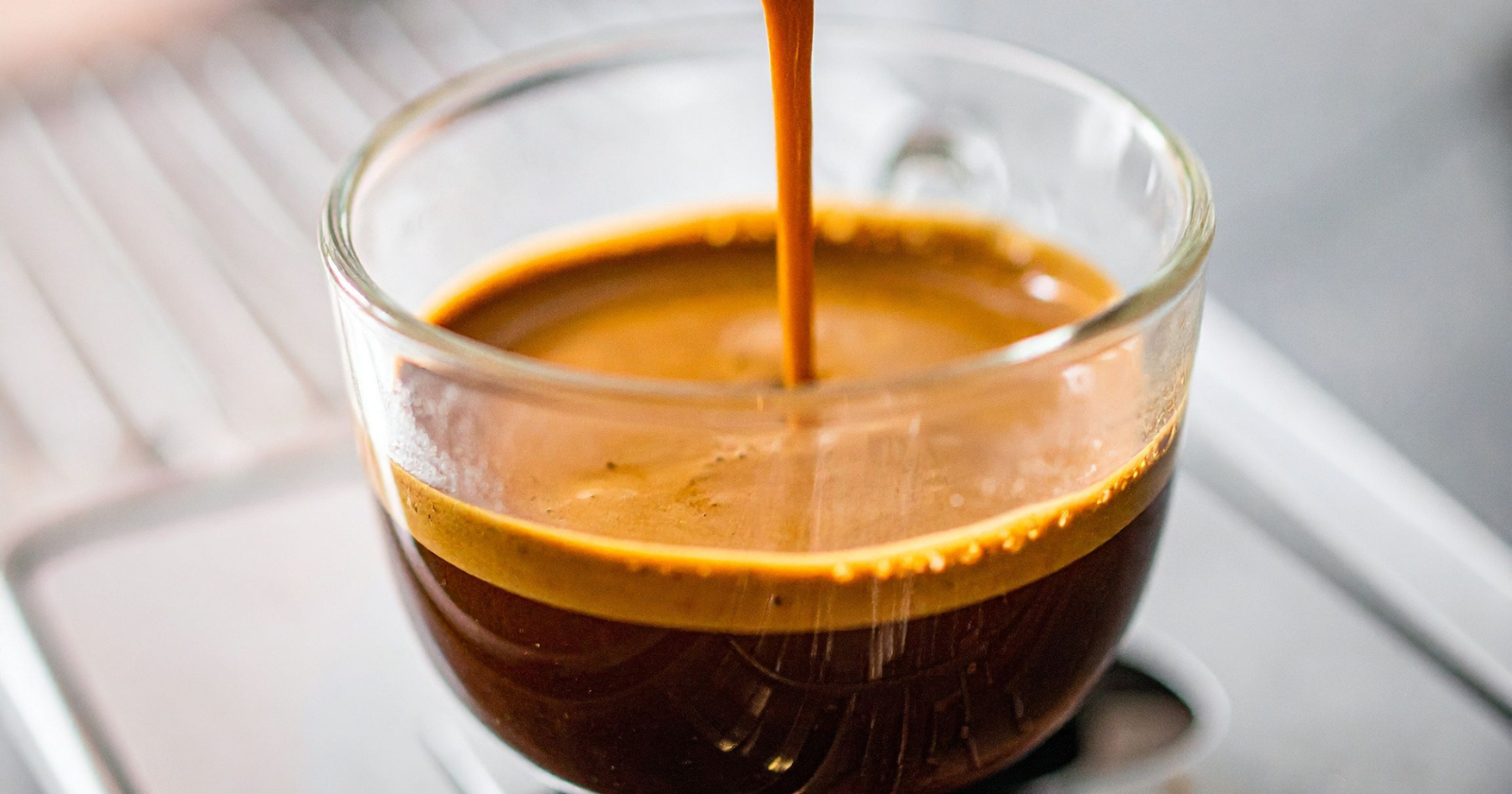

The extra shot is the cheapest upgrade on a coffee order: one tap on the till screen, thirty seconds more brewing, and a drink that already had enough caffeine in it to do the job anyway.
Add it up across a working week and the extra shot rarely tracks with how tired anyone actually is.
People who slept nine hours order it. People running on four skip it. What it tracks more reliably, according to research on daily psychological need satisfaction, is how much say a person feels they’ve had over anything else that day. A 2000 diary study by the psychologists Harry Reis, Kennon Sheldon, Shelly Gable, Joseph Roscoe and Richard Ryan, published in Personality and Social Psychology Bulletin, tracked 67 college students for fourteen days and found that on days people felt more autonomous — more like their choices were their own, and less like obligations simply moving through them — their well-being rose measurably above their personal baseline, regardless of how demanding the day otherwise was.
Caffeine still matters here — I’ll admit that. Lately I ask for a second shot almost every time I order, and if I’m honest with myself, it has less to do with agency than with the fact that my own tolerance has crept up to an embarrassing degree; a single shot barely registers anymore, which is not something I’m proud of. Not everyone who orders an extra shot is making a quiet statement about control — some people just want to feel more awake, myself included on plenty of mornings.
But the timing is suggestive: the extra shot tends to show up heaviest on the mornings that are already the most scripted — the earliest alarm, the most back-to-back meetings, the least room left over for a choice that’s actually optional.
Why it has to be a small choice to count
Self-determination theory, the broader framework Reis and his colleagues were testing, makes a specific and slightly counterintuitive claim here: autonomy is about whether a choice is volitional, not about the size or importance of the choice itself. A promotion decided by someone else doesn’t count toward it, however large the promotion. An extra shot decided by nobody but the person ordering it does, however small the extra shot.
That’s what makes a two-tap till upgrade a plausible candidate in the first place — it clears the actual bar the research cares about, which has nothing to do with stakes and everything to do with whose decision it actually was.
What a day of small, chosen things predicts
The autonomy finding held up well enough that a much larger, more recent study essentially re-ran the same logic on adults navigating real daily stress rather than college students journaling about their week. Published in Communications Psychology in 2025 by a research team drawing on longtime Penn State stress researcher David Almeida’s National Study of Daily Experiences, the study followed 1,766 adults through eight consecutive days of daily interviews, then again a decade later, and found that on days people felt more in control of a stressor than their own average, they were substantially more likely to resolve it — an odds ratio of 1.56 within the same person at the study’s start, strengthening to 1.89 a decade later. Feeling in control, in other words, fluctuates day to day — a state, not a fixed trait — and that fluctuation itself does measurable work on how the rest of the day goes.
Notice which mornings the extra shot actually happens, and it rarely lines up with how little sleep the night before contained. It lines up with how little the rest of the day is going to belong to the person drinking it.
The treat people skip on the exact days they need it
A separate strand of research points at the same mechanism from an odder angle: self-gifting. A series of experiments led by the marketing researcher Jacqueline Rifkin at Cornell, published in the Journal of Consumer Research in 2022, found that people under time or financial pressure are less drawn to small self-treats, not more — they assume, wrongly, that they won’t have the mental bandwidth left to enjoy them. When the same stressed participants were nudged into self-gifting anyway, they reported significantly more happiness, more relaxation and less feeling of time pressure than they had predicted going in. The instinct to treat yourself precisely when the day is hardest turns out to be correct. Most people override it anyway.
What this doesn’t prove
No study on record has looked specifically at coffee orders, extra shots, or till-screen upgrades. The autonomy-and-well-being research measures need satisfaction broadly, not a two-dollar add-on; the sample is small and dated — 67 undergraduates, most of them under 26. The Almeida-team study measures whether people resolve a stressor, not whether they buy themselves anything. The self-gifting research is about deliberate treats people consciously choose, not a habitual, barely-noticed line item added out of routine. Stitching an extra shot into any of these findings is an interpretation of the pattern, not something any of the three studies actually tested. There’s also a duller possibility worth naming honestly: some of this is just habit, run on autopilot with no felt sense of choosing attached to it at all — in which case an extra shot ordered without a flicker of awareness wouldn’t satisfy the mechanism these studies describe, whatever else it might be doing.
What can be said carefully is this: none of these three literatures measured a coffee order. But together they describe a real and repeatedly observed pattern — small, self-directed choices measurably lift a day that otherwise runs on someone else’s schedule, and the people most likely to skip that lift are the ones who need it most. An extra shot fits that pattern more plausibly than it fits simple tiredness. It doesn’t prove the fit.
The barista never asks why. The extra shot goes in, the button gets tapped, and the drink costs fifty cents more than it strictly needed to. Whatever that fifty cents is actually buying, on the mornings it gets spent, it probably isn’t the caffeine.