
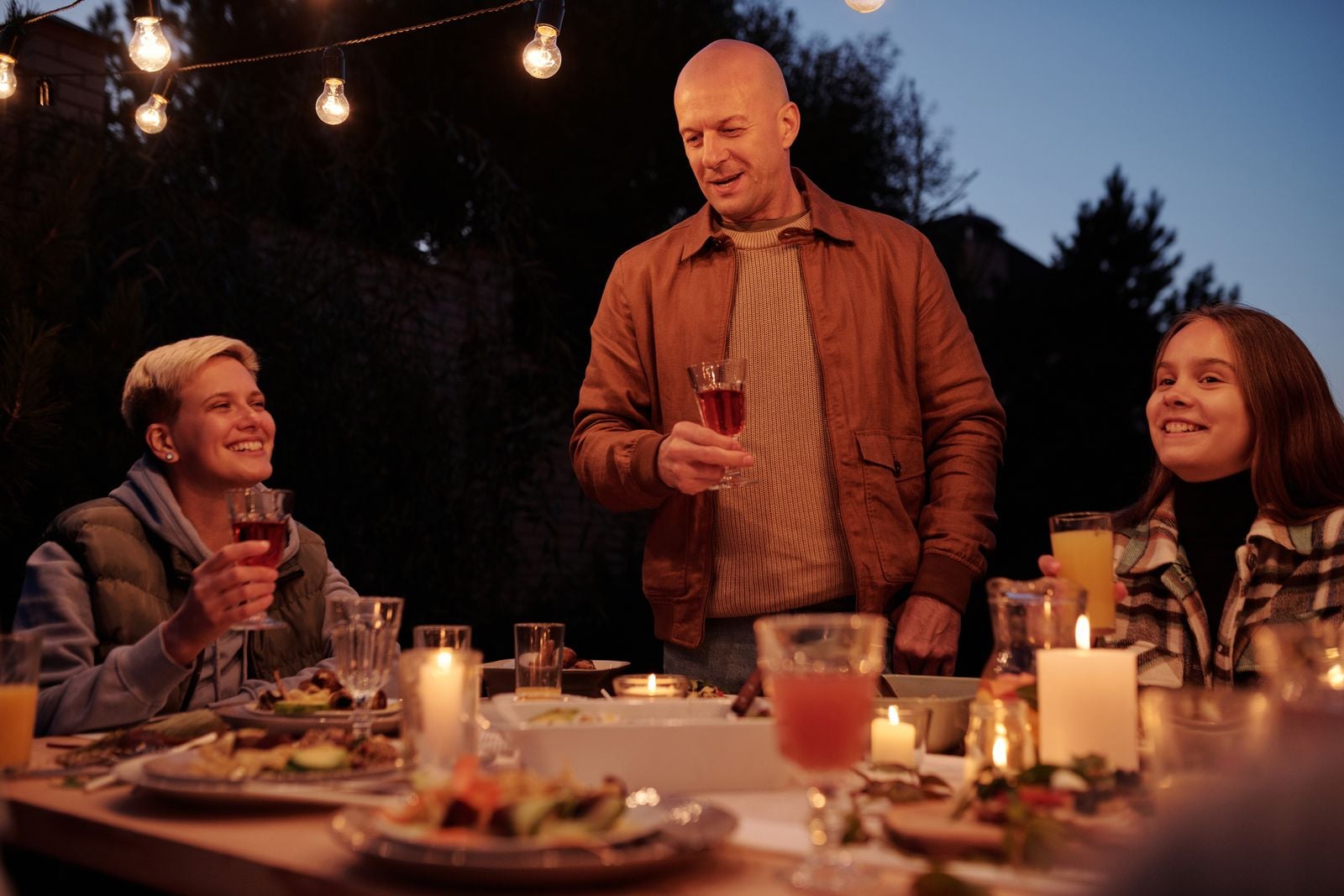

At many family gatherings, there is one voice you can count on to break a silence that has started to feel uncomfortable. What you hear less often from that same person is a sentence that begins with something like, I need to tell you how I actually feel about this. The jokes arrive on schedule. The seriousness rarely gets the same welcome.
Being the funny one in a family is usually described as a gift, or at worst a harmless quirk. Sometimes it becomes something more demanding: a role that earns laughter, keeps the room moving, and quietly limits how much of the person underneath gets seen.
The job description nobody wrote down
In a family where tension moves through the room like weather, somebody often learns how to change the atmosphere. A joke interrupts the argument. A ridiculous impression breaks the silence. Everyone exhales.
Sometimes the person who discovers this is a child. Once the pattern works a few times, it can become part of what the family expects from them.
That child may learn that a well-timed joke can redirect anger, soften disappointment, or give everybody a way around a difficult subject. It is a real skill. It can also teach them that their value in the room depends on making discomfort disappear.
Humour can make a painful moment easier to carry. The problem begins when it becomes the only response the person feels permitted to offer.

Why the joke gets made in the first place
Not every funny person is avoiding something. Some people simply have quick minds, love making others laugh, and enjoy the energy of a room. The distinction matters.
The useful question is whether the humour still feels like a choice. Can the person let a serious moment remain serious, or do they feel pulled to turn it into a punchline before anyone has to sit with it?
In a tense household, a child who notices that laughter changes the atmosphere may keep repeating what works. Over time, the response can become so automatic that the joke arrives before the person has worked out what they wanted to say.
That habit may be protective in the moment. It gives the person something useful to do and may reduce the pressure in the room. It can also leave them with years of practice at managing everybody else’s discomfort and very little practice at expressing their own.
The family script hardens
Families like familiar roles. Once one seems to work, it can become permanent. The funny one becomes the funny one, just as another sibling becomes the responsible one or the sensitive one.
The problem appears when the funny one tries to step outside the part. A serious sentence gets met with another joke, or a comment such as don’t get heavy on us. Sometimes the reaction is quieter: eyes drift, someone changes the subject, and the energy flattens until the funny one picks the performance back up.
The message does not have to be spoken directly. The person learns what the room welcomes from them and what it does not.
By adolescence or adulthood, they may begin censoring themselves before anyone else has the chance. They feel something serious rising, read the room, and reroute it into something amusing. Eventually, the family no longer has to enforce the role because the person has learned to enforce it alone.
What the humour is doing underneath
Comedy about painful things is not new, and it is not automatically harmful. An overview published by the Association for Psychological Science describes how psychological distance shapes humour and coping. Disturbing material can become easier to laugh at when it feels sufficiently distant, safe, or contained.
That helps explain why dark humour can provide relief. A joke can change the angle from which someone looks at a difficult experience and make the moment feel more manageable.
But relief is not the same as openness. Inside a family, the funny one may be creating distance for everybody else while receiving none of the attention or care that might come if the subject were allowed to remain serious.
They are not simply telling jokes about the tension. They may be taking responsibility for moving the whole room past it.
Humour can also be used to deflect, dismiss, or hide a sharper message behind plausible innocence. The person who is told they cannot take a joke may simply be the person who noticed what the joke was doing.

When the penny drops
There is no reliable age at which the funny one recognises the pattern. For some people, it becomes visible only after years of repeating it.
Sometimes the change begins when something happens that cannot easily be turned into a good story: a bereavement, a health scare, the end of a relationship, or a child of their own beginning to copy the same habit.
The person opens their mouth to speak seriously and discovers that they have an extensive vocabulary for making people laugh about the situation, but a much thinner one for asking someone to stay with them in it.
When they do try, the people closest to them may struggle to respond. The role has been in place for so long that sincerity feels unfamiliar coming from the person everybody expects to entertain them.
This is where the loneliness can become visible. Being funny is a genuine form of closeness, but it can also keep intimacy within carefully controlled limits. A person may have a wide social circle while very few people have watched them hesitate, cry, admit uncertainty, or ask plainly for support.
Charm can bring people close while still keeping an important part of the person out of view.
Why families resist the change
When the funny one tries to renegotiate the role, the family may push back. This does not necessarily mean the family is cruel. It may simply mean everybody has organised themselves around a pattern that has existed for years.
If the funny one stops filling every silence, somebody else has to experience the silence. If they stop turning conflict into an anecdote, the people involved may have to speak directly. If they stop making grief entertaining, the grief remains in the room.
That can feel surprisingly disruptive to people who believed the humour was simply part of the person’s personality.
The family may try to recruit them back with comments about how serious they have become or nostalgic stories about how much fun they used to be. There may also be irritation, as though the person has broken an agreement nobody remembers making.
Usually, this is less a coordinated rejection than an old pattern trying to restore itself.
What stepping out of the role looks like
Most people do not need to stop being funny. Their humour is often genuine, creative, and deeply connected to how they relate to others. Abandoning it completely would be another way of flattening themselves into a role.
What changes is the reflex.
They begin to notice the moment when a serious feeling is about to be turned into a joke, and occasionally they let it remain serious. That may mean saying something plain and slightly awkward at dinner, then allowing the room not to know what to do with it.
It may mean leaving a silence unfilled. It may mean admitting that a story everyone finds hilarious was painful at the time and is not funny to them today.
It can also help to spend time with people who did not know them in their original family casting. Friendships formed later in life can offer unusual freedom because nobody has a fixed script yet. There is room to be amusing one day, quiet the next, and uncertain after that.
The important shift is not from funny to serious. It is from being permitted one emotional register to being allowed the full range.
The grief underneath the realisation
There is a particular sadness in recognising that people who genuinely loved you may have known the relief you brought into rooms more clearly than they knew the person providing it.
That does not make the love fake. It means the relationship may have been real and incomplete at the same time.
The person may grieve the conversations that never happened, the seriousness that was waved away, and the version of themselves that learned to turn every difficult feeling into something easier for other people to consume.
There is also a temptation to demand that the family finally acknowledge what happened. Sometimes they will. Sometimes they will not.
Freedom may look less like winning that argument and more like no longer needing everybody else to agree before the person changes how they participate.
They do not have to persuade the family that they carried the emotional weight of the room. They can simply stop volunteering to carry it every time.
What change can look like
The first change is often small: noticing how frequently the joke appears before the honest sentence. There is no need to condemn the habit. It probably developed because it worked.
The next step may be allowing one serious sentence to survive without immediately softening it. That was harder than I let on. I don’t want to joke about this yet. I need you to listen before we make this funny.
The response may be warm, awkward, dismissive, or confused. What matters is that the person has begun giving their seriousness the same chance their humour has always received.
The family may not update quickly. Some members may never update at all. The aim is not to force everybody to see a completely different person overnight. It is to stop treating the family’s oldest impression as the full truth.
The funny one has usually spent years paying close attention to the room, the tension, and the people who needed relief. Turning some of that attention inward does not erase the gift.
It finally lets the person who has been providing the laughter take up space beside it.