


The people who struggle most to accept help are rarely the ones who think they are better than everyone else. They are often the ones who decided, at some point long ago, that being the sort of person who needed help was not an option available to them. Accepting a hand now would mean revising a contract they signed with themselves before they had the language to negotiate its terms.
This is an interpretation of psychological and cultural evidence for general information. It is not therapy or clinical advice.
Pride is the easy explanation, and it is often an incomplete one. Pride implies a person who thinks they are above the offer. For some people, the difficulty runs in the opposite direction: the identity holding their life together may depend on the offer being refused.
The private agreement
In late childhood or early adolescence, many people work out a story about what kind of person they are allowed to be. Self-sufficient. Undemanding. The one who copes. The one who does not add to the pile. The story is rarely spoken aloud, which is what makes it durable.
A 2024 study in Frontiers in Psychology examined emotional autonomy, identity commitment, and wellbeing among 454 adolescents aged 15 to 19. It found that autonomy and identity commitment both predicted wellbeing, although in different ways. The narrower point is useful here: independence and identity are developing at the same time, so a habit of managing without asking can become part of how a young person understands who they are.
The private agreement is usually specific. I will not be a burden. I will not be the difficult one. I will be the sibling who does not need worrying about. I will be the immigrant who does not complain. The clauses vary, but the structure is similar: to remain the person I have been permitted to be, I have to refuse this.

Why the refusal feels like survival
If someone has built an identity around not needing, accepting help can feel like more than an awkward practical exchange. It may challenge the story that has organised their relationships, their work, and their image of themselves.
A 2025 phenomenological study of first-generation college students in China, published in Humanities and Social Sciences Communications, found that students sometimes hesitated to seek academic help because they did not want to trouble others, feared appearing incompetent, or preferred to solve problems independently. One participant described help as creating an obligation that would later need to be repaid. The study did not find a single private contract, but it did document the concerns about competence, indebtedness, and self-reliance that can make asking feel costly.
The same complexity appears in a 2025 qualitative study of 23 university students in Honduras. Participants identified stigma, fear of judgment, discomfort with opening up, and a belief in the sufficiency of self-reliance. They also described practical barriers, including expense, limited space in university services, long waits, and difficulty finding a trusted professional. Identity mattered, but it was not the only barrier.
This is the piece that a simple pride-based explanation misses. Refusing help can be protective because it preserves an internal rule that has kept a person functional. Removing the rule does not automatically produce freedom. It can leave someone having to work out who they are without it.
What the agreement was for
Many of these agreements made sense when they were formed. A child in a busy household may learn that staying quiet creates less friction. A teenager in a family under financial strain may decide that not asking for anything is a way of loving their parents. A young person in a community where seeking support carries stigma may learn to keep difficulties private. A strategy that once reduced conflict can outlast the circumstances that produced it.
Reporting by Deutsche Welle on Muslims seeking mental health care in India describes both internal hesitation and external barriers. A woman identified by the pseudonym Sana said she had seen approximately 12 mental health professionals and had repeatedly encountered questions or comments about her Muslim identity. Another interviewee described a family environment in which mental health was acknowledged only in extreme cases, while the usual instruction was to rely on God. The reporting also identifies cost, provider shortages, stigma, and cultural insensitivity, so the difficulty cannot be reduced to self-concept alone.
The content of the rule may be different inside a quieter household in Copenhagen or Stockholm. An adult raised to be self-reliant may refuse ordinary assistance because the private clause reads: I do not inconvenience people. A value that felt like love in one decade can become a wall in the next.
The person the agreement did not allow
What makes accepting help destabilising is not always the practical exchange. The offer may name a version of the person that the agreement forbade: the one who is tired, behind, or unable to manage alone. Meeting that version can feel less like acknowledging a difficult afternoon and more like meeting a stranger the household never mentioned.
Perfectionism research offers an adjacent example. A 2025 longitudinal study of 422 athletes found that self-oriented perfectionism predicted later athlete burnout, partly through increased loneliness. The study did not compare self-imposed standards with every other kind of perfectionism, and it does not establish that all help-refusal is perfectionism. It does show that demanding standards generated from within can carry social and emotional costs over time.
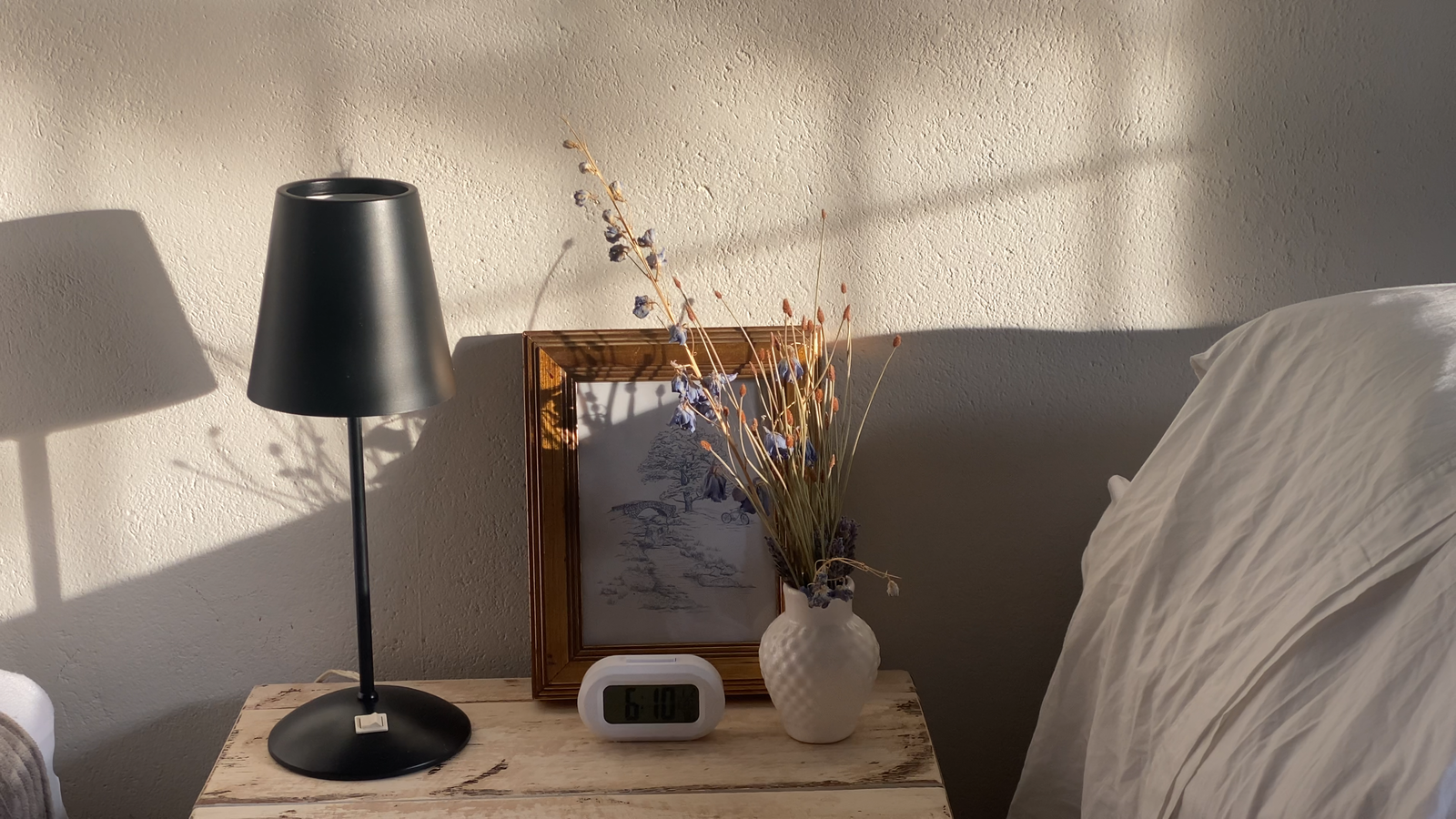
Adjacent versions of this quiet self-legislation appear in ordinary habits. The long-time black coffee drinker who forgets whether they ever liked it sweet may be following a smaller contract: I am someone who tolerates bitterness, needs less, and does not ask for it gentler. The habit of apologising before speaking can carry a matching clause: I will occupy less. Refusing help can fit into the same drawer.
Why encouragement does not work
Telling someone they should be able to accept help is like telling them they should be able to speak a language they learned to consider forbidden. It skips the part where they came to treat the offer as a challenge to who they are.
This is one reason well-meaning encouragement from friends can fail. The person is not necessarily refusing help in the casual way someone chooses a restaurant. They may be protecting an internal architecture that has held them upright.
Sudden crises can crack that architecture open. When the agreement collides with a reality it cannot handle, such as a stroke, bereavement, job loss, or a child whose needs exceed what one person can provide, the old rule becomes unenforceable. Some people find this liberating, while others find it disorienting. After thirty years as the person who copes, the first time someone cannot cope may feel like more than a difficult day. It may feel like the loss of a self.
What actually shifts
People do renegotiate these agreements, although not usually through willpower alone. Accounts of that shift often involve a relationship in which accepting help does not cost what the old rule predicted. The friend accepts help in return later. The colleague does not preserve the moment as evidence of weakness. The parent asks for something in old age without becoming smaller in the asking.
Accepting help is often a mixed-emotion event. A person can be grateful and exposed, relieved and uncomfortable, loved and slightly younger than they wanted to feel. Recognising that both reactions can be present makes the experience easier to describe without pretending the discomfort is not there.
None of this is a technique, and there is no exercise that dissolves a decades-old private agreement in a weekend. But when the next offer of help feels harder to accept than the situation warrants, it may be useful to notice that the difficulty is not necessarily pride. It may be an old clause, written by a younger version of the person who was doing their best with what they had, and who could not have known that the same clause might one day keep the room quieter than they wanted it to be.