
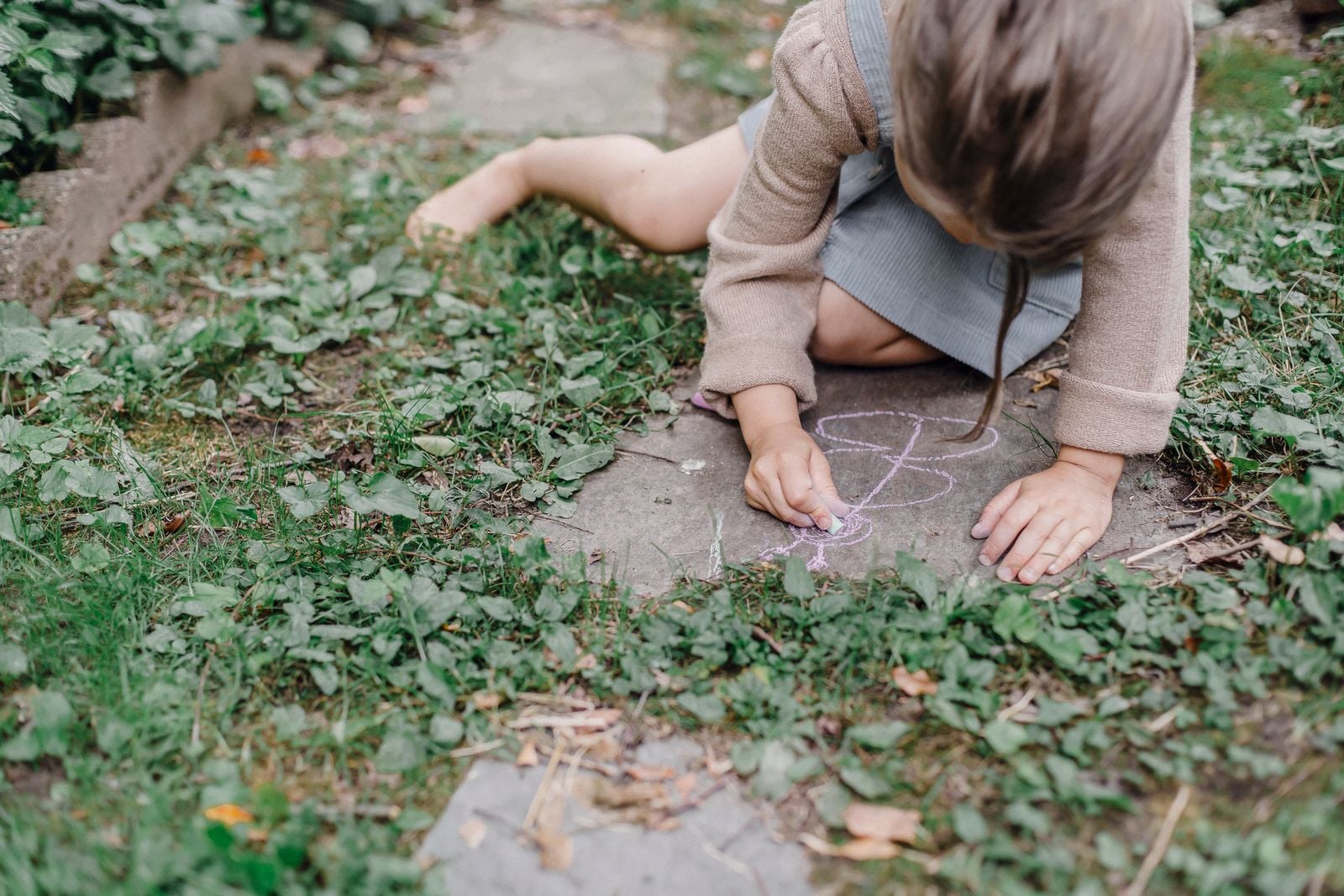

Left alone with nothing to do, a child will usually complain first and invent second. The complaint is the interesting part. It signals that the child has met the empty half hour and does not yet know what to do with it, which is precisely the moment adults have started rushing to shorten. The idea, sometimes attached loosely to Scandinavian parenting culture, that children should be permitted to be a little bored on purpose is not a shrug at neglect. It is a bet that the empty half hour is where a child first has to consult themselves rather than a screen, a schedule, or a well-meaning grown-up with a suggestion ready.
Whether this belief is genuinely more Scandinavian than anywhere else is harder to prove than the parenting-book version usually admits. What is clearer is that a version of the idea circulates widely in Denmark, Sweden, Norway, and Finland, alongside outdoor play, long unsupervised stretches in forest kindergartens, and a general suspicion of over-scheduling. Whether it originated there or simply survived there better is a separate question.
What we actually mean by boredom
Boredom, in the research literature, is not the same thing as rest. It is the uncomfortable gap between a child who wants to be engaged and an environment that is not currently engaging them. Healthline’s overview of the evidence describes it as an unpleasant state that arrives when a person cannot engage in a satisfying activity, either because they do not know what to do or because something is in the way. That definition matters. It rules out the calm of a child lying on the grass watching clouds, which is not boredom but attention with no assignment. It rules in the fidgety, whining, mildly annoyed child who has just been told that no, the iPad is not coming out before dinner.
The Scandinavian version of the argument, insofar as one exists, is not that discomfort is character-building in some Victorian sense. It is smaller and more practical. If a child never sits with that gap, they never get to practise closing it themselves.
The old bet
The bet is old because it predates the smartphone by several centuries. Children with access to a garden, a kitchen drawer, a stick, or a sibling have generally been trusted, at least intermittently, to sort themselves out. What has changed is the density of alternatives. A CDC data brief published in October 2024 found that about half of American teenagers spend four or more hours a day on screens. The Scandinavian countries are not immune to that pattern, but their public discussion of childhood tends to protect certain zones from it: outdoor time, unstructured play, and the long, unpromising afternoon.
The wager underneath is that the first thing a child reaches for when nothing is offered is themselves. Not a self in the therapeutic sense, but a set of preferences, half-formed interests, small obsessions with drawing horses or rearranging Lego by colour. Meeting that inventory, in private, without a stranger’s help, is one of the earlier forms of self-knowledge available to a small human.
What the research actually suggests
The evidence for boredom’s creative dividend is real but modest, and worth reading carefully. Teresa Belton, a visiting fellow at the University of East Anglia’s School of Education and Lifelong Learning who has spent years on the relationship between boredom and imagination, has argued that children need time to switch off from the demands of the outside world, daydream, and pursue their own occupations. Writing in The Conversation, she makes the case that unfilled time is where children build the curiosity, perseverance, playfulness and confidence they need in order to invent anything at all. Anke Zeißig, an educational psychology researcher at Brandenburg University of Technology, described boredom in a 2023 paper as a space conducive to contemplation, invention, and exploration, a point summarised in Futura’s review of the science.
None of this proves that boredom causes creativity in a clean, one-way sense. It suggests, more cautiously, that unfilled time is one of the conditions under which children practise inventing occupations, and that permanently filled time removes that practice. A 2024 review discussed by Healthline notes that scientists have not yet confirmed whether the coping skills children develop through boredom translate into better mental health in adulthood. It is a plausible hypothesis, not a proven mechanism.
The adult version of the claim has been tested more directly. Sandi Mann and Rebekah Cadman of the University of Central Lancashire ran two experiments, published in the Creativity Research Journal in 2014, in which participants given a deliberately tedious task first went on to perform better on a creative task afterwards, with daydreaming proposed as the mechanism connecting the two. The children’s version is basically the same claim applied to a smaller person with fewer prior habits.
Why the Nordic version sounds particular
The reason the idea sounds Scandinavian, even when the underlying research is international, has more to do with institutional context than with any secret national wisdom. Nordic preschools tend to build long outdoor blocks into the day, keep formal reading instruction later than many Anglophone systems, and treat children’s own expression as a curriculum item rather than a break. Sweden built much of its preschool philosophy around children’s creative expression, borrowing the Reggio Emilia idea of the hundred languages of children.
Finland, similarly, has been running a longer experiment in what happens when school is designed to protect unstructured thinking rather than fill it. Set against the wider creativity-decline debate, Finland’s bet is a matter of policy design, not national temperament. Children in Helsinki are not born more inventive than children in Manchester. They are more often left with time in which invention becomes the most interesting option available.
That distinction matters. When boredom-tolerant parenting is discussed as a Nordic personality trait, it can start to sound like a virtue you either have or you don’t. Treated as a design choice about how a day is structured, it becomes something a family or a school can actually try.
What children do when the gap goes unfilled
Left with the gap, children do a fairly predictable set of things. A 2024 study of 130 children aged four to six, referenced in Healthline’s overview, found that they reached for strategies remarkably similar to the ones adults use: social ones, such as asking a sibling to play, and behavioural ones, such as finding a toy or working through a puzzle. The capacity to cope with an empty afternoon emerges early, provided it gets to emerge at all.
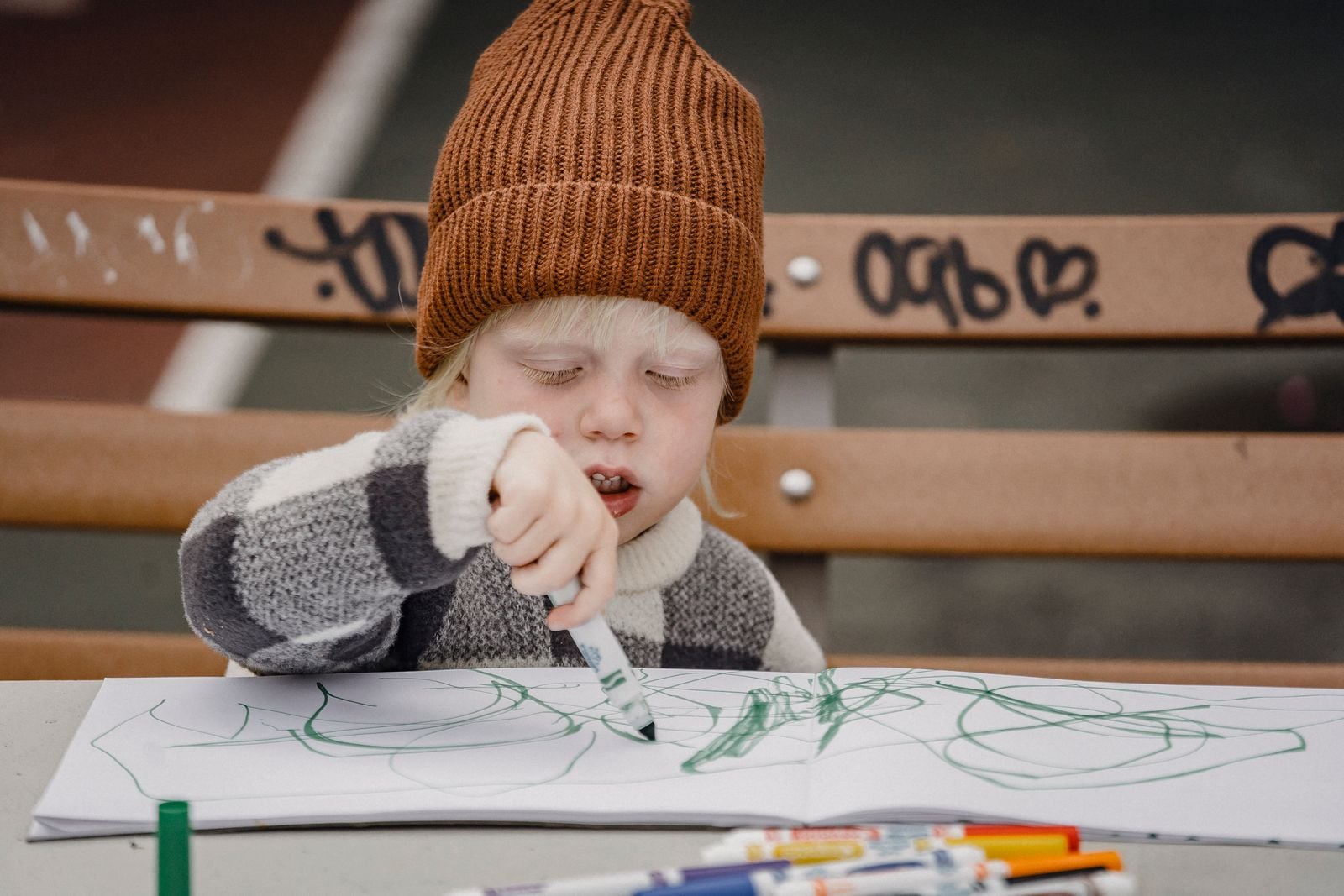
Some of the outputs are more visible than others. Imaginary friends, which the writer Daisy Buchanan has described in the Guardian as a sign of a lively, creative mind, appear to be receding as children’s time fills up with adult-designed entertainment. Elaborate floor games. Drawings of imagined cities. Long, slightly boring conversations with a parent that turn out to contain a real question halfway through.
That is the practical case against filling every gap. Not that boredom is virtuous, but that being rescued from it repeatedly teaches a child that they are not the person who solves it. Over-scheduling works the same way as over-protection: it removes the ordinary problem of what to do next before the child has had a chance to be the one who answers it.

Where the bet stops working
The idea has limits, and honest versions of it say so. Excessive boredom, especially in adolescents, is associated with dissatisfaction, low mood, and risk-taking, as noted in the research summarised by Futura and Healthline. A child who is chronically bored at school may be under-stimulated, unwell, or in the wrong environment, and a shrug about the redemptive power of empty time is the wrong response. The positive case, as the child development specialist Amanda Gummer puts it for GoodtoKnow, is a narrow one: boredom as a gateway to imagination and innovation, helped along by open-ended questions rather than an empty diary. The argument is for pockets of unstructured time, not for an unengaged childhood.
There is also a class and access dimension worth naming. The advice to let a child work out their own afternoon assumes a safe indoor or outdoor environment to work it out in, an adult somewhere in the background, and a household not under acute economic stress. Danish or Swedish parents who follow the idea are often doing so inside a welfare system that provides parental leave, subsidised childcare, and physically safe neighbourhoods. That is part of the story of why the bet has held there.
A smaller claim than the one on the tin
The strongest version of the boredom argument is the smallest one. Children who are never given a stretch of unfilled time rarely get to discover what they reach for when no one is directing them. The Scandinavian framing, at its best, is a permission structure for that stretch, held up by outdoor play, later formal schooling, and a culture that does not treat the phrase “I’m bored” as a failure of parenting.
Whether that produces measurably more imaginative adults is not settled. What it produces, at minimum, is a child who has practised meeting their own attention alone. That is not neglect wearing a philosophy costume. It is the modest, older idea that a person’s imagination is something they first meet in private, and that the meeting has to be allowed to happen.